
Dictionary category

Astrology

Core sky-language terms used in charts, signs, placements, timing, techniques, dignity, elements, and symbolic interpretation.

184 termsThe Great Almanac Dictionary
Astrology illustration

Direct answer

Core sky-language terms used in charts, signs, placements, timing, techniques, dignity, elements, and symbolic interpretation. This category page gathers concise definitions, related terms, and safe spiritual interpretation in one place.

What this category covers

Astrology pages explain the everyday meaning of each term first, then add spiritual context, historical or traditional background, and The Great Almanac's interpretation limits. The goal is to help readers understand the symbol without turning it into fear, hype, or a forced prediction.

How to use this dictionary category

Use this category as a reference layer, not as a substitute for a personal reading. A definition page can tell you what a term means, why it matters, and which related concepts to read next. A personalized Great Almanac reading checks whether that term actually applies to your birth chart, numerology, current timing, or saved personal context.

Astrology terms

Accidental DignityAccidental Dignity describes circumstantial planetary strength in a chart. Air SignsAir Signs are Gemini, Libra, and Aquarius. Almuten FigurisAlmuten Figuris is a traditional dignity winner calculated from several key chart points. AnaretaAnareta is a historical traditional astrology term for a harmful significator in older longevity methods. Angular House EmphasisAngular House Emphasis highlights planets in the 1st, 4th, 7th, and 10th houses. Annual ProfectionsAnnual Profections means a timing technique that advances the chart by one house for each year of life. Annual Time LordAnnual Time Lord means the planet governing a year in a specific timing method. AntisciaAntiscia means a mirror-point technique comparing zodiac degrees equidistant from the solstice axis. AntiscionAn Antiscion is a solstice-mirror degree that can link planets or points by hidden correspondence. Apex PlanetApex Planet is the pressure or focus point in an aspect pattern. AscendantAscendant is the exact rising degree that anchors the birth chart and begins the first house. Aspect PatternAspect Pattern is a multi-planet geometry such as a T-Square, Grand Trine, Yod, or Kite. Astrological ChartAn Astrological Chart is a calculated sky map for a particular moment and location. AstrologyAstrology interprets sky patterns as symbolic language for temperament, timing, relationship, and reflection. AstrotheologyAstrotheology examines how sky symbolism appears in religious and theological systems. AversionAversion means a traditional relationship where signs do not see each other by major aspect. BesiegementBesiegement means a traditional condition where a planet is hemmed between difficult influences. Biblical AstrologyBiblical Astrology examines astrology-related themes in relation to Scripture, creation, and spiritual boundaries. Birth ChartA Birth Chart is a personal astrology map built from birth date, time, and place. Birth LocationBirth Location anchors a chart to the local sky where birth occurred. Birth TimeBirth Time is the time input that makes a birth chart locally precise. BonificationBonification means the improvement of a planet condition through helpful reception, aspect, or benefic contact. Boomerang YodBoomerang Yod adds an opposition to the apex of a Yod pattern. Bowl Chart ShapeBowl Chart Shape places planets within one half of the chart. Bucket Chart ShapeBucket Chart Shape has one isolated handle planet outside the main group. Bundle Chart ShapeBundle Chart Shape concentrates planets in a narrow portion of the zodiac. Cadent House EmphasisCadent House Emphasis highlights planets in the 3rd, 6th, 9th, and 12th houses. Cardinal SignsCardinal Signs are Aries, Cancer, Libra, and Capricorn. Celestial LongitudeCelestial Longitude means a planet position measured along the ecliptic and expressed in zodiac degrees. Chart RulerChart Ruler is the ruling planet of the Ascendant sign. Chiron ReturnChiron Return is a midlife cycle tied to wound, wisdom, healing, and teaching themes. ChronocratorChronocrator means a time-ruling planet or period lord in traditional timing. Co-SignificatorA Co-Significator is a supporting significator used alongside the main representative planet. Collection of LightCollection of Light describes a third planet gathering two significators that do not connect directly. Composite ChartComposite Chart turns two birth charts into one chart for the relationship itself. Conjunction PairConjunction Pair means two planets joined closely by zodiac degree. Contra-AntisciaContra-Antiscia means the opposite mirror point to antiscia, often used to study concealed tension or counterpoint. Contra-AntiscionContra-Antiscion is the opposing point to a planet's antiscion mirror degree. Cradle AspectA Cradle Aspect supports an opposition with softer connecting aspects. Davison ChartDavison Chart creates a real time-and-place midpoint chart for a relationship. DecanDecan divides each zodiac sign into three ten-degree sections. DecennialsDecennials means a traditional timing method that divides life into planetary periods. DeclinationDeclination means a planet position north or south of the celestial equator. DescendantDescendant is the western horizon point of the chart and the doorway into seventh-house relationship themes. DetrimentDetriment describes a planet placed opposite its sign of rulership. DignityDignity evaluates how strongly or comfortably a planet can express. Diurnal ChartDiurnal Chart means a day chart with the Sun above the horizon. Dominant ElementDominant Element shows which astrological element is most emphasized in a chart. Dominant HouseDominant House identifies the most emphasized life area in a chart. Dominant ModalityDominant Modality shows whether a chart leans initiating, stabilizing, or adapting. Dominant PlanetDominant Planet identifies the planet with the strongest repeated emphasis in a chart. Dominant SignDominant Sign is the sign that appears most strongly across a chart. DoryphoryDoryphory means a traditional condition where planets act as attendants or spear-bearers to a luminary or important point. Draconic ChartDraconic Chart is an advanced nodal chart technique used alongside the natal chart. DwadDwad is a fine zodiac subdivision of 2.5 degrees per segment. Earth SignsEarth Signs are Taurus, Virgo, and Capricorn. Electional AstrologyElectional Astrology selects timing for beginnings such as launches, weddings, and important actions. Electional ChartAn Electional Chart is a timing chart used to choose a better moment for an action. ElementElement groups the zodiac signs into fire, earth, air, and water. EmplacementEmplacement means the condition of a planet based on where it is placed by sign, house, dignity, and aspect. EnclosureEnclosure means a condition where a planet is hemmed in by other planetary influences. EphemerisAn Ephemeris lists planetary positions by date and time. Esoteric AstrologyEsoteric Astrology is a spiritually oriented approach to chart interpretation. Essential DebilityEssential Debility means a traditional condition where a planet lacks ease by sign placement. Essential DignityEssential Dignity evaluates planetary condition by sign and degree. ExaltationExaltation is a traditional dignity where a planet is considered especially supported in a sign. FaceFace is the decan-level dignity of a planet in traditional astrology. FallFall is the sign opposite a planet's exaltation and marks a traditional debility. Fan Chart ShapeFan Chart Shape concentrates planets with one distinct outlet planet. Feminine SignsFeminine Signs are the earth and water signs in traditional polarity language. FeralityFerality means a condition where a planet is unusually isolated from major aspect contact. Final DispositorFinal Dispositor is the planet that receives a rulership chain and anchors chart meaning. Finger of GodFinger of God is the common mystical name for a Yod pattern. FirdariaFirdaria means a medieval timing system that assigns planetary rulers to life periods. Fire SignsFire Signs are Aries, Leo, and Sagittarius. Fixed SignsFixed Signs are Taurus, Leo, Scorpio, and Aquarius. FrustrationFrustration describes an intended perfection being spoiled by another contact or priority. Grand CrossA Grand Cross is a four-point aspect pattern made from two oppositions and multiple squares. Grand SextileGrand Sextile is a six-point hexagonal aspect pattern. Grand SquareGrand Square is a four-point aspect pattern of squares and oppositions. Grand TrineA Grand Trine is a triangular pattern of three trines in a chart. Handle PlanetHandle Planet is the outlet planet of a Bucket chart. HayzHayz means a traditional condition where a planet aligns with sect, sign polarity, and placement expectations. Heliacal RisingHeliacal Rising means the first visible rising of a star or planet after solar invisibility. Heliacal SettingHeliacal Setting means the last visible setting of a star or planet before solar invisibility. Hellenistic AstrologyHellenistic Astrology is a foundational ancient branch of horoscopic astrology. Hemisphere EmphasisHemisphere Emphasis shows a strong concentration of planets in one half of the chart. Horary AstrologyHorary Astrology is question-based astrology using the chart of the question moment. Horary QuestionA Horary Question is a focused question read through the chart of the asking moment. HoroscopeA Horoscope is a chart-based astrology reading or forecast. House RulerHouse Ruler links a house topic to its ruling planet and that planet's placement. HylegHyleg is an older traditional astrology point connected with life-signification doctrines. Imum CoeliImum Coeli is the technical IC point associated with home, roots, ancestry, and inner foundation. Jupiter ReturnJupiter Return is a twelve-year cycle of renewal, expansion, and meaning. Karmic AstrologyKarmic Astrology reads the chart through repetition, consequence, and soul-learning themes. Kite AspectA Kite Aspect adds an opposition and focus point to a Grand Trine. Latitude in AstrologyLatitude in Astrology means a planet distance north or south of the ecliptic. Leading PlanetLeading Planet is the first planet after the largest empty arc in chart-shape analysis. Light of the TimeLight of the Time means a traditional phrase for the luminary ruling the time of birth by sect. Locomotive Chart ShapeLocomotive Chart Shape occupies most of the wheel while leaving one large empty gap. Lot of LoveLot of Love means a Hellenistic lot associated with affection, desire, and relational attraction. Lunar ReturnLunar Return is a monthly chart for the Moon returning to its natal degree. MaltreatmentMaltreatment means a traditional term for a planet being harmed by difficult contact or condition. Masculine SignsMasculine Signs are the fire and air signs in traditional polarity language. Medical AstrologyMedical Astrology is a historical symbolic system linking astrology and body correspondences. Medium CoeliMedium Coeli is the technical MC point associated with career, calling, and public life. MidheavenMidheaven is a major chart angle linked with career, visibility, reputation, and life direction. Minor Grand TrineMinor Grand Trine combines one trine with two sextiles. ModalityModality describes whether a sign initiates, stabilizes, or adapts. Moon SignMoon Sign is the birth sign of the Moon and a key indicator of emotional patterning. Morning Star PhaseMorning Star Phase means the phase when a planet, especially Venus or Mercury, rises before the Sun. Mundane AstrologyMundane Astrology interprets collective and world-level astrology rather than personal charts. Mutable SignsMutable Signs are Gemini, Virgo, Sagittarius, and Pisces. Mutual ReceptionMutual Reception is a rulership exchange between two planets. Mystic RectangleA Mystic Rectangle links two oppositions with harmonious aspects into a rectangular pattern. NadirNadir is the lower chart angle connected with inner life, home, roots, and ancestral ground. Natal ChartA Natal Chart is a full astrology map of the sky at birth, used for personal interpretation and timing. Negative SignsNegative Signs are another name for the feminine or yin zodiac signs. Nocturnal ChartNocturnal Chart means a night chart with the Sun below the horizon. Nodal OppositionNodal Opposition is the halfway point of the nodal cycle, about nine years from a nodal return. Nodal ReturnNodal Return is an 18.6-year lunar-node cycle of direction and release. Occidental PlanetOccidental Planet means a planet setting after the Sun in relation to solar phase. OrbOrb measures how close an aspect is to exact by degrees. Oriental PlanetOriental Planet means a planet rising before the Sun in relation to solar phase. Out of Bounds PlanetOut of Bounds Planet means a planet whose declination exceeds the Sun usual maximum range. Peregrine PlanetPeregrine Planet means a planet with no major essential dignity in its sign. Planetary JoyPlanetary Joy means a traditional house placement where a planet is said to rejoice. Planetary PhasePlanetary Phase means the stage of a planet within its cycle of visibility and relationship to the Sun. Planetary PlacementPlanetary Placement is a planet's location and condition inside an astrology chart. Planetary PositionPlanetary Position is the exact zodiac location of a planet for chart calculation. Positive SignsPositive Signs are another name for the masculine or yang zodiac signs. Primary MotionPrimary Motion means the apparent daily rotation of the sky that carries planets across the angles. Profected AscendantProfected Ascendant means the sign or house activated for a year by annual profections. ProgressionProgression is a symbolic timing method, often using one day after birth for one year of life. ProhibitionProhibition means a promised contact is interrupted before it can complete. Quadrant EmphasisQuadrant Emphasis shows strong planetary focus in one three-house quadrant. QuadruplicityQuadruplicity groups signs by cardinal, fixed, or mutable mode. Radical ChartA Radical Chart is the root chart used for judgment, especially when a horary question is considered fit to read. Ray CastingRay Casting means the traditional idea that planets cast rays to other zodiacal places by aspect. Reception by DignityReception by Dignity means a condition where one planet receives another into a sign of its dignity. RefranationRefranation means a traditional condition where an applying aspect fails to perfect because a planet changes course. Retrograde EmphasisRetrograde Emphasis means retrograde motion is unusually important in a birth chart. Right AscensionRight Ascension means an equatorial coordinate used in astronomy and some astrological timing techniques. Rising SignRising Sign is the sign on the eastern horizon at birth and one of the most personal chart factors. RulershipRulership connects each zodiac sign with its planetary ruler. Saturn ReturnSaturn Return is a major Saturn cycle of adulthood, responsibility, pruning, and commitment. Secondary MotionSecondary Motion means the slower zodiacal movement of planets against the background of signs. SectSect means the traditional distinction between day charts and night charts. Sect LightSect Light means the luminary that leads the chart sect, the Sun by day or the Moon by night. Seesaw Chart ShapeSeesaw Chart Shape divides planets into two opposing clusters. Sidereal ZodiacSidereal Zodiac anchors signs to stellar reference rather than the seasonal equinox point. SignificatorA Significator is the chart factor assigned to represent someone or something being judged. Singleton PlanetSingleton Planet is a lone planet carrying an otherwise missing chart category. Solar ArcSolar Arc directs the whole chart by the progressed Sun's arc. Solar PhaseSolar Phase means a planet visibility relationship with the Sun. Solar ReturnSolar Return is the annual chart for the Sun returning to its birth degree. Solar Return LordSolar Return Lord means a ruler emphasized in the chart cast for the Sun yearly return. Solstice PointsSolstice Points means degree relationships built around the Cancer-Capricorn solstice axis. Splash Chart ShapeSplash Chart Shape spreads planets broadly around the chart. Splay Chart ShapeSplay Chart Shape has three or more uneven planetary clusters. StelliumA Stellium is a cluster of three or more planets in one sign or house. Succedent House EmphasisSuccedent House Emphasis highlights planets in the 2nd, 5th, 8th, and 11th houses. Sun SignSun Sign is the birth sign of the Sun and the most familiar doorway into astrology. SynastrySynastry compares two charts to interpret relationship dynamics. Synodic ArcSynodic Arc means the angular distance between bodies within a shared cycle. SyzygySyzygy means a New Moon or Full Moon used as a key lunation point in traditional astrology. T-SquareA T-Square is a high-pressure aspect pattern built from an opposition and two squares. TermTerm is a traditional dignity subdivision assigning degree ranges of a sign to planetary rulers. TestimonyTestimony means a single piece of chart evidence supporting an interpretation. Time LordTime Lord means a planet assigned to govern a period in a timing technique. TransitTransit means current planetary movement activating a chart. Translation of LightTranslation of Light describes a third planet carrying contact from one significator to another. Triple ConjunctionTriple Conjunction is a three-planet conjunction cluster. TriplicityTriplicity is a traditional dignity based on the zodiac elements. Tripod Chart ShapeTripod Chart Shape organizes planets around three main clusters. Tropical ZodiacTropical Zodiac measures signs from the equinoxes and seasons. Unaspected PlanetUnaspected Planet is a planet without major aspect connections in the chart. Vedic AstrologyVedic Astrology is the Indian Jyotisha tradition with its own zodiac, timing systems, and techniques. Water SignsWater Signs are Cancer, Scorpio, and Pisces. YodA Yod is a sextile base pointing through two quincunxes to an apex planet. ZodiacThe Zodiac is the twelve-sign wheel used as astrology's core sign language. Zodiac WheelThe Zodiac Wheel is the circular layout of the twelve signs around an astrology chart. Zodiacal AphesisZodiacal Aphesis means a releasing-style timing concept that lets periods unfold through zodiac signs. Zodiacal ReleasingZodiacal Releasing means a Hellenistic timing technique using lots and sign periods to map chapters of life.

Personalized next step

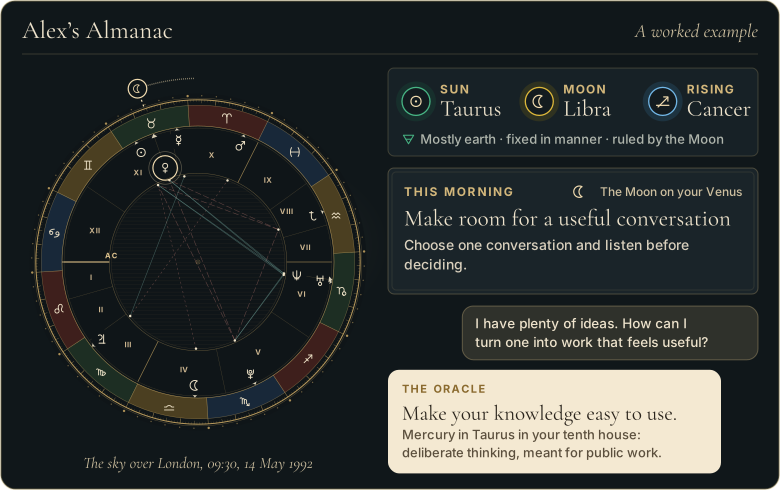
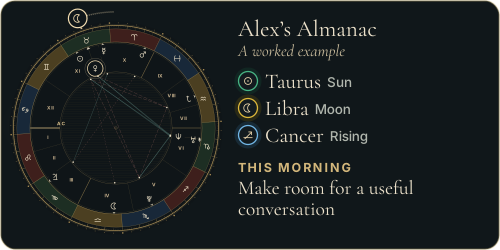
See how this meaning connects to your own birth chart, numerology, spiritual timing, and personal almanac.

Cast your natal chart

Common questions

What is in the Astrology dictionary?

Core sky-language terms used in charts, signs, placements, timing, techniques, dignity, elements, and symbolic interpretation.

How should I use this category?

Use it to understand the basic meaning of each term, compare related concepts, and decide which symbols are worth exploring in a personal reading.

How do these entries connect to a personal reading?

A dictionary page explains the public meaning. The matching focused tool applies related symbolism to a birth chart, number pattern, timing question, or personal context.

See the complete pattern

Cast the chart that connects every placement

Calculate your planets, houses, aspects, and natal table together so no single placement has to carry the whole interpretation.

Start with one focused tool. No purchase is required to explore the public tool page.

Read more

Explore more Almanac guides

Keep moving through the archive: signs, compatibility, chart timing, faith-aware discernment, and practical daily guidance.