Astrology and Free WillA Christian View
The stars may move the body and its moods; they cannot move the will. That is the Christian answer from Augustine to Aquinas.
$0 today, then $12/month after 7 days. Cancel anytime.
"The stars incline, they do not compel"
The Latin saying astra inclinant, non necessitant sums up the Christian position of the Middle Ages: the heavens may move the body and its moods, but they cannot force the will. It is often credited to Thomas Aquinas, whose teaching it condenses.
What does your own chart say about you?
Choose love, work or purpose. Your reading is written from your chart. Your reading uses your own birth details.
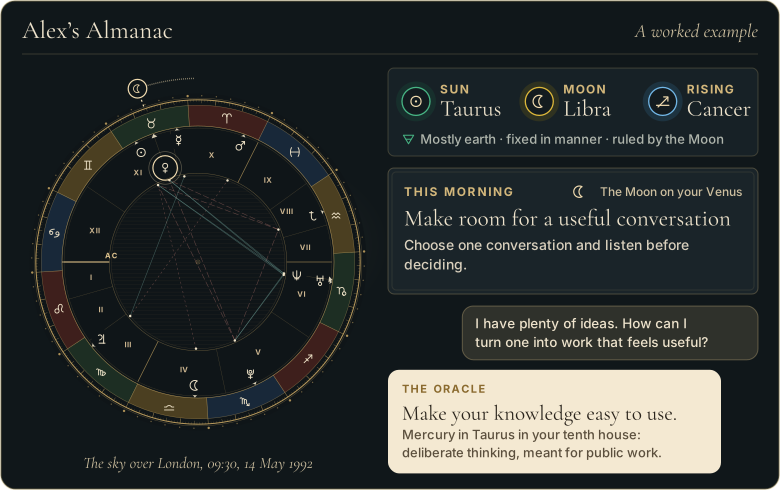
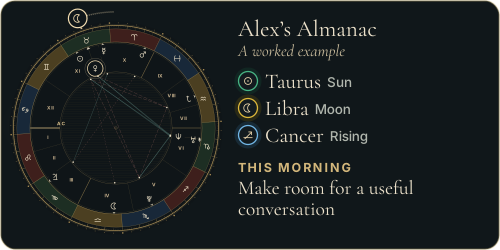
Walk through Alex’s whole example first
 The Road of AgesSee the turning points of your whole life, from your birth date
See your road's shape
The Road of AgesSee the turning points of your whole life, from your birth date
See your road's shape
Prefer to explore first?
 The Road of AgesThe turning points of your whole life, from your own chart
Walk my road
The Road of AgesThe turning points of your whole life, from your own chart
Walk my road
Free, by email
Your daily Almanac letter
One short letter at 7 each morning: the day’s theme read for your own chart, and one thing to do with it.
What Aquinas taught
In the Summa Theologiae (I, q. 115, a. 4) Aquinas grants that the heavenly bodies act on bodies, and so on the passions that live in the body, but not directly on the intellect and will. Because most people follow their passions, astrologers can often foretell what most people will do; they cannot foretell what a free person must choose.
What Augustine saw in the twins
Augustine's answer was older and sharper: twins born in the same hour, like Esau and Jacob, lead different lives, and a slave's child can be born at the moment of a rich man's son (City of God, book V; Confessions VII.6). If the hour decided the life, those lives would match.
What it means for a chart
Most astrologers today say the same in their own words: a chart describes tendencies and timing, not fixed outcomes. The Christian reading adds the reason: the will belongs to the person, and the person belongs to God.
Reading it with discernment
The test offered here is the fruit: whether a question about the heavens or the unseen leads toward humility, prayer and love of neighbor, or toward fear, secrecy and control. God first, and every created sign after him.
Practical boundaries
Authority
God, Scripture, conscience, wise counsel, and love of neighbor stand above every reading.
Fruit
A practice should be judged by what it forms: humility or pride, peace or fear, responsibility or avoidance.
Limits
The hidden world is not a playground for control. Curiosity stays accountable and prayerful.
Discernment checklist
- Does this interpretation increase humility instead of pride or fear?
- Does it preserve responsibility instead of blaming the sky?
- Does it lead toward prayer, repair, patience, courage, and love of neighbor?
- Would a wise friend recognize the fruit as good?
Make it personal
Open a faith-aware personal reflection: reflective guidance drawn from your own chart, with no claim to predict what only God knows.
Open a faith-aware personal reflectionAnd for the year entire: the Cosmic Codex offers a reflective map of a year from your chart, never a prediction, one edition bought once. Open the Cosmic Codex
Sources and editorial method
Research and editorial references used for this page include:
- Thomas Aquinas, Summa Theologiae I, q. 115, a. 4 (New Advent) - Whether the heavenly bodies are the cause of human acts.
- BibleGateway: Genesis 25:24-27 (KJV) - Quoted on this page in the King James Version.
Scripture is quoted from the King James Version; the church fathers and the Catechism are cited by book and paragraph.
From the reference page to your own chart
Every word here
is in your own chart.
- A personal reading about love, work or purpose, written from your chart
- A practical next step to consider
- It opens with 7 days free, with the AI Oracle and daily guidance
$0 today, then $12/month after 7 days. Cancel anytime.
Common questions
Do the stars control our lives?
Christian teaching says no: the heavens may influence the body and its moods, but the will stays free (Thomas Aquinas, Summa Theologiae I, q. 115, a. 4).
Who said "the stars incline, they do not compel"?
The Latin saying astra inclinant, non necessitant is medieval and is often credited to Thomas Aquinas, whose teaching it condenses.
What did Augustine say about fate and the stars?
That twins born together, like Esau and Jacob, live different lives, so the hour of birth cannot decide a life (City of God, book V).
Continue in Christian Foundations & Created Order
Stay within this topic cluster for the closest related guides, or move through one of the neighboring faith and discernment hubs.
Free, by email
The Almanac, in your inbox at 7
One short letter at 7 each morning: the day’s theme read for your own chart, and one thing to do with it.