
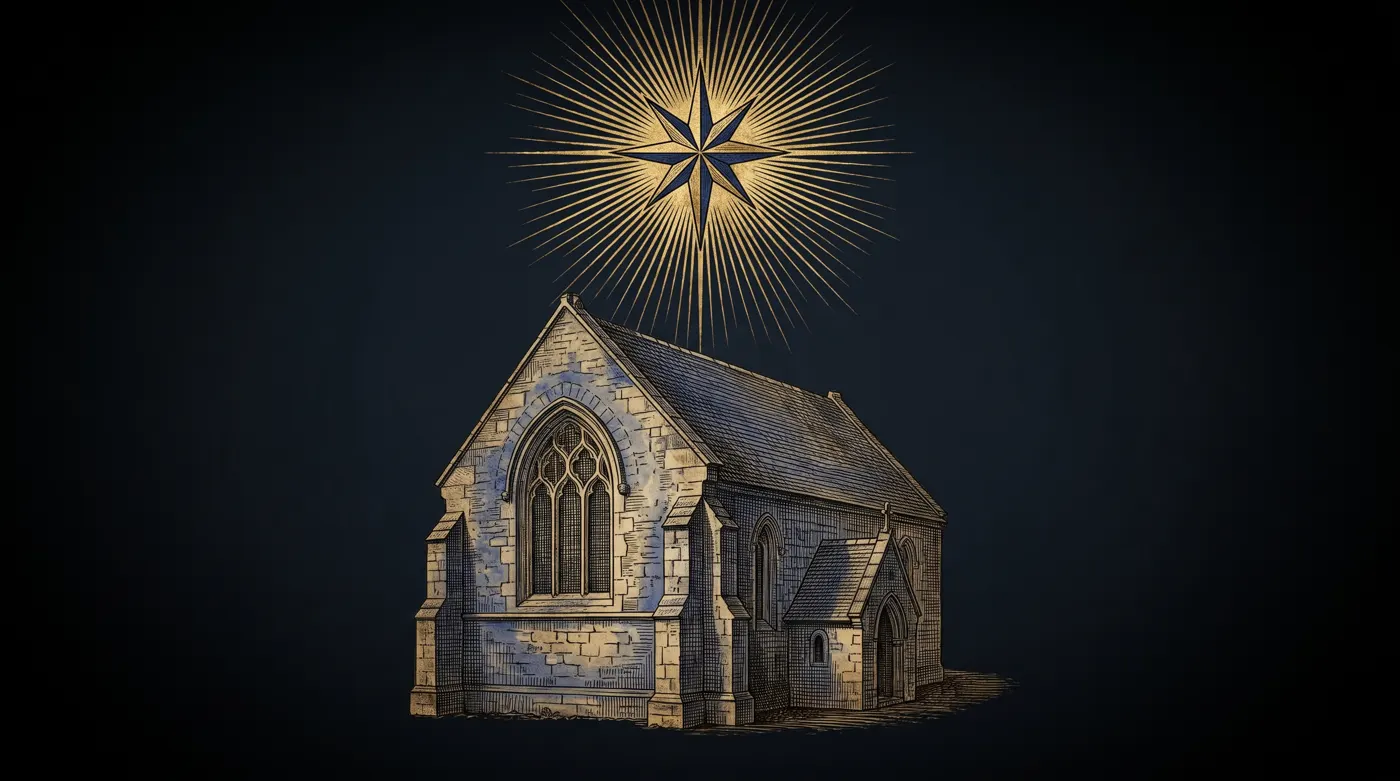
Dreams, Stars, and Christian Discernment
The Bible includes meaningful dreams and celestial imagery, but it also warns against false claims and deceptive interpretation. A dream about stars may reflect memory, emotion, Scripture, culture, stress, or spiritual reflection; the dream alone cannot prove divine origin.
$0 today, then $12/month after 7 days. Cancel anytime.
Direct answer
Short version
Record the dream before interpreting it, identify personal and biblical associations, consider sleep and stress, reject fear-based or flattering certainty, and test any possible meaning through Scripture in context, character, wise counsel, and consequences. Never make an irreversible decision from one dream.

What does your own chart say about you?
Choose love, work or purpose. Your reading is written from your chart. Your reading uses your own birth details.
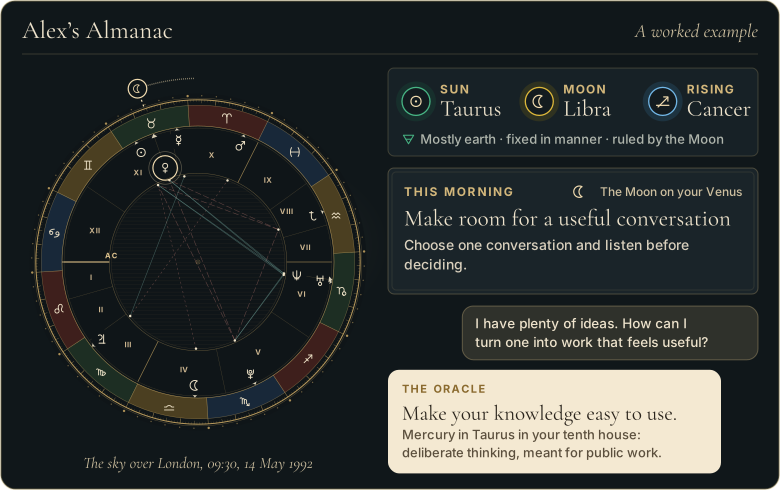
Walk through Alex’s whole example first
 The Road of AgesSee the turning points of your whole life, from your birth date
See your road's shape
The Road of AgesSee the turning points of your whole life, from your birth date
See your road's shape
Prefer to explore first?
 The Road of AgesThe turning points of your whole life, from your own chart
Walk my road
The Road of AgesThe turning points of your whole life, from your own chart
Walk my road
Free, by email
Your daily Almanac letter
One short letter at 7 each morning: the day’s theme read for your own chart, and one thing to do with it.
Quick facts
| Question | Grounded answer |
|---|---|
| Are dreams important in the Bible? | Yes, some narratives present dreams as meaningful, but not every dream is divine revelation |
| Do stars have one dream meaning? | No; context can suggest descendants, rulers, guidance, created order, distance, hope, or ordinary memory |
| Can science explain dreams completely? | No single theory explains all dreams, but sleep stage, memory, emotion, and physiology clearly matter |
| What should govern action? | Scripture read in context, ethical responsibility, wise counsel, evidence, consent, and safety |
| When is help needed? | When dreams cause severe distress, sleep disruption, command behavior, or difficulty distinguishing dream from waking reality |
Dreams in the biblical canon
Biblical narratives include dreams associated with warning, guidance, vocation, political change, and symbolic revelation. Joseph interprets dreams in Genesis; Daniel receives and interprets visions; Matthew describes dreams that guide Joseph during danger surrounding Jesus’s infancy. These stories present particular events, often with clear narrative confirmation and consequences.
The same canon warns about false prophets, deceptive dreams, and speakers who use spiritual claims to redirect allegiance. Deuteronomy 13 evaluates even a fulfilled sign by covenant faithfulness. Jeremiah 23 criticizes those who trade in dreams without being sent. The biblical pattern is therefore neither “dreams never matter” nor “every vivid dream is a message.” Claims are tested.
Star imagery changes with context
In Joseph’s dream in Genesis 37, the Sun, Moon, and eleven stars bow, and the family immediately hears the image through kinship and status. Elsewhere stars can represent innumerable descendants, heavenly hosts, rulers, created praise, or signs in apocalyptic imagery. The star followed by the Magi in Matthew 2 belongs to a narrative about Jesus and foreign visitors; it is not a general instruction that every unusual light guides a personal journey.
Modern dream dictionaries flatten these differences into one-line equations such as “star equals destiny.” A better interpretation begins with the dreamer’s own associations. A star may recall a deceased parent, a navigation lesson, celebrity, a childhood ceiling, astronomy, ambition, loneliness, or a recent film. Biblical resonance can be considered without erasing biography.
What sleep and memory contribute

Dreams occur across sleep, though vivid narrative recall is often associated with rapid eye movement sleep. The sleeping brain processes recent experiences, emotion, memory fragments, bodily signals, and environmental stimuli. Medication, fever, trauma, sleep deprivation, substances, and irregular schedules can alter dream intensity or recall.
Recognizing physiology does not insult faith. It prevents a false choice between meaning and mechanism. A dream can become personally significant even when its images arose through ordinary memory processes. Meaning is then formed through reflection and response rather than proven by mysterious origin.
Keep a basic sleep record beside a dream journal: bedtime, awakenings, stress, medication changes, illness, alcohol or other substances, and recent media. Patterns often become clearer when the body is included.
A careful dream-discernment method
- Write the dream in present-tense detail before searching symbols: setting, people, sequence, emotion, colors, words, and ending.
- Separate what occurred in the dream from the interpretation added after waking.
- List personal associations for each major image before consulting biblical or cultural parallels.
- Read any biblical parallel in its full literary setting; do not convert one symbol from one narrative into a universal code.
- Consider recent experiences, grief, fear, media, physical state, and recurring concerns.
- Ask whether a proposed meaning produces truth, humility, love, responsibility, and freedom rather than panic, vanity, or control.
- Choose a reversible response (prayer, conversation, journaling, rest, or research) before any consequential action.
Three examples without fixed dream-dictionary answers
A star disappears
This might express grief, lost direction, fear of failure, changing belief, or a recent astronomical image. Ask what vanished in the dreamer’s actual life before calling it an omen.
Many stars form a path
The image may evoke guidance, community, travel, Abrahamic promise, or a desire for certainty. A safe response is reflection and counsel, not assuming a commanded relocation.
A star falls toward the dreamer
Apocalyptic language, anxiety, awe, ambition, or recent media may contribute. It does not prove impending disaster, special election, or spiritual attack.
Sharing a dream responsibly
A listener should ask questions rather than seize authority: What feeling stayed with you? What was happening before the dream? What does the image mean in your family or faith? Avoid “God told me your dream means” language, especially when the interpretation concerns marriage, money, pregnancy, illness, relocation, abuse, or another person’s motives.
Church communities can make space for dreams while requiring humility, accountability, and freedom to disagree. No interpreter should demand payment, secrecy, obedience, sexual access, or escalating sessions because of a frightening dream. Consent and ordinary safeguarding remain in force.
Nightmares, commands, and urgent support
Recurring nightmares can follow trauma, stress, medication changes, sleep disorders, or mental-health conditions. Professional care does not deny spiritual life. A clinician can evaluate sleep and distress while a trusted pastor supports prayer, community, and meaning.
Seek prompt help if dream-related fear prevents sleep, if waking experiences feel indistinguishable from dreams, or if a perceived command involves self-harm or harm to others. Do not obey a harmful command to prove faith. Contact local emergency or crisis support when danger is immediate.
Sources and editorial method
Research and editorial references used for this page include:
- Bible Gateway: Genesis 37, Daniel 2, and Matthew 1-2 - Canonical examples of dreams, interpretation, celestial imagery, guidance, and narrative confirmation.
- Bible Gateway: Deuteronomy 13 and Jeremiah 23 - Canonical warnings about signs, dreams, false authority, and discernment.
- National Institute of Neurological Disorders and Stroke: Understanding Sleep - Evidence-based overview of sleep stages, REM sleep, dreaming, memory, and health.
- Encyclopaedia Britannica: Dream - Reference overview of dream experience and major historical and scientific approaches.
These references support the factual, historical, textual, or interpretive claims on this page. Interpretive traditions are identified as such, and factual claims are kept separate from symbolic claims.
Related reading
From the reference page to your own chart
Every word here
is in your own chart.
- A personal reading about love, work or purpose, written from your chart
- A practical next step to consider
- It opens with 7 days free, with the AI Oracle and daily guidance
$0 today, then $12/month after 7 days. Cancel anytime.
Common questions
Does God speak through dreams?
Biblical narratives sometimes present God doing so. That does not establish every dream as revelation; claims still require humility, context, testing, and responsible action.
What do stars mean in a Christian dream?
There is no universal answer. Biblical uses include descendants, heavenly beings, rulers, and created order, while personal memories may be more relevant in a particular dream.
Should I use a dream dictionary?
Use it only as a collection of possibilities, not an authority. Personal association, narrative context, culture, sleep factors, and ethical consequences matter more than a fixed keyword.
Can a nightmare be a spiritual attack?
A nightmare alone cannot establish that cause. Stress, trauma, sleep disruption, medication, illness, and ordinary dreaming should be considered, with pastoral and clinical support as appropriate.
Free, by email
The Almanac, in your inbox at 7
One short letter at 7 each morning: the day’s theme read for your own chart, and one thing to do with it.
