Observation · calendar · instrument
Sky & Time Almanac
A clockwork field guide to what is measured now, what must be calculated for a place and time, and what belongs to symbolic interpretation.
$0 today, then $12/month after 7 days. Cancel anytime.
The short version
The almanac begins with coordinates, timestamps, geometry, and named sources. It adds local claims only when a calculation has a location and time. Symbolic meaning is always labeled as interpretation rather than observation.
Verified current positions · refreshes hourly
The Active Transits Sky Map
Current geocentric longitudes. No local rise, set, altitude, direction, weather, or future visibility is inferred.
Angular comparisons use ecliptic longitude. They do not establish apparent separation, altitude, brightness, darkness, or local visibility.
Opening the Active Transits sky map…
How to use the Sky & Time Almanac
Begin with the live sky or space-weather dial when your question is about now. Move to an event guide when your question concerns a type of alignment, phase, shower, or seasonal marker. For an observing plan, follow the source link to a time-specific event table, add a location-aware horizon calculation, and check local weather. This sequence prevents a beautiful global diagram from pretending to be a city forecast.
Each guide answers its central query before the long explanation, provides a compact fact set, names uncertainty, and links to a primary institutional source. The pages remain useful without JavaScript; live cards enhance the article but never replace the crawlable definitions and cautions.
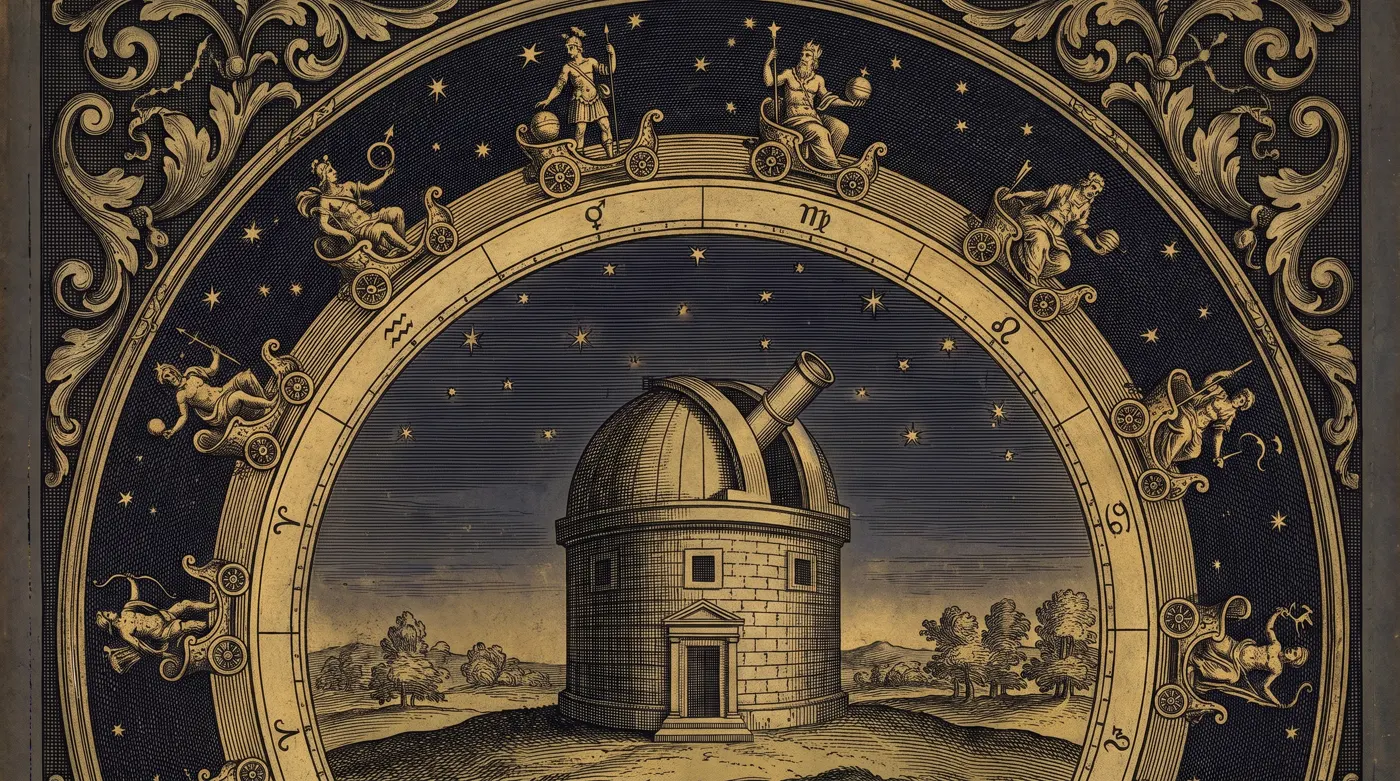

What does your own chart say about you?
Choose love, work or purpose. Your reading is written from your chart. Your reading uses your own birth details.
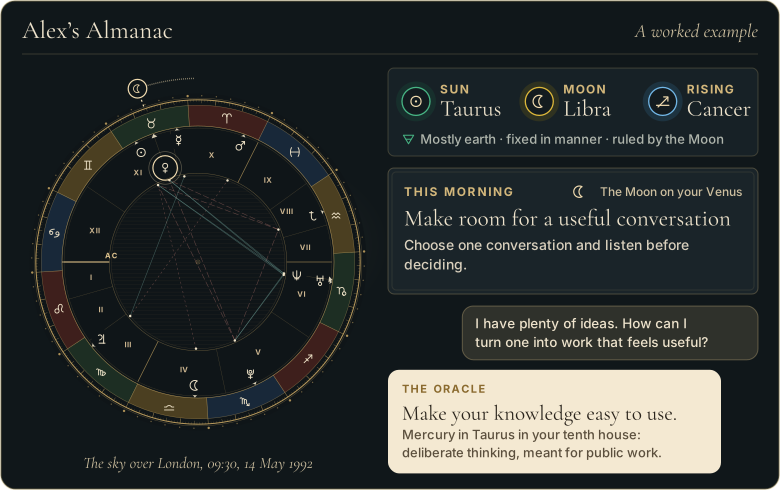
Walk through Alex’s whole example first
 The Road of AgesSee the turning points of your whole life, from your birth date
See your road's shape
The Road of AgesSee the turning points of your whole life, from your birth date
See your road's shape
Prefer to explore first?
 The Road of AgesThe turning points of your whole life, from your own chart
Walk my road
The Road of AgesThe turning points of your whole life, from your own chart
Walk my road
Free, by email
Your daily Almanac letter
One short letter at 7 each morning: the day’s theme read for your own chart, and one thing to do with it.
Explore the fifteen guides
Observed sky · hourlyLive Sky TodaySee the exact Active Transits sky map from the webapp, using hourly geocentric longitudes for the Sun, Moon, planets, nodes, Chiron, and Lilith.
Lunar almanac · observed nowMoon TodayRead the Moon’s current geocentric longitude, zodiac degree, approximate phase family, and the limits of non-location-aware lunar data.
Lunar cycle · geometry firstMoon PhasesExact UTC dates and times of the upcoming new Moons, quarters, and full Moons, with a clear explanation of why the Moon changes shape through its 29.5-day cycle.
Observing calendar · verify locallyCelestial EventsLearn the major kinds of celestial events, how to verify an observing opportunity, and what a current longitude feed can and cannot establish.
Sun, Earth, Moon · alignmentEclipsesA grounded guide to solar and lunar eclipse geometry, paths of visibility, local circumstances, Saros cycles, and safe observation.
Debris, atmosphere, dark skyMeteor ShowersUnderstand meteor-shower radiants, parent bodies, peak rates, Moon interference, and the local conditions that determine what you can see.
Seasonal astronomy · one instantEquinoxes and SolsticesLearn what equinoxes and solstices measure, why their calendar dates shift, and why daylight and season do not behave identically everywhere.
NOAA observations · physical Sun-Earth systemSpace WeatherRead the current planetary Kp index and GOES X-ray class, then understand what NOAA space-weather scales do and do not say.
Geomagnetic index · 0 to 9Kp IndexSee the current planetary Kp reading and understand its 0-9 scale, three-hour cadence, NOAA storm threshold, and limits for local aurora viewing.
Northern and southern lightsAuroraUse current Kp as context, then learn why aurora visibility requires an oval forecast, darkness, weather, geomagnetic latitude, and a clear horizon.
GOES soft X-rays · A through XSolar FlaresSee the latest GOES soft X-ray class and learn how A, B, C, M, and X flare classes differ from CMEs, geomagnetic storms, and radio-blackout scales.
Magnetosphere · NOAA G scaleGeomagnetic StormsUnderstand NOAA’s G1-G5 geomagnetic storm scale, its Kp relationship, possible technology effects, and why current Kp is not a future local forecast.
Sky regions, patterns, and cultureConstellationsLearn the difference between official constellation boundaries and familiar star patterns, plus safe, location-aware ways to begin sky navigation.
Celestial coordinates · time seriesEphemerisUnderstand ephemerides, ecliptic longitude, coordinate frames, time standards, retrograde notation, interpolation, and the limits of a current snapshot.
Astrolabe, quadrant, armillary sphereHistorical Astronomical InstrumentsExplore how astrolabes, quadrants, armillary spheres, planispheres, sundials, and orreries turned sky geometry into usable instruments.
Three clocks, three kinds of truth
The celestial clock tracks calculated position: where a body lies in a coordinate system at a timestamp. The observing clock adds Earth rotation, location, darkness, and weather: what may be above a real horizon and visible. The symbolic clock is a human interpretive practice: what a cycle might invite someone to consider. Confusing these clocks creates false precision; naming them creates a usable almanac.
Source and forecast policy
The current sky uses the same validated first-party gateway as the Almanac’s live orrery. Space weather uses an endpoint derived from NOAA SWPC products. Moon, eclipse, seasonal, and observing explanations point to NASA and the U.S. Naval Observatory; constellation boundaries point to the IAU; instrument history points to Smithsonian collections. This first cluster does not manufacture future event dates from a current snapshot and does not publish local rise or set without a location-aware query.
Continue through the Sky & Time Almanac
Cluster hubSky & Time AlmanacAll observation guides, live instruments, and source boundaries.
Lunar almanac · observed nowMoon TodayRead the Moon’s current geocentric longitude, zodiac degree, approximate phase family, and the limits of non-location-aware lunar data.
Observing calendar · verify locallyCelestial EventsLearn the major kinds of celestial events, how to verify an observing opportunity, and what a current longitude feed can and cannot establish.
NOAA observations · physical Sun-Earth systemSpace WeatherRead the current planetary Kp index and GOES X-ray class, then understand what NOAA space-weather scales do and do not say.
Astrolabe, quadrant, armillary sphereHistorical Astronomical InstrumentsExplore how astrolabes, quadrants, armillary spheres, planispheres, sundials, and orreries turned sky geometry into usable instruments.
From the reference page to your own chart
Every word here
is in your own chart.
- A personal reading about love, work or purpose, written from your chart
- A practical next step to consider
- It opens with 7 days free, with the AI Oracle and daily guidance
$0 today, then $12/month after 7 days. Cancel anytime.
Common questions
Is the live sky a local visibility forecast?
No. It shows geocentric ecliptic longitudes. Local altitude, direction, rise/set, darkness, weather, and horizon require location-aware calculations.
Where do the live facts come from?
Planetary positions come through The Great Almanac validated current-positions gateway. Kp and GOES X-ray class come through its NOAA-derived space-weather gateway. Every live panel shows an observation time.
Does the almanac mix astronomy and astrology?
It places them next to a visible boundary: astronomy and space weather are observation layers, while symbolic interpretation is optional reflection and never presented as physical proof.
Free, by email
The Almanac, in your inbox at 7
One short letter at 7 each morning: the day’s theme read for your own chart, and one thing to do with it.