Fallen Angels in the Bible and Book of Enoch
Fallen angel teaching must be handled soberly: Scripture warns against rebellion, deception, and fascination with spiritual powers.
Biblical anchor points
Jude 6 and 2 Peter 2:4 speak of angels who sinned and did not keep their proper domain. Genesis 6 is often discussed in relation to the sons of God. The Watchers tradition expands these themes with a narrative of heavenly beings crossing forbidden boundaries.
The Instruments
Ten readings, worked out from your own birth chart
An instrument is a reading this house works out for you. Give your birth date, time and place once, and each one reads today’s real sky against the chart you were born under. Eight are personal; two are calendars anyone can open. A free account opens one instrument a day. The plans open every instrument, every day.
- Natal Chart Every planet, house and aspect in your chart
- Active Transits Where the planets are now, read against your chart
- Daily Counsel What to pursue today, and what to leave alone
- Personal Timing Your best days to decide, weeks ahead
- Fellowship Your chart and another, read side by side
- Theme of the Day The one thing today is asking of you
- Sacred Numbers Your life path, your cycles, your name in numbers
- Aeolian Harmonics Classical music chosen to match your chart
- Mercury Retrograde Every Mercury retrograde this year, with its dates Open to all
- Void-of-Course Moon When the Moon is between signs, hour by hour Open to all



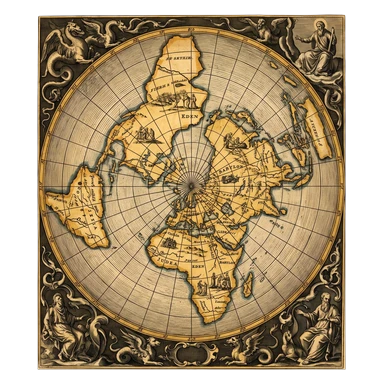

Fallen angels and demons
Christian traditions differ on some details, but Scripture consistently presents evil spiritual powers as deceptive, destructive, and subordinate to God. The central Christian confession is not fear of them, but Christ as Lord over visible and invisible creation.
The danger of obsession
Healthy discernment does not deny the unseen world, but it also refuses fixation. Obsession can become its own bondage. The fruit test matters: fear or peace, pride or humility, secrecy or confession, compulsion or freedom.
A sober response
Pray, confess, stay accountable, reject occult control, and refuse any system that trains domination or fear. The goal is faithful obedience, not mastery over spiritual mysteries.
What this topic is protecting
Fallen Angels in the Bible and Book of Enoch is not only an information page. It protects the central order of discernment: God first, created signs second, human responsibility always present. The practical question is not whether a symbol feels powerful, but whether it trains worship, humility, truth, repentance, love, and freedom.
When Christians approach astrology, numbers, angels, dreams, Enochic material, or the unseen world, the danger is often not curiosity itself. The danger is misplaced trust: using a created thing for control, identity, secrecy, superiority, or fear. A healthier practice keeps every interpretation limited and accountable.
What to reject immediately
- Reject any practice that promises control over God, people, timing, or outcomes.
- Reject any interpretation that creates panic, spiritual superiority, obsession, secrecy, or dependence.
- Reject any reading that weakens conscience, prayer, Scripture, wise counsel, or ordinary responsibility.
- Reject any fascination with hidden power that makes love of neighbor feel secondary.
How to use this guide
Read this page as a discernment framework, not as an invitation to fear or speculation. The goal is to test spiritual interest by its fruit: humility, prayer, repentance, sober responsibility, love of neighbor, and freedom from compulsion. If a topic produces obsession, secrecy, pride, or panic, slow down and return to God first.
The Almanac keeps this boundary because symbolic tools can become unhealthy when they are used for control. A responsible reading should clarify a season, reveal a practical next step, and preserve moral agency. It should never make the reader dependent on signs, terrified of hidden powers, or less accountable for ordinary obedience.
Put this insight to work
Open faith-aware daily counsel and decide whether the frame feels useful, careful, and grounded.
Open Daily CounselPractical boundaries
Authority
God, Scripture, conscience, wise counsel, and love of neighbor stand above every reading.
Fruit
A practice should be judged by what it forms: humility or pride, peace or fear, responsibility or avoidance.
Limits
The hidden world is not a playground for control. Curiosity must remain sober, accountable, and prayerful.
Discernment checklist
- Does this interpretation increase humility instead of pride or fear?
- Does it preserve responsibility instead of blaming the sky?
- Does it lead toward prayer, repair, patience, courage, and love of neighbor?
- Would wise counsel recognize the fruit as sober and grounded?
The Great Almanac approach
We aim for careful language, clear limits, and practical fruit. A reading should lead toward prayerful attention, honest self-knowledge, wiser timing, and responsible action.
Make it personal
Open a faith-aware personal reflection: reflective guidance drawn from your own chart, with no claim to predict what only God knows.
Open a faith-aware personal reflectionAnd for the year entire: the Cosmic Codex offers a reflective map of a year from your chart, never a prediction, one edition bought once. Open the Cosmic Codex
Common questions
Does The Great Almanac worship the stars?
No. The platform treats the heavens as created signs and seasonal markers, not divine rulers.
Can Christians use this carefully?
That requires discernment. The intended use is reflection, timing, and stewardship, never fatalism, fear, or control.
What should I reject?
Reject any reading that weakens conscience, prayer, responsibility, Scripture, or love of God and neighbor.
Continue in Watchers, Enoch & Forbidden Knowledge
Stay within this topic cluster for the closest related guides, or move through one of the neighboring faith and discernment hubs.