
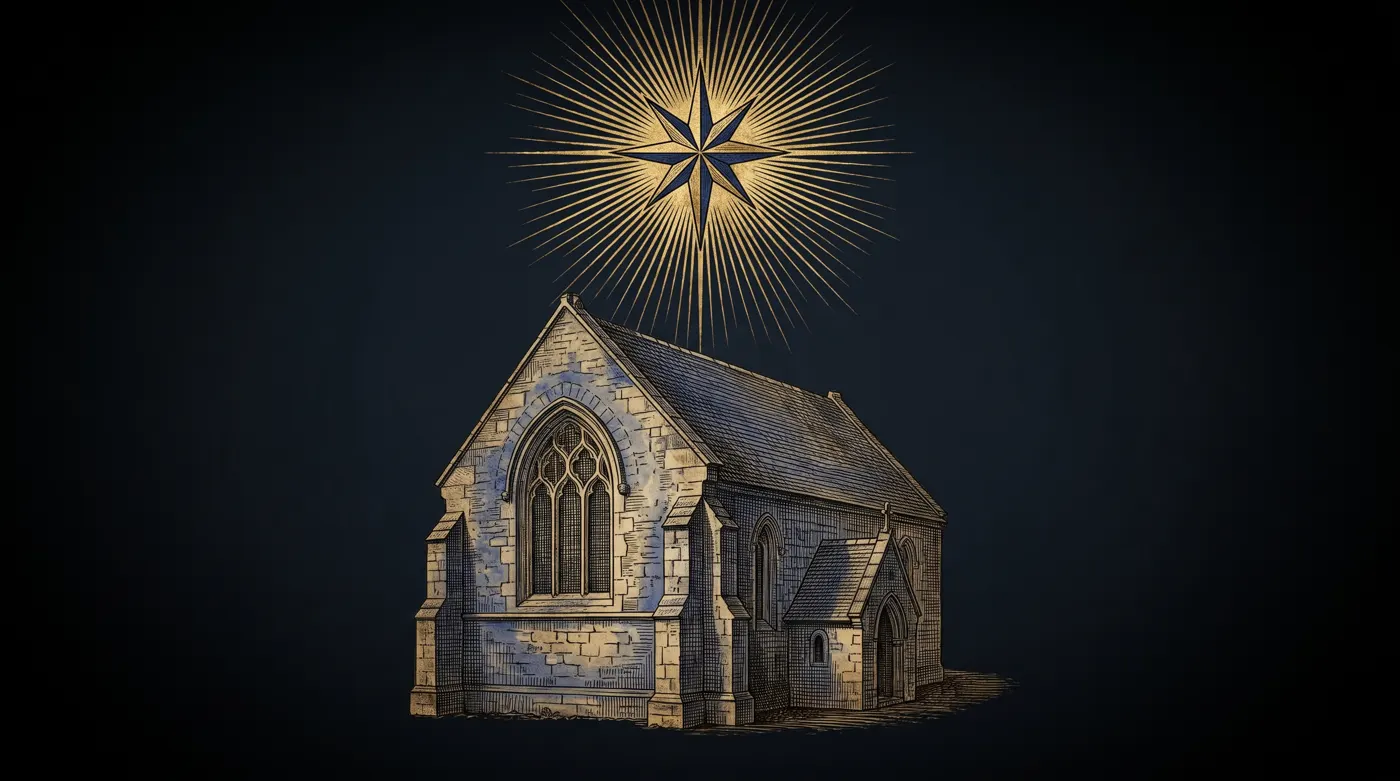
Christian Symbolism of the Sun
Christian Scripture treats the Sun as a created light that marks days and seasons, displays divine glory, and supplies metaphors of justice, healing, witness, and Christ’s light. The physical Sun is not God, and solar symbolism is not the same as solar worship.
$0 today, then $12/month after 7 days. Cancel anytime.
Direct answer
Short version
Interpret a Christian solar image by locating its biblical or historical context. Ask whether it represents creation, time, divine glory, resurrection, righteousness, judgment, Christ, or simple daylight. Visual resemblance to pagan solar art does not by itself prove identical worship or direct borrowing.

What does your own chart say about you?
Choose love, work or purpose. Your reading is written from your chart. Your reading uses your own birth details.
Walk through Alex’s whole example first


 The Road of AgesSee the turning points of your whole life, from your birth date
See your road's shape
The Road of AgesSee the turning points of your whole life, from your birth date
See your road's shape
Prefer to explore first?
 The Road of AgesThe turning points of your whole life, from your own chart
Walk my road
The Road of AgesThe turning points of your whole life, from your own chart
Walk my road
Free, by email
Your daily Almanac letter
One short letter at 7 each morning: the day’s theme read for your own chart, and one thing to do with it.
Quick facts
| Context | Solar meaning |
|---|---|
| Genesis 1 | A created greater light governing the day and marking time |
| Psalm 19 | Part of the heavens that declare divine glory; also an image within creation |
| Malachi 4:2 | The “sun of righteousness” as an image of healing and vindication |
| New Testament light language | Christ, revelation, holiness, witness, and life are described through light imagery |
| Christian art and worship | Halos, rays, eastward orientation, dawn, and gold can carry solar associations |
| Doctrinal boundary | Creator and creation remain distinct; the Sun is not an independent divine authority |
The Sun as created light and keeper of time
Genesis 1 presents the greater light as part of creation, appointed to govern the day and participate in marking signs, seasons, days, and years. The text’s refusal to name it with the ordinary Hebrew word for Sun has often been read as emphasizing function rather than divine identity. Whatever the literary explanation, the theological hierarchy is clear: the light is made; it is not the Creator.
This boundary allowed Christians to value astronomy, calendars, sunrise, agriculture, and the beauty of daylight without treating the Sun as a god. Physical dependence on sunlight is real. Plants use solar energy, weather and climate depend upon it, and Earth’s orbit structures the year. Gratitude for those gifts is directed through creation rather than to creation as ultimate authority.
Major biblical solar images
Psalm 19 joins cosmic witness and moral instruction. The heavens declare glory, the Sun crosses the sky with vigor, and the psalm then turns toward divine teaching. The Sun is both observed creature and poetic image. It is not asked to determine personal destiny.
Malachi’s “sun of righteousness” rising with healing in its wings evokes vindication after judgment. Christian readers have often applied the image christologically, though interpretation should preserve the prophetic setting before moving to later reception. The phrase is metaphor, not an astronomical prediction or a claim that Jesus is the physical star.
The New Testament frequently uses light for revelation, holiness, witness, and Christ. John calls Christ the light of the world; the Transfiguration uses radiant imagery; Revelation imagines the holy city needing neither Sun nor Moon because divine glory is its light. These texts use familiar sensory experience to speak about God while maintaining that created lights are surpassed by divine presence.
“Sun” and “Son” are an English wordplay, not biblical etymology

English sermons and art sometimes play on the similar sound of sun and Son. The pun can be memorable, but it does not exist in biblical Hebrew or Greek in the same way and should not be offered as proof of doctrine. Christological solar interpretation rests on themes of light, glory, dawn, righteousness, and resurrection, not on English spelling.
The distinction matters when evaluating claims that Christianity simply renamed a solar deity. Christian art can adapt visual language from its environment, and early Christians lived among Roman solar cults. Shared rays, disks, dates, or eastward imagery deserve historical study, but similarity alone cannot establish that worship, theology, and community meaning were identical.
Dawn, eastward prayer, halos, and sacred art
Dawn naturally symbolizes awakening, deliverance from darkness, and resurrection. Eastward orientation became significant in several Christian architectural and liturgical traditions, though buildings and rites vary widely. Light entering a church can organize space and time without turning the Sun into the object of worship.
Halos and radiant gold identify holiness or glory in many works of Christian art. Their visual ancestry is complex and includes imperial, Jewish, Christian, and wider Mediterranean conventions. A circular halo is not a miniature theological statement that the saint is a solar god. Iconography must be read with inscriptions, subject, date, region, patronage, and liturgical setting.
The Sun, Sol Invictus, and Christmas claims
The relationship between late Roman solar festivals and the date of Christmas is debated. December 25 sits near the winter solstice in the Roman calendar, and later Christian preaching could interpret increasing light through Christ. Scholars also point to internal Christian chronological calculations connecting Jesus’s conception and death, which can lead to a December birth date.
Statements that Christmas was simply copied from Sol Invictus are too confident, as are claims that surrounding solar culture had no influence on Christian expression. Evidence must distinguish the origin of a feast date, later preaching about it, local customs, and modern popular explanations. Historical complexity is not a threat to theology.
How to interpret a solar symbol
| Question | Example of what it clarifies |
|---|---|
| Where does it appear? | A Bible passage, mosaic, hymn, church orientation, gravestone, or modern design carries different conventions. |
| What accompanies it? | A cross, Christogram, inscription, saint, zodiac, ruler, or plant may identify the intended theme. |
| When and where was it made? | Roman, Byzantine, Ethiopian, medieval European, and contemporary works do not share one code. |
| Is the language literal or metaphorical? | Physical sunrise, poetic justice, and Christological light should not be collapsed. |
| Who is worshiped? | Radiance around a figure does not alone identify the object of devotion. |
| What claim is supportable? | Documented use is stronger than a visual resemblance found without a transmission history. |
A grounded Christian use of sunlight
Sunrise can support prayer, gratitude, seasonal awareness, and attention to created order. The practice need not decode solar events as private messages. Eclipses, sunspots, and storms have physical causes and should be understood through astronomy before symbolic reflection is added.
Solar imagery becomes harmful when used to predict doom, claim divine rank, deny eye-safety guidance during an eclipse, or replace medical care with sunlight. The theological distinction remains practical: creation can reveal beauty and inspire metaphor without becoming an oracle or master.
Sources and editorial method
Research and editorial references used for this page include:
- Bible Gateway: Genesis 1, Psalm 19, Malachi 4, and Revelation 21 - Canonical contexts for the Sun as creation, cosmic witness, healing metaphor, and a light surpassed by divine glory.
- NASA Science: Sun Facts - Authoritative description of the physical Sun, its energy, structure, and importance to Earth.
- Encyclopaedia Britannica: Sun Worship - Comparative historical context for actual solar worship and the need to distinguish it from symbolic use.
- Bible Gateway: John 8:12 - Canonical example of Christological light language.
These references support the factual, historical, textual, or interpretive claims on this page. Interpretive traditions are identified as such, and factual claims are kept separate from symbolic claims.
Related reading
From the reference page to your own chart
Every word here
is in your own chart.
- A personal reading about love, work or purpose, written from your chart
- A practical next step to consider
- It opens with 7 days free, with the AI Oracle and daily guidance
$0 today, then $12/month after 7 days. Cancel anytime.
Common questions
Do Christians worship the Sun?
Historic Christian doctrine distinguishes the Creator from the created Sun. Christian texts and art use solar imagery, but symbolism does not by itself make the Sun an object of worship.
Does “sun of righteousness” mean Jesus?
Malachi 4:2 first belongs to its prophetic context. Christian tradition has often read it christologically, but the phrase remains metaphorical rather than identifying Jesus with the physical Sun.
Was Christmas copied from a Sun festival?
The history is debated and involves Roman solar culture, the solstice, Christian chronological calculations, and later interpretation. A one-cause claim overstates the evidence.
Are eclipses spiritual signs?
Eclipses are predictable alignments of the Sun, Moon, and Earth. People may reflect symbolically, but an eclipse does not supply a verified private prophecy, and safe viewing instructions remain essential.
Free, by email
The Almanac, in your inbox at 7
One short letter at 7 each morning: the day’s theme read for your own chart, and one thing to do with it.
