Timing and cycles
Solar Eclipse
Direct answer
Solar Eclipse occurs at New Moon when the Moon passes between Earth and the Sun near a lunar node, blocking some or all of the Sun from view.
Solar Eclipse is a New Moon near the nodes that interrupts solar light.
$0 today, then $12/month after 7 days. Cancel anytime.
At a glance
- In astrology
- A solar eclipse only happens when New Moon occurs close enough to the lunar nodes for alignment with the Sun and Earth.
- Found in
- Transits & Cycles
- Related
- Birth Chart, Zodiac, Transit
Solar Eclipse is a New Moon near the nodes that interrupts solar light.
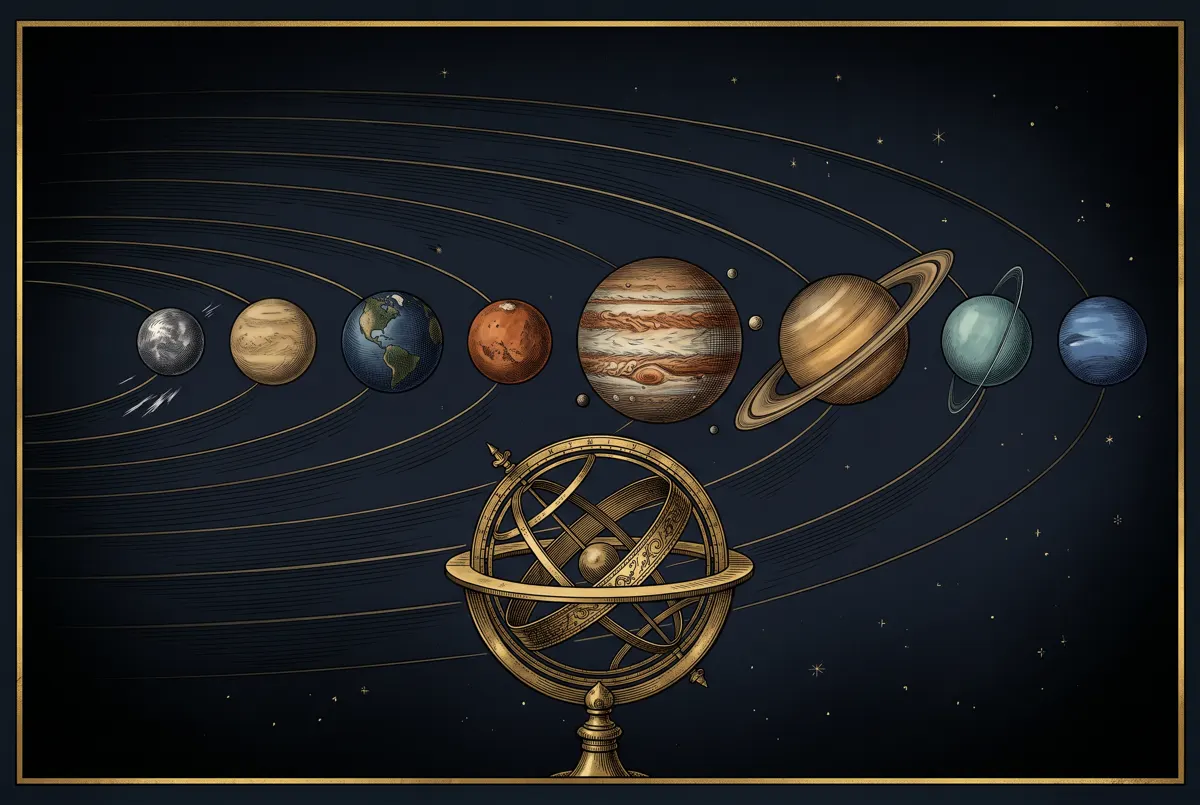
The orbit map distinguishes physical bodies, calculated points, and symbolic cycles where possible.
What does your own chart say about you?
Choose love, work or purpose. Your reading is written from your chart. Your reading uses your own birth details.
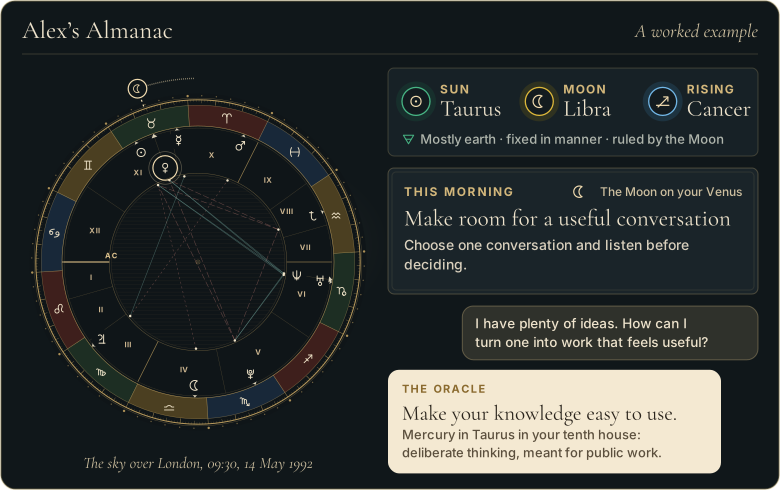
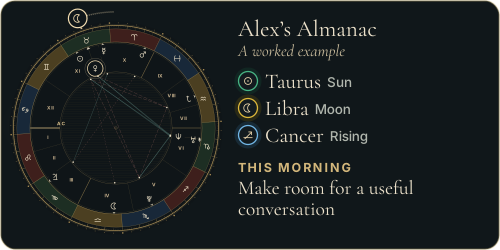
Walk through Alex’s whole example first
 The Road of AgesSee the turning points of your whole life, from your birth date
See your road's shape
The Road of AgesSee the turning points of your whole life, from your birth date
See your road's shape
Prefer to explore first?
 The Road of AgesThe turning points of your whole life, from your own chart
Walk my road
The Road of AgesThe turning points of your whole life, from your own chart
Walk my road
Free, by email
Your daily Almanac letter
One short letter at 7 each morning: the day’s theme read for your own chart, and one thing to do with it.
The story behind Solar Eclipse
Solar eclipses have been observed, feared, predicted, and mythologized across civilizations because they visibly interrupt daylight.
A one-minute story
The Wandering Stars
How the moving planets were watched, named and found, and what a transit is.

The spiritual meaning of Solar Eclipse
Spiritually, Solar Eclipse asks what new beginning requires humility before the larger order of time.
Why Solar Eclipse matters
Solar Eclipse matters because it intensifies New Moon symbolism and can mark powerful beginnings, endings, visibility shifts, and changes of direction.
How to read Solar Eclipse
Read Solar Eclipse timing by checking the eclipse sign, degree, house, nodal axis, and contacts to natal planets or angles.
Solar Eclipse in practice: an example
A Solar Eclipse in the Tenth House may open or disrupt public life, vocation, leadership, or reputation themes.
Where readings of Solar Eclipse go wrong
A common error is to stare at a solar eclipse without proper certified eye protection, and do not interpret eclipses through panic.
Sources and editorial method
This entry summarizes the tradition in the Almanac's own words; where no source is listed, it is an editorial summary rather than a primary text, and symbolic readings are named as the tradition's, not as fact.
- Source
- The Great Almanac Dictionary
- Category
- Transits & Cycles
- Last updated
- 2026-09-26
Track your eclipse house
Solar Eclipse in a book is one thing; Solar Eclipse in your own birth chart is your life. The Oracle casts your real chart and tells you what it means for your love, your work, and your year ahead, in conversation. It opens with the 7-day Seeker trial.
Speak with the OracleThe Cosmic Codex reads a whole year of transits against your own chart, Solar Eclipse included where it touches your love, your work, your timing. Open the Cosmic Codex
Related terms
More in Transits & Cycles
- Transit Cluster
- Venus Retrograde
- Cazimi
- First Quarter Moon
- Lunar Mansion
- Moon Phase
- Planetary Hour
- Retrograde Motion
From the reference page to your own chart
Every word here
is in your own chart.
- A personal reading about love, work or purpose, written from your chart
- A practical next step to consider
- It opens with 7 days free, with the AI Oracle and daily guidance
$0 today, then $12/month after 7 days. Cancel anytime.
Common questions
What is a solar eclipse?
Solar Eclipse occurs at New Moon when the Moon passes between Earth and the Sun near a lunar node, blocking some or all of the Sun from view.
Where does a solar eclipse come from?
Solar eclipses have been observed, feared, predicted, and mythologized across civilizations because they visibly interrupt daylight.
What does a solar eclipse mean in astrology?
Read Solar Eclipse timing by checking the eclipse sign, degree, house, nodal axis, and contacts to natal planets or angles.
What does a solar eclipse look like in a birth chart?
A Solar Eclipse in the Tenth House may open or disrupt public life, vocation, leadership, or reputation themes.
What does a solar eclipse mean spiritually?
Spiritually, Solar Eclipse asks what new beginning requires humility before the larger order of time.
Free, by email
The Almanac, in your inbox at 7
One short letter at 7 each morning: the day’s theme read for your own chart, and one thing to do with it.