Astrology
Zodiac Wheel
Direct answer
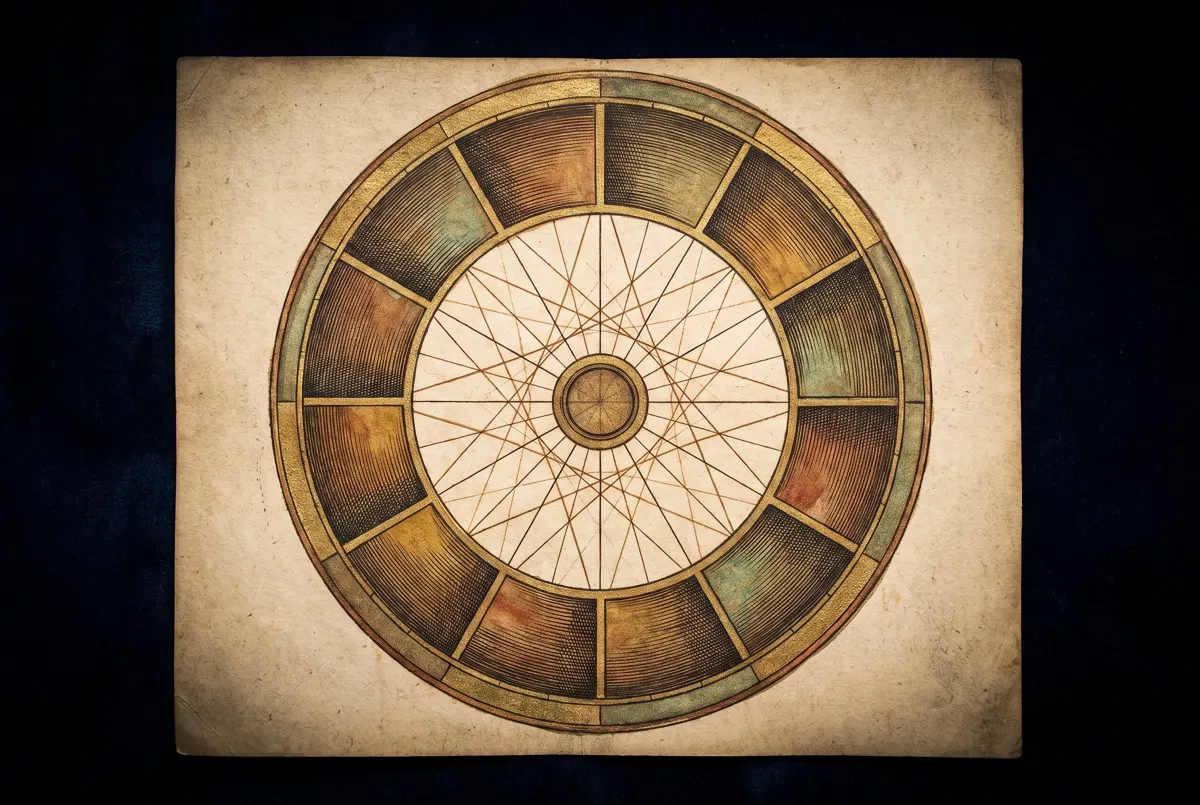
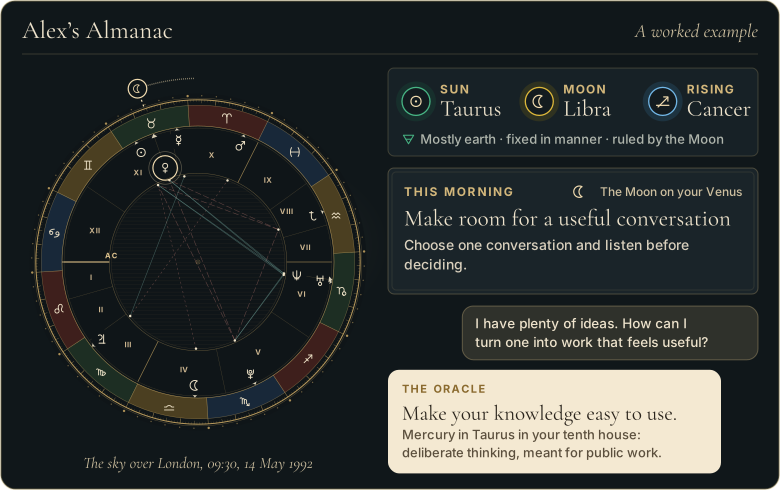
Zodiac Wheel: The Zodiac Wheel is the circular chart framework that places the twelve signs around the horoscope. It lets astrologers see sign order, house placement, angles, and aspect geometry in one field.
The Zodiac Wheel is the circular layout of the twelve signs around an astrology chart.
$0 today, then $12/month after 7 days. Cancel anytime.
At a glance
- Also called
- zodiac circle, twelve-sign wheel
- In astrology
- The wheel is usually read counterclockwise through signs and houses.
- Found in
- Astrology
- Related
- Birth Chart, Zodiac, Transit
Deeper Almanac guide: Zodiac guide. This dictionary entry is a concise definition page; the linked guide remains the long-form topic page.
The Zodiac Wheel is the circular layout of the twelve signs around an astrology chart.
A structural orientation; exact placements depend on the chart or technique being discussed.
What does your own chart say about you?
Choose love, work or purpose. Your reading is written from your chart. Your reading uses your own birth details.
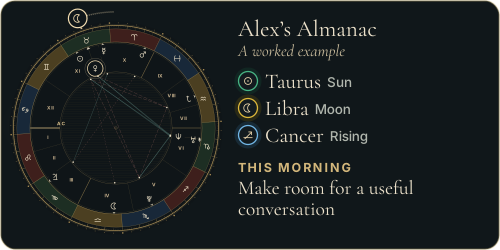
Walk through Alex’s whole example first
 The Road of AgesSee the turning points of your whole life, from your birth date
See your road's shape
The Road of AgesSee the turning points of your whole life, from your birth date
See your road's shape
Prefer to explore first?
 The Road of AgesThe turning points of your whole life, from your own chart
Walk my road
The Road of AgesThe turning points of your whole life, from your own chart
Walk my road
Free, by email
Your daily Almanac letter
One short letter at 7 each morning: the day’s theme read for your own chart, and one thing to do with it.
The story behind Zodiac Wheel
Circular horoscope diagrams became standard because they can display sign order, planetary positions, houses, and aspects together.
A one-minute story
The Book of the Sky
How people learned to read the sky, from Babylon to the day you were born.

The spiritual meaning of Zodiac Wheel
Spiritually, the Zodiac Wheel can symbolize seasons of attention, not a closed loop of fate.
Zodiac Wheel in astrology
The Ascendant sets the first-house doorway, while planets are placed by zodiac degree and connected by aspects.
Why Zodiac Wheel matters
Zodiac Wheel matters because astrology is relational and geometric. The wheel shows oppositions, squares, trines, houses, sign order, and angular emphasis more clearly than a list of placements can.
Zodiac Wheel in practice: an example
Aries rising puts Aries on the first-house doorway, but the full wheel shows where Taurus, Gemini, Cancer, and every other sign fall by house.
Where readings of Zodiac Wheel go wrong
It is a mistake to treat the wheel as decorative only. Its geometry is part of the interpretation.
Sources and editorial method
This entry summarizes the tradition in the Almanac's own words; where no source is listed, it is an editorial summary rather than a primary text, and symbolic readings are named as the tradition's, not as fact.
- Source
- The Great Almanac Dictionary
- Category
- Astrology
- Aliases
- zodiac circle, twelve-sign wheel
- Last updated
- 2026-09-26
See your Zodiac Wheel
Zodiac Wheel in a book is one thing; Zodiac Wheel in your own birth chart is your life. The Oracle casts your real chart and tells you what it means for your love, your work, and your year ahead, in conversation. It opens with the 7-day Seeker trial.
Speak with the OracleHow Zodiac Wheel lives in your own chart across your year, in love, in work, in timing, is written in the Cosmic Codex: the whole year, once. Open the Cosmic Codex
Related terms
More in Astrology
- Besiegement
- Cradle Aspect
- Enclosure
- Hayz
- Lot of Courage
- Mutual Reception
- Quadrant Emphasis
- Splash Chart Shape
From the reference page to your own chart
Every word here
is in your own chart.
- A personal reading about love, work or purpose, written from your chart
- A practical next step to consider
- It opens with 7 days free, with the AI Oracle and daily guidance
$0 today, then $12/month after 7 days. Cancel anytime.
Common questions
What is the Zodiac Wheel?
The Zodiac Wheel is the circular chart framework that places the twelve signs around the horoscope. It lets astrologers see sign order, house placement, angles, and aspect geometry in one field.
Where does the Zodiac Wheel come from?
Circular horoscope diagrams became standard because they can display sign order, planetary positions, houses, and aspects together.
What does the Zodiac Wheel mean in astrology?
The wheel is usually read counterclockwise through signs and houses. The Ascendant sets the first-house doorway, while planets are placed by zodiac degree and connected by aspects.
What does the Zodiac Wheel look like in a birth chart?
Aries rising puts Aries on the first-house doorway, but the full wheel shows where Taurus, Gemini, Cancer, and every other sign fall by house.
What does the Zodiac Wheel mean spiritually?
Spiritually, the Zodiac Wheel can symbolize seasons of attention, not a closed loop of fate.
Free, by email
The Almanac, in your inbox at 7
One short letter at 7 each morning: the day’s theme read for your own chart, and one thing to do with it.