Astrology
Mundane Astrology
Direct answer
Mundane Astrology studies charts and cycles related to nations, governments, world events, weather, economies, rulers, and collective history.
Mundane Astrology interprets collective and world-level astrology rather than personal charts.
$0 today, then $12/month after 7 days. Cancel anytime.
At a glance
- In astrology
- Mundane work may examine Aries ingress charts, eclipses, great conjunctions, national charts, lunations, outer-planet cycles, and planetary stations.
- Found in
- Astrology
- Related
- Astrology, Birth Chart, Zodiac, Biblical Astrology
Mundane Astrology interprets collective and world-level astrology rather than personal charts.
A structural orientation; exact placements depend on the chart or technique being discussed.
What does your own chart say about you?
Choose love, work or purpose. Your reading is written from your chart. Your reading uses your own birth details.
Walk through Alex’s whole example first
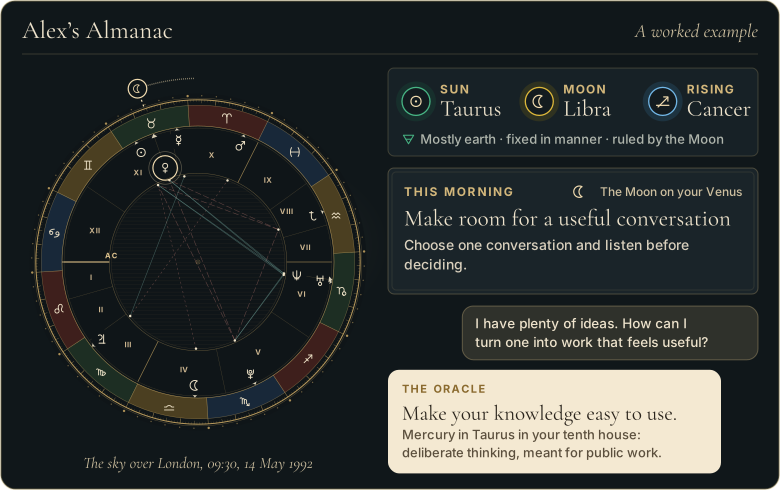
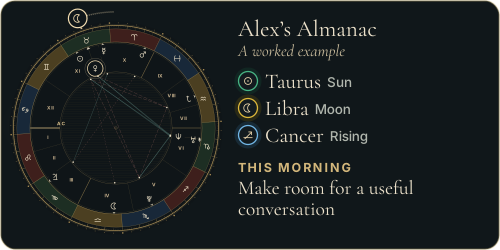
 The Road of AgesSee the turning points of your whole life, from your birth date
See your road's shape
The Road of AgesSee the turning points of your whole life, from your birth date
See your road's shape
Prefer to explore first?
 The Road of AgesThe turning points of your whole life, from your own chart
Walk my road
The Road of AgesThe turning points of your whole life, from your own chart
Walk my road
Free, by email
Your daily Almanac letter
One short letter at 7 each morning: the day’s theme read for your own chart, and one thing to do with it.
What sets Mundane Astrology apart
Mundane astrology is the oldest scale of the art: charts cast for places, seasons and ruling bodies, not for a person's birth. Ptolemy gives it Book II of the Tetrabiblos, covering whole countries, eclipses, comets and the weather of the year. Its characteristic chart is the ingress, cast for the moment the Sun enters a cardinal sign, and its slowest clock is the Jupiter and Saturn conjunction, which Abu Ma'shar used to date the rise and fall of dynasties.
- Ptolemy: Tetrabiblos Book II treats general or universal prediction
- Four ingresses: the Sun entering 0 degrees of Aries, Cancer, Libra and Capricorn
- Great conjunction: Jupiter and Saturn meet about every 19.9 years
- Abu Ma'shar: wrote On Great Conjunctions, ninth century, linking them to history and religion
- Chart types: ingress, eclipse, lunation and the founding chart of a city or state
Often mistaken for something else: Natal astrology reads the chart of one person's birth; mundane reads a chart for a land, season or moment shared by many.
A one-minute story
The Book of the Sky
How people learned to read the sky, from Babylon to the day you were born.

The story behind Mundane Astrology
Mundane astrology is one of the oldest branches, tied to rulers, cities, seasons, harvests, and public events.
The spiritual meaning of Mundane Astrology
Spiritually, Mundane Astrology asks for sober discernment about the times without panic.
Why Mundane Astrology matters
Mundane Astrology matters because collective events require different methods and ethics than personal guidance. The scale is larger and the claims must be more cautious.
How to read Mundane Astrology
Mundane Astrology speaks to historical cycles, ingress charts, eclipses, national charts, collective timing, and public-event symbolism.
Mundane Astrology in practice: an example
An Aries ingress chart may be studied for collective themes in a region, but not as a private prophecy for one person.
Where readings of Mundane Astrology go wrong
A common error is to use mundane astrology for fear-based predictions, date-setting, or political certainty.
Sources and editorial method
This entry summarizes the tradition in the Almanac's own words; where no source is listed, it is an editorial summary rather than a primary text, and symbolic readings are named as the tradition's, not as fact.
- Source
- The Great Almanac Dictionary
- Category
- Astrology
- Last updated
- 2026-09-26
See it in your own chart
Mundane Astrology in a book is one thing; Mundane Astrology in your own birth chart is your life. The Oracle casts your real chart and tells you what it means for your love, your work, and your year ahead, in conversation. It opens with the 7-day Seeker trial.
Speak with the OracleHow Mundane Astrology lives in your own chart across your year, in love, in work, in timing, is written in the Cosmic Codex: the whole year, once. Open the Cosmic Codex
Related terms
More in Astrology
- Progression
- Solar Return Lord
- Yod
- Astrotheology
- Conjunction Pair
- Electional Chart
- Grand Trine
- Lot of Basis
From the reference page to your own chart
Every word here
is in your own chart.
- A personal reading about love, work or purpose, written from your chart
- A practical next step to consider
- It opens with 7 days free, with the AI Oracle and daily guidance
$0 today, then $12/month after 7 days. Cancel anytime.
Common questions
What is mundane astrology?
Mundane Astrology studies charts and cycles related to nations, governments, world events, weather, economies, rulers, and collective history.
Where does mundane astrology come from?
Mundane astrology is one of the oldest branches, tied to rulers, cities, seasons, harvests, and public events.
What does mundane astrology mean in astrology?
Mundane work may examine Aries ingress charts, eclipses, great conjunctions, national charts, lunations, outer-planet cycles, and planetary stations.
What does mundane astrology look like in a birth chart?
An Aries ingress chart may be studied for collective themes in a region, but not as a private prophecy for one person.
What does mundane astrology mean spiritually?
Spiritually, Mundane Astrology asks for sober discernment about the times without panic.
Free, by email
The Almanac, in your inbox at 7
One short letter at 7 each morning: the day’s theme read for your own chart, and one thing to do with it.