Astrology
Moon Sign
Direct answer
Moon Sign is the zodiac sign occupied by the Moon at birth. It describes emotional rhythm, instinct, memory, bodily habit, nurture, and what a person reaches for when they need safety.
Moon Sign is the birth sign of the Moon and a key indicator of emotional patterning.
$0 today, then $12/month after 7 days. Cancel anytime.
At a glance
- In astrology
- The Moon changes sign quickly, so birth time matters more than many beginners expect.
- Found in
- Astrology
- Related
- Birth Chart, Zodiac, Planetary Placement, Birth Time
Deeper Almanac guide: Moon sign placement guides. This dictionary entry is a concise definition page; the linked guide remains the long-form topic page.
Moon Sign is the birth sign of the Moon and a key indicator of emotional patterning.
A structural orientation; exact placements depend on the chart or technique being discussed.
What does your own chart say about you?
Choose love, work or purpose. Your reading is written from your chart. Your reading uses your own birth details.
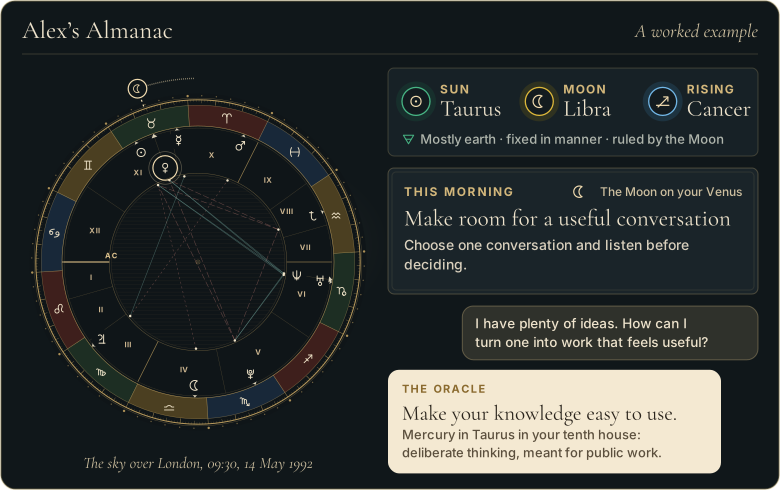
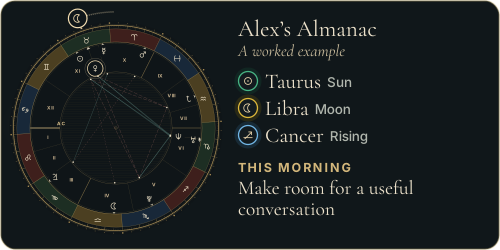
Walk through Alex’s whole example first
 The Road of AgesSee the turning points of your whole life, from your birth date
See your road's shape
The Road of AgesSee the turning points of your whole life, from your birth date
See your road's shape
Prefer to explore first?
 The Road of AgesThe turning points of your whole life, from your own chart
Walk my road
The Road of AgesThe turning points of your whole life, from your own chart
Walk my road
Free, by email
Your daily Almanac letter
One short letter at 7 each morning: the day’s theme read for your own chart, and one thing to do with it.
What sets Moon Sign apart
The Moon crosses a sign in about two and a quarter days, so on roughly four birthdays in ten it changes sign during the day and the birth hour decides which sign is meant. Its degree also fixes the nakshatra, the Vedic lunar mansion: 27 mansions of 13 degrees 20 minutes each, about a day's travel for the Moon. In Vedic astrology the Moon sign, the rashi, is the main sign of the person, where Western practice leads with the Sun sign.
- Time in a sign: about 2.3 days, so the sign changes about every 55 hours
- Nakshatras: 27 lunar mansions of 13 degrees 20 minutes each
- Vedic term: rashi, the sign of the Moon, as the main sign
- Precision: the exact sign needs the birth hour; the day alone is not enough
- Exaltation and fall: Moon exalted in Taurus (3 degrees) and fallen in Scorpio
A one-minute story
The Book of the Sky
How people learned to read the sky, from Babylon to the day you were born.

The story behind Moon Sign
Traditional astrology gives the Moon major importance because it moves quickly, reflects visible change, and governs bodily and daily rhythms.
The spiritual meaning of Moon Sign
Spiritually, Moon Sign invites care for the hidden self without making emotion the final authority.
Moon Sign in astrology
Its house and aspects show where emotional needs express and what supports or pressures them.
Why Moon Sign matters
Moon Sign matters because many people recognize themselves in it privately. It names what soothes, protects, remembers, reacts, and keeps emotional continuity when the public self is not performing.
How to read Moon Sign
Moon Sign applies when the question involves feelings, attachment, family memory, home life, body rhythm, instinctive response, or daily mood.
Moon Sign in practice: an example
A Gemini Moon may process emotion by naming it, asking questions, or talking it through, while a Scorpio Moon may need privacy and depth first.
Read in the journal
Sources and editorial method
This entry summarizes the tradition in the Almanac's own words; where no source is listed, it is an editorial summary rather than a primary text, and symbolic readings are named as the tradition's, not as fact.
- Source
- The Great Almanac Dictionary
- Category
- Astrology
- Aliases
- lunar sign
- Last updated
- 2026-09-26
Reveal your Moon Sign
Moon Sign in a book is one thing; Moon Sign in your own birth chart is your life. The Oracle casts your real chart and tells you what it means for your love, your work, and your year ahead, in conversation. It opens with the 7-day Seeker trial.
Speak with the OracleHow Moon Sign lives in your own chart across your year, in love, in work, in timing, is written in the Cosmic Codex: the whole year, once. Open the Cosmic Codex
Related terms
More in Astrology
- Primary Motion
- Solar Phase
- Vedic Astrology
- Astrological Chart
- Collection of Light
- Why Easter Moves
- Grand Sextile
- Light of the Time
From the reference page to your own chart
Every word here
is in your own chart.
- A personal reading about love, work or purpose, written from your chart
- A practical next step to consider
- It opens with 7 days free, with the AI Oracle and daily guidance
$0 today, then $12/month after 7 days. Cancel anytime.
Common questions
What is Moon Sign?
Moon Sign is the zodiac sign occupied by the Moon at birth. It describes emotional rhythm, instinct, memory, bodily habit, nurture, and what a person reaches for when they need safety.
Where does Moon Sign come from?
Traditional astrology gives the Moon major importance because it moves quickly, reflects visible change, and governs bodily and daily rhythms.
What does Moon Sign mean in astrology?
The Moon changes sign quickly, so birth time matters more than many beginners expect. Its house and aspects show where emotional needs express and what supports or pressures them.
What does Moon Sign look like in a birth chart?
A Gemini Moon may process emotion by naming it, asking questions, or talking it through, while a Scorpio Moon may need privacy and depth first.
What does Moon Sign mean spiritually?
Spiritually, Moon Sign invites care for the hidden self without making emotion the final authority.
Free, by email
The Almanac, in your inbox at 7
One short letter at 7 each morning: the day’s theme read for your own chart, and one thing to do with it.