Dictionary term
Collection of Light
Direct answer
Collection of Light is a horary technique where two significators both apply to a heavier or more authoritative planet that can gather their testimony together.
Collection of Light describes a third planet gathering two significators that do not connect directly.
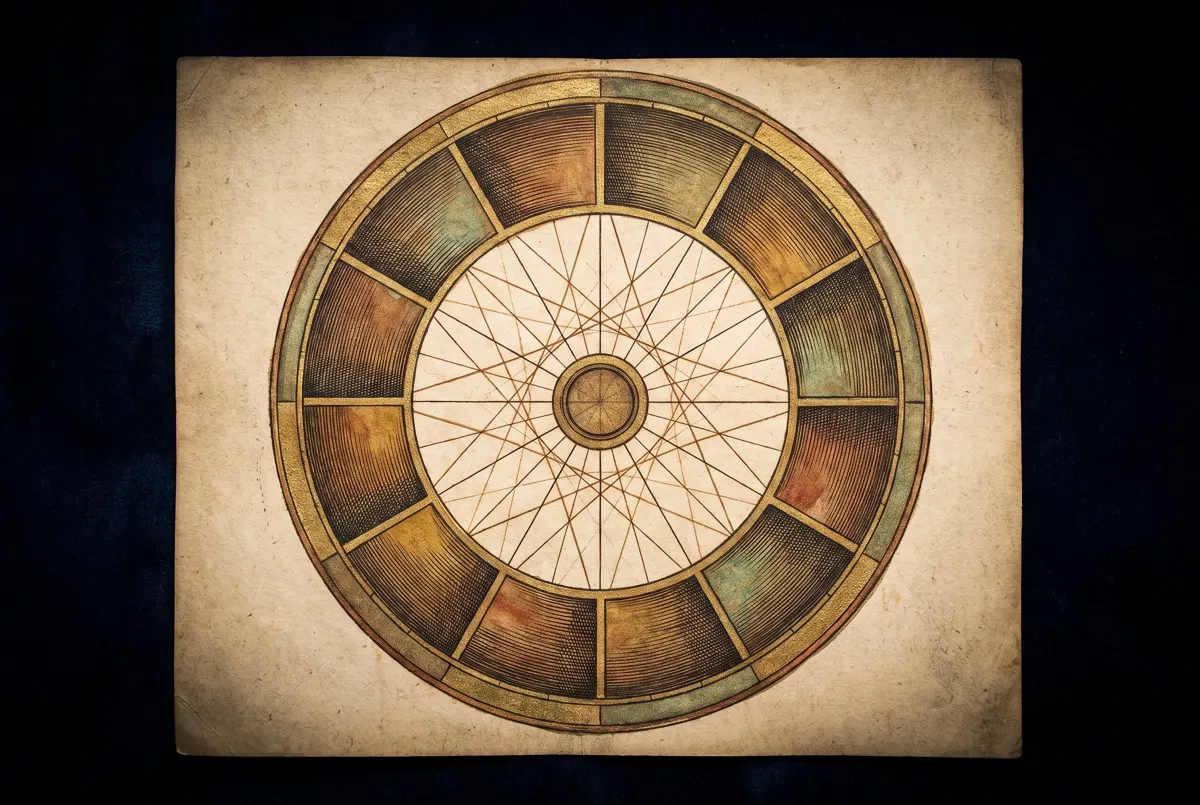
Collection of Light describes a third planet gathering two significators that do not connect directly.
A structural orientation; exact placements depend on the chart or technique being discussed.Quick reference
- Use when
- Use Collection of Light when explaining horary perfection through a third party, especially when both significators apply to the collecting planet.
- Do not use it for
- Do not ignore reception, dignity, and the collecting planet's condition.
- Reference category
- Astrology
- Related terms
- Birth Chart, Zodiac, Transit
The Instruments
Ten readings, worked out from your own birth chart
An instrument is a reading this house works out for you. Give your birth date, time and place once, and each one reads today’s real sky against the chart you were born under. Eight are personal; two are calendars anyone can open. A free account opens one instrument a day. The plans open every instrument, every day.
- Natal Chart Every planet, house and aspect in your chart
- Active Transits Where the planets are now, read against your chart
- Daily Counsel What to pursue today, and what to leave alone
- Personal Timing Your best days to decide, weeks ahead
- Fellowship Your chart and another, read side by side
- Theme of the Day The one thing today is asking of you
- Sacred Numbers Your life path, your cycles, your name in numbers
- Aeolian Harmonics Classical music chosen to match your chart
- Mercury Retrograde Every Mercury retrograde this year, with its dates Open to all
- Void-of-Course Moon When the Moon is between signs, hour by hour Open to all









The story behind Collection of Light
Traditional horary texts distinguish collection from translation: collection gathers two applications into a more weighty planet rather than having a lighter planet carry one contact to another.
Collection of Light in spiritual tradition
Spiritually, Collection of Light asks whether resolution needs a larger container than either side can provide alone.
Collection of Light in the Bible
Collection language should not be used to manipulate third parties or claim spiritual inevitability.
Why Collection of Light matters
Collection of Light matters because a matter may be perfected through a stronger third party, institution, judge, manager, elder, or circumstance when the two main significators cannot complete it themselves.
Collection of Light at work: an example
Two people may not aspect each other, but if both apply to Jupiter, Jupiter may collect the light and describe a mediator or institution.
Sources and editorial method
Research references used for this entry include:
- Source
- The Great Almanac Dictionary
- Category
- Astrology
- Also appears in
- Astrology
- Aliases
- None listed
- Last updated
- 2026-07-15
Find the collecting planet
Collection of Light in a book is one thing; Collection of Light in your own birth chart is your life. The Oracle casts your real chart and tells you what it means for your love, your work, and your year ahead, in conversation, free.
Speak with the OracleHow Collection of Light lives in your own chart across your year, in love, in work, in timing, is written in the Cosmic Codex: the whole year, once. Open the Cosmic Codex
Related terms
More in Astrology
- Draconic Chart
- Fire Signs
- Karmic Astrology
- Nadir
- Quadrant Emphasis
- Solar Return Lord
- Unaspected Planet
- Astrology
Common questions
What is Collection of Light?
Collection of Light is a horary technique where two significators both apply to a heavier or more authoritative planet that can gather their testimony together.
How is Collection of Light used in astrology?
Use Collection of Light when explaining horary perfection through a third party, especially when both significators apply to the collecting planet.
What should I avoid when interpreting Collection of Light?
Do not ignore reception, dignity, and the collecting planet's condition. A weak or hostile collector may not help.