
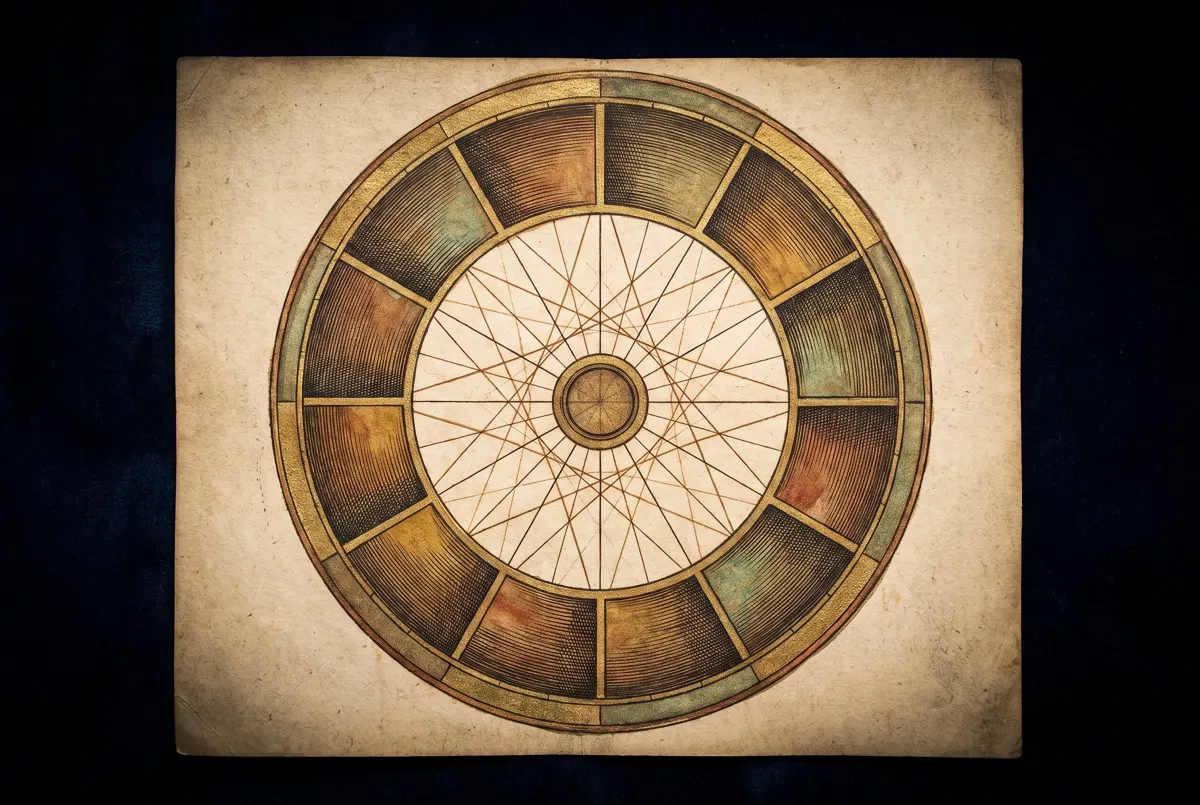
Natal chart patterns
Locomotive Chart Shape
Direct answer
A Locomotive has a large empty arc but no isolated handle. Find the largest empty gap and follow the chart clockwise in the direction of diurnal motion. The first planet encountered as that gap ends is the leading planet in the usual interpretive method.
A Locomotive is a natal-chart distribution in which the planets occupy roughly two thirds of the zodiac, leaving one conspicuous empty sector of about one third. In the usual Jones-pattern method, the planet that rises clockwise immediately after the empty sector is the leading or cutting planet.
$0 today, then $12/month after 7 days. Cancel anytime.
Quick facts
| Feature | Typical form |
|---|---|
| Occupied area | Planets spread across about 210 to 240 degrees in many definitions. |
| Empty area | One continuous gap of roughly 120 degrees, with reasonable variation by method. |
| Leading planet | The first planet after the empty gap in clockwise diurnal motion on a conventional chart wheel. |
| Overall emphasis | Sustained momentum, directed effort, and a recurring way of initiating action in astrological interpretation. |
Locomotive Chart Shape occupies most of the wheel while leaving one large empty gap.
A structural orientation; exact placements depend on the chart or technique being discussed.
What does your own chart say about you?
Choose love, work or purpose. Your reading is written from your chart. Your reading uses your own birth details.
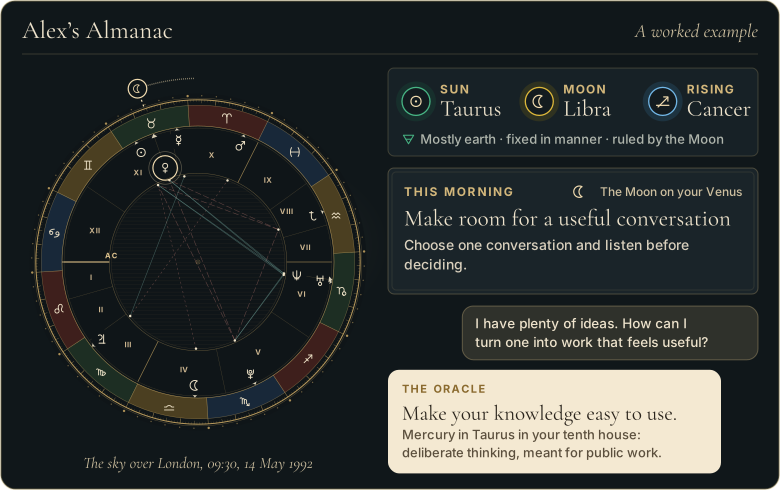
Walk through Alex’s whole example first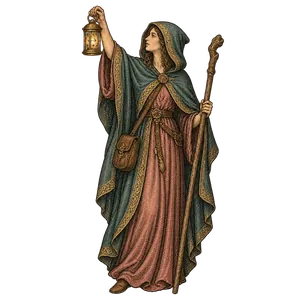
 The Road of AgesSee the turning points of your whole life, from your birth date
See your road's shape
The Road of AgesSee the turning points of your whole life, from your birth date
See your road's shape
Prefer to explore first?
 The Road of AgesThe turning points of your whole life, from your own chart
Walk my road
The Road of AgesThe turning points of your whole life, from your own chart
Walk my road
Free, by email
Your daily Almanac letter
One short letter at 7 each morning: the day’s theme read for your own chart, and one thing to do with it.
What a Locomotive pattern looks like
The Locomotive is one of the planetary-distribution patterns associated with Marc Edmund Jones. Its ten major planets are neither compressed into one half of the chart nor scattered around the entire wheel. Instead, they form a long sequence over about two thirds of the zodiac, while a single broad, continuous sector remains empty. The occupied planets resemble the cars of a train, and the first planet pulling away from the empty gap is called the leading planet.
Different authors set different numerical limits. One reproducible method classifies an occupied arc of 210 to 255 degrees as Locomotive when the largest empty gap is at least 105 degrees. Many textbook descriptions use the simpler image of 240 degrees occupied and 120 degrees empty. Borderline cases should display the measured arcs because a named metaphor is less informative than the actual geometry.
A one-minute story
The Book of the Sky
How people learned to read the sky, from Babylon to the day you were born.

How to find the leading planet
- Use the ten major planets and sort their zodiacal longitudes from 0 to 360 degrees.
- Measure every gap between consecutive planets, including the wrap from the last planet back to the first.
- Identify the largest gap. Confirm that it is large enough to make the distribution visibly one-sided but not so large that the chart is better classified as a Bowl or Bundle.
- Follow the conventional wheel clockwise through the empty sector, in the direction of diurnal motion. The first planet encountered as the gap ends begins the occupied train and is the leading planet.
- Do not follow increasing zodiacal longitude, which runs counterclockwise on a conventional wheel. If software reverses the wheel, use the stated diurnal direction rather than screen-left or screen-right.
How astrologers interpret a Locomotive
The traditional symbolic reading emphasizes drive, continuity, and the urge to put available energy to work. The image suggests a chart that gathers momentum rather than waiting passively. That language is interpretive, not a scientifically established personality result, and it should never override the person’s actual temperament or circumstances.
The leading planet receives special attention because it symbolically pulls the sequence. Its planetary function describes how initiative tends to begin. Mercury may lead through questions, speech, trade, or analysis; Venus through relationship, taste, diplomacy, or values; Mars through direct action and contest; Jupiter through growth, teaching, faith, or opportunity; Saturn through structure, restraint, craft, or responsibility. Its house shows the life area in which the locomotive most readily starts moving, while sign and aspects describe style and condition.
Worked example
Suppose Venus at 12 degrees Scorpio marks one edge of the largest empty sector and the Moon at 18 degrees Cancer marks the other. On a conventional wheel, moving clockwise from Scorpio through Libra, Virgo, and Leo crosses the empty sector and reaches the Moon first. The Moon is therefore the leading planet, while Venus marks the trailing edge. An astrologer would examine how lunar themes such as care, memory, security, habit, and responsiveness initiate larger efforts in the life, then refine that reading through the Moon’s sign, house, aspects, and rulerships.
The Moon as leader does not guarantee emotional fluency, and the Locomotive does not guarantee relentless ambition. A square from Saturn, a conjunction with Mercury, or closeness to an angle could substantially change how the leading role is expressed. The chart must still be read as a network.
How it differs from nearby chart shapes
| Pattern | Main distinction |
|---|---|
| Locomotive | About two thirds occupied, one large empty sector, and a leading planet at the edge. |
| Bowl | All planets generally fit within one half of the chart. |
| Bundle | All planets fit within a much tighter arc, often about 120 degrees. |
| Splash | Planets are distributed broadly around nearly the entire wheel without one dominant empty gap. |
| Bucket | A grouped body of planets is balanced by one clearly isolated handle planet. |
Classification cautions
Do not fill the empty houses with invented meanings. An empty zodiacal sector does not mean that its signs or houses are absent from life; their rulers, transits, and other chart factors still operate. Do not add asteroids until after the basic shape is classified, because enough extra points will turn every chart into an apparent Splash. Finally, publish the exact planet list and thresholds whenever software assigns the label. Transparent rules make disagreements understandable.
What sets Locomotive Chart Shape apart
In Jones's Locomotive the planets cover about two thirds of the wheel, 240 degrees, and leave one empty arc of about 120, the size of a trine. Of his shapes it is the one most defined by a single gap, with a leading planet at the front of the occupied arc. Jones made the leading planet part of the reading from the start.
- Span: planets across about 240 degrees
- Gap: one empty arc of about 120 degrees, a trine
- Source: Marc Edmund Jones, named in his 1941 list
- Leading planet: the first planet in zodiacal order after the gap
- Neighbor shape: a Bowl has a gap of 180 or more; a Splash has none
Often mistaken for something else: A Bowl has all its planets in 180 degrees, a Locomotive in 240. The Locomotive fills more and its gap is a third of the wheel.
Sources and editorial method
Research and editorial references used for this page include:
- Marc Edmund Jones, The Guide to Horoscope Interpretation - Historical source for the Locomotive and the wider Jones-pattern system.
- Astrodienst: The Jones Patterns - Contemporary explanatory overview of chart distributions and leading-planet logic.
These references support the factual, historical, textual, or interpretive claims on this page. Interpretive traditions are identified as such, and factual claims are kept separate from symbolic claims.
Related reading
Find your leading planet
Locomotive Chart Shape in a book is one thing; Locomotive Chart Shape in your own birth chart is your life. The Oracle casts your real chart and tells you what it means for your love, your work, and your year ahead, in conversation. It opens with the 7-day Seeker trial.
Speak with the OracleHow Locomotive Chart Shape lives in your own chart across your year, in love, in work, in timing, is written in the Cosmic Codex: the whole year, once. Open the Cosmic Codex
More in Astrology
- Morning Star Phase
- Profected Ascendant
- Solar Return
- Water Signs
- Astrological Chart
- Composite Chart
- Electional Astrology
- Grand Square
From the reference page to your own chart
Every word here
is in your own chart.
- A personal reading about love, work or purpose, written from your chart
- A practical next step to consider
- It opens with 7 days free, with the AI Oracle and daily guidance
$0 today, then $12/month after 7 days. Cancel anytime.
Common questions
Which direction does the locomotive move?
The standard Jones-pattern method follows clockwise diurnal motion on a conventional chart wheel, opposite increasing zodiacal order. Cross the large empty gap in that direction; the first planet encountered as it ends is the leader.
Can two planets share the leading role?
A very close conjunction can make leadership feel shared, but one planet is still first by longitude. Interpret the conjunction while stating which body technically begins the sequence.
Are empty houses in the gap unimportant?
No. Empty houses remain part of the chart and are read through their signs, rulers, aspects, and timing. The gap describes distribution, not a missing part of life.
Free, by email
The Almanac, in your inbox at 7
One short letter at 7 each morning: the day’s theme read for your own chart, and one thing to do with it.
