Astrology
Planetary Position
Direct answer
Planetary Position is the measured location of a planet in the zodiac at a specific time, usually recorded by sign, degree, minute, and sometimes speed or retrograde status.
Planetary Position is the exact zodiac location of a planet for chart calculation.
$0 today, then $12/month after 7 days. Cancel anytime.
At a glance
- In astrology
- Positions are usually measured in celestial longitude along the zodiac.
- Found in
- Astrology
- Related
- Birth Chart, Planetary Placement, Chart Ruler, House Ruler
Planetary Position is the exact zodiac location of a planet for chart calculation.
A structural orientation; exact placements depend on the chart or technique being discussed.
What does your own chart say about you?
Choose love, work or purpose. Your reading is written from your chart. Your reading uses your own birth details.
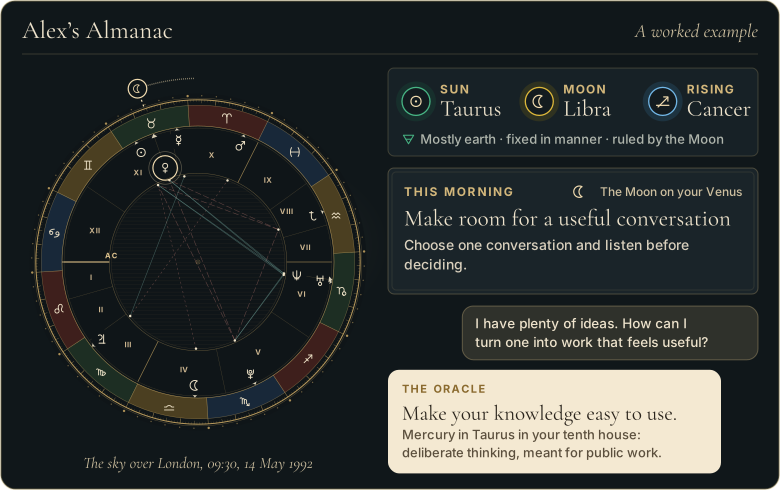
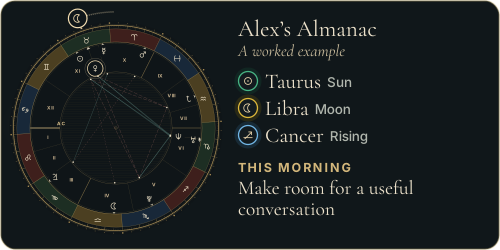
Walk through Alex’s whole example first
 The Road of AgesSee the turning points of your whole life, from your birth date
See your road's shape
The Road of AgesSee the turning points of your whole life, from your birth date
See your road's shape
Prefer to explore first?
 The Road of AgesThe turning points of your whole life, from your own chart
Walk my road
The Road of AgesThe turning points of your whole life, from your own chart
Walk my road
Free, by email
Your daily Almanac letter
One short letter at 7 each morning: the day’s theme read for your own chart, and one thing to do with it.
What sets Planetary Position apart
A planetary position is a coordinate, and its precision is what matters: a longitude from 0 to 360 degrees along the ecliptic, written as sign, degrees and minutes, for one named instant. The sign is only the first 30 degrees of that number, so 14 degrees of Gemini is 74 degrees of longitude. The same planet at the same moment reads about 24 degrees earlier in the sidereal zodiac of the 2020s than in the tropical one, so the zodiac used must be stated with the position.
- Unit: 1 degree is 60 minutes of arc; positions are quoted to the minute or finer
- Sign width: 30 degrees each, so longitude 74 degrees is 14 degrees of Gemini
- Speed: the Moon covers roughly 12 to 15 degrees a day, the Sun about 1 degree
- Retrograde: shown as R in an ephemeris, meaning a negative daily speed in longitude
- Time base: ephemerides are tabulated in UT, so local time must be converted first
Often mistaken for something else: A sign placement says only which 30 degree sector holds the planet; the position adds degree, minute and direction of motion.
A one-minute story
The Book of the Sky
How people learned to read the sky, from Babylon to the day you were born.

The story behind Planetary Position
Planetary positions were historically tracked in ephemerides before software automated chart calculation.
The spiritual meaning of Planetary Position
Spiritually, Planetary Position invites attention to timing without turning precision into control.
Planetary Position in astrology
The chosen zodiac system, house system, time zone, and location can affect how the position is interpreted.
Why Planetary Position matters
Planetary Position matters because interpretation starts with measurement. A few degrees can change aspects, dignity, house placement, ingress meaning, and timing.
How to read Planetary Position
Planetary Position speaks to ephemeris data, transit calculations, chart setup, exact-degree comparisons, retrograde checks, and determining whether an aspect is actually within orb.
Planetary Position in practice: an example
Saturn at 29 degrees Pisces is interpreted differently from Saturn at 0 degrees Aries because sign, degree, and ingress context change.
Where readings of Planetary Position go wrong
It is a mistake to call a position meaningful until the calculation method and zodiac system are clear.
Sources and editorial method
This entry summarizes the tradition in the Almanac's own words; where no source is listed, it is an editorial summary rather than a primary text, and symbolic readings are named as the tradition's, not as fact.
- Source
- The Great Almanac Dictionary
- Category
- Astrology
- Last updated
- 2026-09-26
Check your planet positions
Planetary Position in a book is one thing; Planetary Position in your own birth chart is your life. The Oracle casts your real chart and tells you what it means for your love, your work, and your year ahead, in conversation. It opens with the 7-day Seeker trial.
Speak with the OracleHow Planetary Position lives in your own chart across your year, in love, in work, in timing, is written in the Cosmic Codex: the whole year, once. Open the Cosmic Codex
Related terms
More in Astrology
- Significator
- Tripod Chart Shape
- As Above, So Below
- Chronocrator
- Draconic Chart
- Fixed Signs
- Kite Aspect
- Midheaven
From the reference page to your own chart
Every word here
is in your own chart.
- A personal reading about love, work or purpose, written from your chart
- A practical next step to consider
- It opens with 7 days free, with the AI Oracle and daily guidance
$0 today, then $12/month after 7 days. Cancel anytime.
Common questions
What is a planetary position?
Planetary Position is the measured location of a planet in the zodiac at a specific time, usually recorded by sign, degree, minute, and sometimes speed or retrograde status.
Where does a planetary position come from?
Planetary positions were historically tracked in ephemerides before software automated chart calculation.
What does a planetary position mean in astrology?
Positions are usually measured in celestial longitude along the zodiac. The chosen zodiac system, house system, time zone, and location can affect how the position is interpreted.
What does a planetary position look like in a birth chart?
Saturn at 29 degrees Pisces is interpreted differently from Saturn at 0 degrees Aries because sign, degree, and ingress context change.
What does a planetary position mean spiritually?
Spiritually, Planetary Position invites attention to timing without turning precision into control.
Free, by email
The Almanac, in your inbox at 7
One short letter at 7 each morning: the day’s theme read for your own chart, and one thing to do with it.