Astrology
Rulership
Direct answer
Rulership is the traditional link between a planet and the zodiac sign or signs it governs, also called domicile in dignity language.
Rulership connects each zodiac sign with its planetary ruler.
$0 today, then $12/month after 7 days. Cancel anytime.
At a glance
- Also called
- domicile
- In astrology
- In traditional rulership, Mars rules Aries and Scorpio, Venus rules Taurus and Libra, Mercury rules Gemini and Virgo, the Moon rules Cancer, the Sun rules Leo, Jupiter rules Sagittarius and Pisces, and Saturn rules Capricorn and Aquarius.
- Found in
- Astrology
- Related
- Dignity, Essential Dignity, Exaltation, Detriment
Rulership connects each zodiac sign with its planetary ruler.
A structural orientation; exact placements depend on the chart or technique being discussed.
What does your own chart say about you?
Choose love, work or purpose. Your reading is written from your chart. Your reading uses your own birth details.
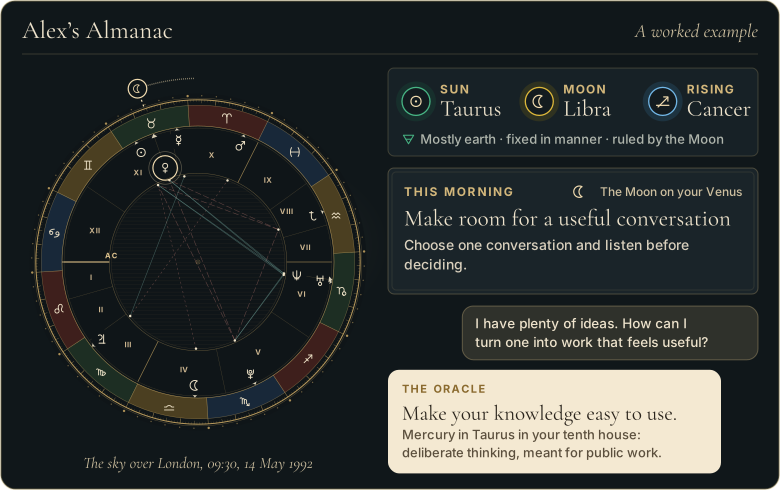
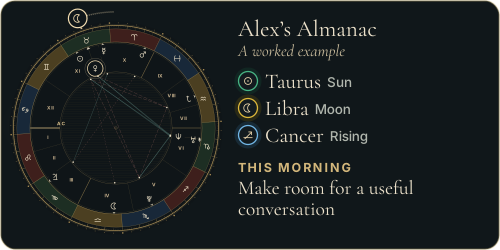
Walk through Alex’s whole example first
 The Road of AgesSee the turning points of your whole life, from your birth date
See your road's shape
The Road of AgesSee the turning points of your whole life, from your birth date
See your road's shape
Prefer to explore first?
 The Road of AgesThe turning points of your whole life, from your own chart
Walk my road
The Road of AgesThe turning points of your whole life, from your own chart
Walk my road
Free, by email
Your daily Almanac letter
One short letter at 7 each morning: the day’s theme read for your own chart, and one thing to do with it.
What sets Rulership apart
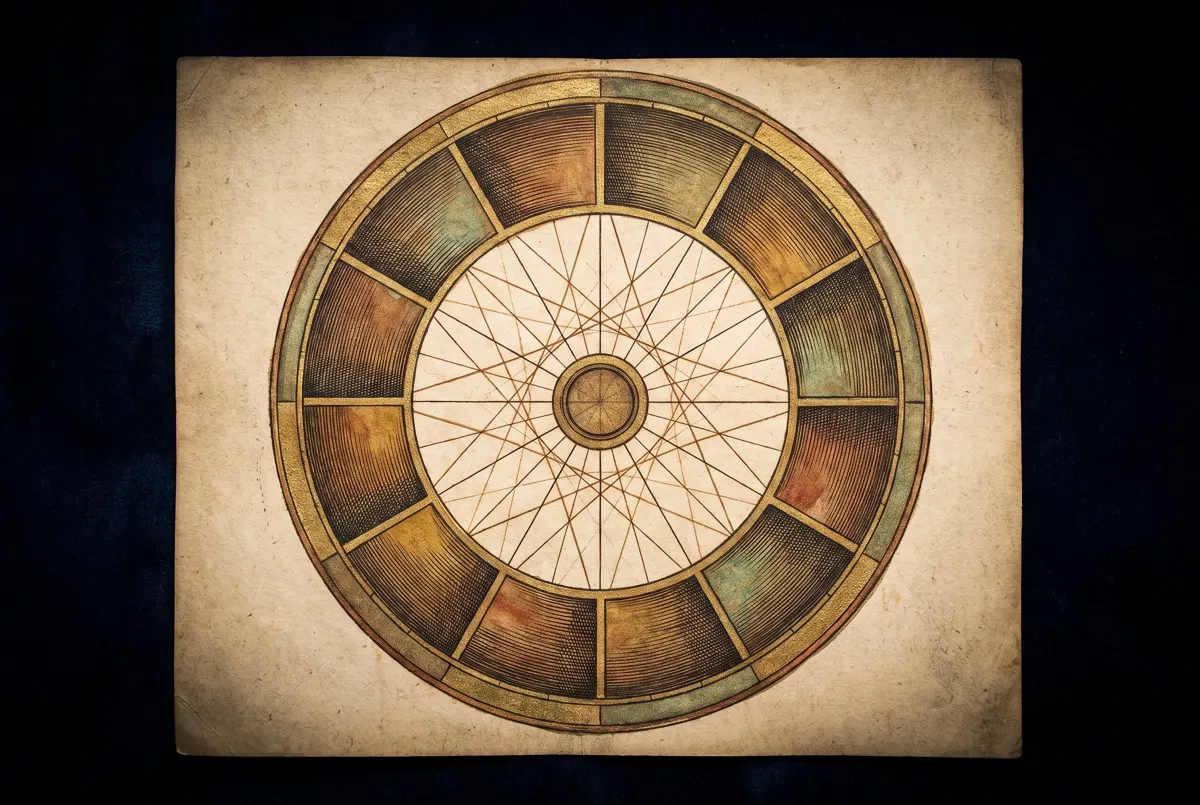
The scheme of rulership has a clear symmetry: Cancer and Leo, the signs of summer, go to the Moon and the Sun, and the five other planets take one sign on each side, moving outward in the Chaldean order. Counting back from Cancer gives Mercury, Venus, Mars, Jupiter, Saturn in Gemini, Taurus, Aries, Pisces, Aquarius; counting forward from Leo gives them in Virgo, Libra, Scorpio, Sagittarius, Capricorn. The opposite sign of a planet's domicile is its detriment. Rulership also yields the dispositor, the planet that rules the sign another planet occupies.
- Planets and signs: seven classical planets cover twelve signs: two luminaries with one sign, five planets with two
- Detriment: the sign opposite a planet's domicile, such as Venus in Aries
- Dispositor: the ruler of the sign a planet stands in; a chain can end at a planet in its own sign
- Greek and Latin: oikos and domus, the house of the planet
- Modern additions: Uranus to Aquarius, Neptune to Pisces and Pluto to Scorpio
A one-minute story
The Book of the Sky
How people learned to read the sky, from Babylon to the day you were born.

Why each planet rules the signs it does
Ptolemy gives a reason for every rulership in the first book of the Tetrabiblos. Cancer and Leo are the northernmost signs, nearest the zenith and hottest, so they go to the Moon and the Sun, and the semicircle from Leo to Capricorn is solar and from Aquarius to Cancer lunar. Each other planet takes one sign in each semicircle, working outward by the order of the spheres.
- Saturn: Capricorn and Aquarius, opposite the signs of the luminaries, cold and wintry
- Jupiter: Sagittarius and Pisces, in trine to the houses of the luminaries, airy and fruitful
- Mars: Aries and Scorpio, dry, with discordant distances from the luminaries
- Venus: Taurus and Libra, in sextile to the luminaries and never more than two signs from the Sun
- Mercury: Gemini and Virgo, never more than one sign from the Sun
Day houses and night houses
Ashmand's footnote, from a later author and not from Ptolemy, gives each planet a day house and a night house: Saturn Aquarius by day and Capricorn by night, Jupiter Sagittarius by day and Pisces by night, Mars Aries by day and Scorpio by night, Venus Taurus by day and Libra by night, Mercury Gemini by day and Virgo by night. Most medieval authors instead give every planet its masculine sign by day, which puts Venus's day house in Libra and her night house in Taurus, the reverse of the footnote. Firmicus Maternus gives each planet's two signs as one masculine and one feminine, with the Sun in Leo and the Moon in Cancer.
Firmicus also gives the Egyptian planet names, Phainon for Saturn, Phaethon for Jupiter, Pyrois for Mars, Phosphoros for Venus and Stilbon for Mercury. Dorotheus has the same list of houses in the first book of the Carmen.
The story behind Rulership
Rulership is one of astrology's oldest organizing principles and supports dignity, house interpretation, and reception.
The spiritual meaning of Rulership
Spiritually, rulership asks where a life topic receives guidance, accountability, and resources.
Why Rulership matters
Rulership matters because the ruler of a sign explains where that sign's topics are managed in the chart.
How to read Rulership
Astrologers reach for Rulership when reading chart rulers, house rulers, dispositors, dignity, transits, and how one placement answers to another.
Rulership in practice: an example
If Libra rises, Venus becomes the chart ruler, so Venus by sign, house, and aspect becomes central to the whole chart.
Where readings of Rulership go wrong
A common error is to ignore traditional rulership just because modern rulers exist. Both systems can be useful, but they answer different interpretive questions.
Sources and editorial method
This entry summarizes the tradition in the Almanac's own words; where no source is listed, it is an editorial summary rather than a primary text, and symbolic readings are named as the tradition's, not as fact.
- Source
- The Great Almanac Dictionary
- Category
- Astrology
- Aliases
- domicile
- Last updated
- 2026-09-26
Find your chart ruler
Rulership in a book is one thing; Rulership in your own birth chart is your life. The Oracle casts your real chart and tells you what it means for your love, your work, and your year ahead, in conversation. It opens with the 7-day Seeker trial.
Speak with the OracleHow Rulership lives in your own chart across your year, in love, in work, in timing, is written in the Cosmic Codex: the whole year, once. Open the Cosmic Codex
Related terms
More in Astrology
- Term
- Angular House Emphasis
- Bundle Chart Shape
- Dominant Element
- Fan Chart Shape
- Horoscope
- Lunar Return
- Orb
From the reference page to your own chart
Every word here
is in your own chart.
- A personal reading about love, work or purpose, written from your chart
- A practical next step to consider
- It opens with 7 days free, with the AI Oracle and daily guidance
$0 today, then $12/month after 7 days. Cancel anytime.
Common questions
What is rulership?
Rulership is the traditional link between a planet and the zodiac sign or signs it governs, also called domicile in dignity language.
Where does rulership come from?
Rulership is one of astrology's oldest organizing principles and supports dignity, house interpretation, and reception.
What does rulership mean in astrology?
Astrologers reach for Rulership when reading chart rulers, house rulers, dispositors, dignity, transits, and how one placement answers to another.
What does rulership look like in a birth chart?
If Libra rises, Venus becomes the chart ruler, so Venus by sign, house, and aspect becomes central to the whole chart.
What does rulership mean spiritually?
Spiritually, rulership asks where a life topic receives guidance, accountability, and resources.
Free, by email
The Almanac, in your inbox at 7
One short letter at 7 each morning: the day’s theme read for your own chart, and one thing to do with it.