
Godfrey Higgins
1772 to 1833
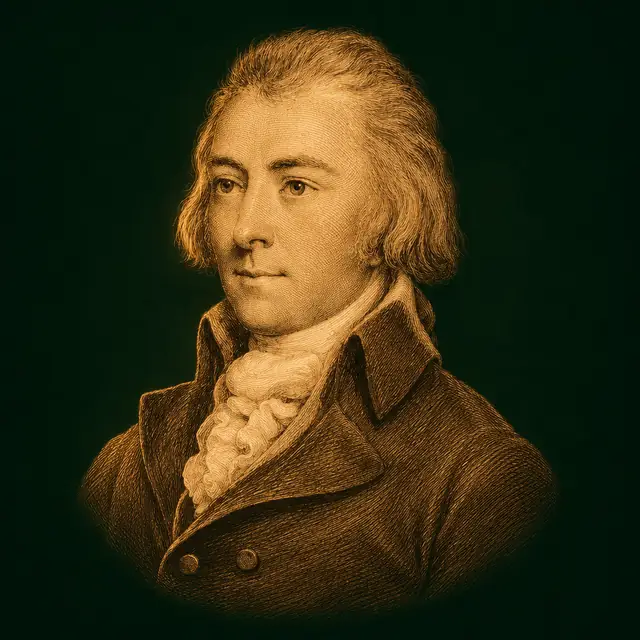
Who was Godfrey Higgins, and what is truly known of them?
What is known
English country gentleman, magistrate and writer on religion, of Skellow Grange near Doncaster. He studied at Cambridge without taking a degree, served as a major of militia, and from 1813 led the inquiry that exposed the abuse of patients at the York asylum. From then on he gave his days to the history of religion. The Celtic Druids appeared in 1827 and 1829, and Anacalypsis, in two large volumes, was printed in 1833 and 1836, most of it after his death, in two hundred copies. It argues that all religions come down from one ancient worship of the Sun, kept by a lost learned nation, and that the names of the gods can be traced to it by their sounds. Helena Blavatsky drew on it freely.
The teaching
Taught from his own books, above all the Anacalypsis (1833 and 1836) and The Celtic Druids (1827).
Drawing aside the veil
Higgins named his great book for what he meant to do: Anacalypsis, an attempt to draw aside the veil of the Saitic Isis, an inquiry into the origin of languages, nations and religions. The veil is the one the goddess of Sais was said to wear, which no mortal had lifted, and behind it he hoped to find the single first religion of mankind. His method is to set side by side the gods, names, rites and symbols of every people he can read of, from India to Ireland, until, as he believed, their common source appears.
One first religion
In the beginning, Higgins teaches, all mankind had one religion and one learned priesthood. Its god was the one supreme being, worshipped under the emblem of the Sun, the fire and light that give life, and known also as the divine wisdom or reason, the Logos of the Greeks. Its priests were masters of astronomy, kept the calendar and taught by allegory. From its home in the East, which he places in India and the lands north of it, it spread across the old world, and every later faith, Buddhist, Brahmin, Persian, Egyptian, Jewish, Druid and Christian, is a dialect of it, broken by time, by the pride of priesthoods and by forgetting.
The cycle of six hundred years
The key to the old astronomy, for Higgins, is the neros, a cycle of six hundred years that Josephus names as the great year of the patriarchs, who lived long enough to learn the periods of the stars. At the end of each cycle, in his reading, the ancients awaited a renewal of the world and the birth of an incarnation of the divine wisdom, a saviour to open the new age. He finds the hope in Virgil's prophecy of a child who brings back the golden age and in the Indian teaching of the descents of Vishnu, and he reads the long line of the saviours of the nations as the same hope returning at each turn of the cycle.
The names that sound alike
His chief instrument is the likeness of names. Letters, he holds, were at first few and served also as numbers, and the same holy names, carried by the first priests, survive under many disguises: the sacred syllable Om in the Hebrew Amen, the name Iao in Jehovah, the Indian Cristna in the Greek Christos. He takes a likeness of sound for a trace of descent, and from such traces he builds his map of the first faith's journeys.
The plain fact is that the kinship of languages is shown by regular correspondences of sound running through whole vocabularies, not by single likenesses, and his derivations do not stand.
The Druids and the stones
In The Celtic Druids he applies the key to Britain. The Druids were no barbarians but a learned priesthood of the first religion, come from the East, kin to the Brahmins and the Magi, and the stone circles of Britain and Ireland are their temples of the Sun. He reads the numbers of their stones, circles and avenues as records of the cycles of the sky, and the great serpent of stones at Avebury, as William Stukeley had before him, as a temple of the Sun and the serpent. The Culdees, the old monks of Iona and Ireland, are for him the Chaldeans under a Christian name, the last keepers of the first faith.
Tolerance as a duty
What Higgins drew from all this was a duty of respect. If every faith is a dialect of one first religion, then none may persecute another, and the ill will between the churches, and between Christians and Muslims, rests on ignorance of their common root. So he defended the Prophet of Islam against the hostile picture of him usual in England, argued that the Christian Sunday is not the Jewish Sabbath and binds no one by law, and asked of his readers that every honest belief be met with the same fairness.
Orders and memberships
A Freemason by his own statement in his books. He wrote that he had held back from other orders so as to stay free to print what he found. The claim that he was Chosen Chief of a Druid order comes from a list made in the twentieth century, with no record behind it.
The legend
His own thesis: one first religion and one lost nation of sages behind every faith. He argued it from likenesses of words and names, and scholars of language and of religion do not accept his derivations. It is the root of much later writing on Atlantis, ancient wisdom and astrotheology.
Their works
- AnacalypsisBook, 1833 and 1836
Two large volumes, printed mostly after his death in two hundred copies, arguing that all religions come down from one ancient worship of the Sun kept by a lost learned nation. He argued from likenesses of words and names, which scholars do not accept. Helena Blavatsky drew on it freely.
Ask the Oracle about it - The Celtic DruidsBook, 1827
A study of the stone circles and Druids of Britain, with many plates, arguing that the Druids were priests of an eastern faith come from India. It was his first large statement of the thesis he carried into Anacalypsis.
Ask the Oracle about it - Horae SabbaticaeEssay, 1826
A short work on the Sabbath, arguing that the keeping of the seventh day was not a law binding on Christians. It shows the freethinking turn of his studies before the great books.
Ask the Oracle about it - An Apology for the Life and Character of MohamedBook, 1829
A defence of the Prophet of Islam against the hostile picture usual in England in his day. It was unusual for its time in treating Islam with respect. It belongs to the same freethinking turn that led him to write Anacalypsis.
Ask the Oracle about it
How the house tells a life
This life is told from the record, with what is documented, what is legend and what was forged kept apart. A membership in an order is stated only where documents show it. A person’s chart explains none of their deeds.
The arts it feeds
Lives near it in time
Thinkers and teachers
Augustin BarruelCharles-François DupuisLouis-Claude de Saint-MartinJohann Wolfgang von GoetheWolfgang Amadeus MozartWilliam BlakeRobert TaylorPhineas QuimbyRalph Waldo EmersonGiuseppe MazziniGerald MasseyLahiri MahasayaThe whole tree

