Mystical systems
Freemasonry
Direct answer
Freemasonry is a fraternal initiatory tradition using lodge ritual, moral allegory, building symbolism, degrees, and brotherhood language.
Freemasonry is a fraternal system of moral allegory, lodge structure, symbols, and degrees.
$0 today, then $12/month after 7 days. Cancel anytime.
At a glance
- Found in
- Mystical Systems
- Related
- Birth Chart, Zodiac, Transit
Freemasonry is a fraternal system of moral allegory, lodge structure, symbols, and degrees.
A lineage map for books and systems; it avoids presenting symbolic traditions as literal fact.
What does your own chart say about you?
Choose love, work or purpose. Your reading is written from your chart. Your reading uses your own birth details.
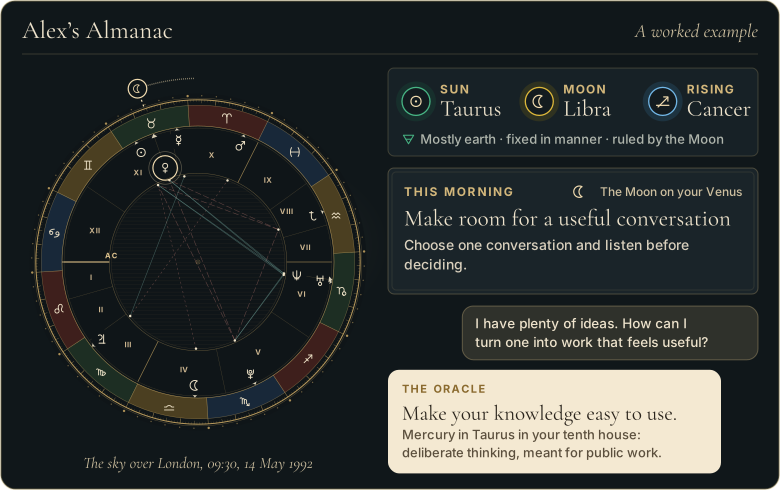
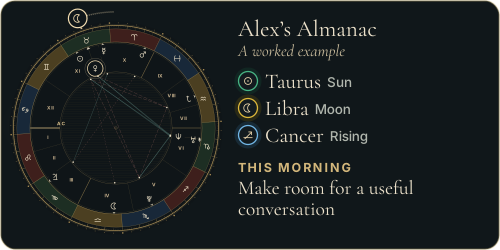
Walk through Alex’s whole example first
 The Road of AgesSee the turning points of your whole life, from your birth date
See your road's shape
The Road of AgesSee the turning points of your whole life, from your birth date
See your road's shape
Prefer to explore first?
 The Road of AgesThe turning points of your whole life, from your own chart
Walk my road
The Road of AgesThe turning points of your whole life, from your own chart
Walk my road
Free, by email
Your daily Almanac letter
One short letter at 7 each morning: the day’s theme read for your own chart, and one thing to do with it.
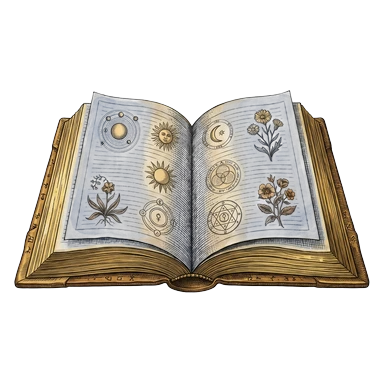
Masonic arms read astronomically
J. H. Hill reads the symbols of Freemasonry as the sky.
- The sun, the moon and the Pleiades in Taurus, and Sirius as Anubis.
- The seven signs from Aries to Libra as the Royal Arch.
- The lion, bull, waterman and eagle as the four seasons.
- The checkered floor as the earth, and the two pillars as the equinox pillars of heaven.
- The letter G as Geometry.
- The cornucopia as the sun in Capricorn.
- The cenotaph with a cross and acacia as the autumn death and the spring resurrection, and the serpent as the Lord of Evil.
Hill's claim and the record
Hill says Masonry was a secret survival of the temple worship from the fifth century, and Druidism the grove form of it, with the Ancient Order of Druids derived from Welsh survivals. Modern historians date Freemasonry differently and do not accept the continuity.
The symbols are older than Hill's argument, and the astronomical readings are one tradition of interpreting them, the sun-myth school, which also includes R. H. Brown and Frank C. Higgins on the source list.
The story behind Freemasonry
Modern speculative Freemasonry developed from early modern lodge culture and became influential in Britain, Europe, and America from the seventeenth and eighteenth centuries onward.
The spiritual meaning of Freemasonry
Spiritually, Freemasonry asks how symbols of building, brotherhood, and secrecy are being interpreted and who receives authority from them.
Why Freemasonry matters
Freemasonry matters because its symbols have deeply influenced modern esoteric imagination, civic history, conspiracy culture, and discussions of initiation.
Where readings of Freemasonry go wrong
It is a mistake to turn Freemasonry into sensational certainty, hidden-world control claims, or recruitment material.
Sources and editorial method
This entry summarizes the tradition in the Almanac's own words; where no source is listed, it is an editorial summary rather than a primary text, and symbolic readings are named as the tradition's, not as fact.
- Source
- The Great Almanac Dictionary
- Category
- Mystical Systems
- Last updated
- 2026-09-26
Separate symbol from rumor
A definition tells you what it is; your own birth chart tells you what it means for you. The Oracle casts your real chart and answers for your love, your work, and your year ahead, in conversation. It opens with the 7-day Seeker trial.
Speak with the OracleYour year, written once from your chart alone: the Cosmic Codex reads the whole of it, month by month. Open the Cosmic Codex
Related terms
More in Mystical Systems
- John of the Cross
- Merkabah Mysticism
- Occultism
- Shekhinah
- The Chariot
- The Star
- Yesod
- Apophatic Theology
From the reference page to your own chart
Every word here
is in your own chart.
- A personal reading about love, work or purpose, written from your chart
- A practical next step to consider
- It opens with 7 days free, with the AI Oracle and daily guidance
$0 today, then $12/month after 7 days. Cancel anytime.
Common questions
What is Freemasonry?
Freemasonry is a fraternal initiatory tradition using lodge ritual, moral allegory, building symbolism, degrees, and brotherhood language.
Where does Freemasonry come from?
Modern speculative Freemasonry developed from early modern lodge culture and became influential in Britain, Europe, and America from the seventeenth and eighteenth centuries onward.
What does Freemasonry mean spiritually?
Spiritually, Freemasonry asks how symbols of building, brotherhood, and secrecy are being interpreted and who receives authority from them.
Free, by email
The Almanac, in your inbox at 7
One short letter at 7 each morning: the day’s theme read for your own chart, and one thing to do with it.