
2027 eclipsesEvery date, time and sign
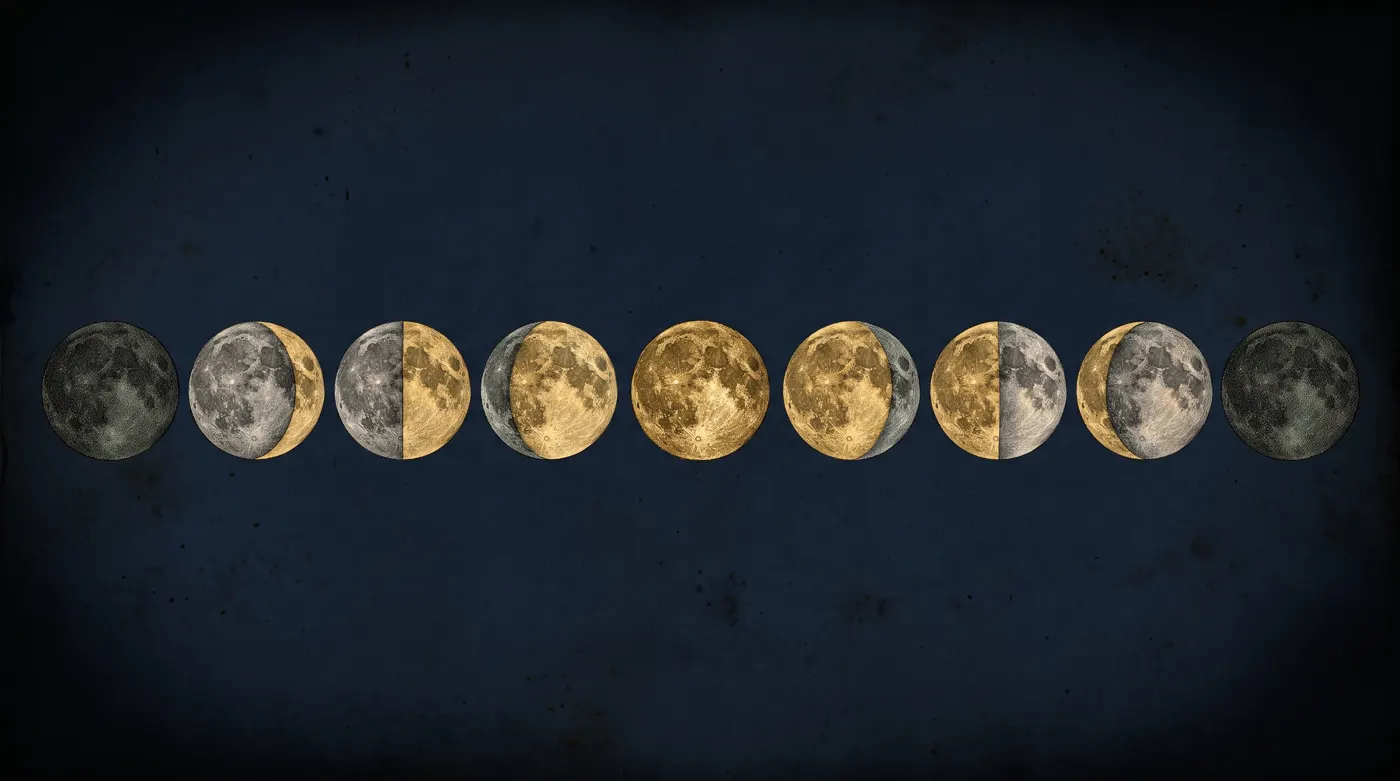
2027 has five eclipses: an annular solar eclipse on 6 February at 17°37′ Aquarius, a penumbral lunar eclipse on 20 February at 1°58′ Virgo, a penumbral lunar eclipse on 18 July at 25°57′ Capricorn, a total solar eclipse on 2 August at 9°55′ Leo and a penumbral lunar eclipse on 17 August at 24°04′ Aquarius. The total eclipse of 2 August is the year’s great event: NASA puts totality at up to 6 minutes 23 seconds on the central line, and Wikipedia records its nickname, the Eclipse of the Century.
$0 today, then $12/month after 7 days. Cancel anytime.
Every eclipse of 2027
| Date (UTC) | Eclipse | Sign and degree | Seen from |
|---|---|---|---|
| Sat 6 Feb16:00 UTC | Annular solar | 17°37′ Aquarius | South America, Antarctica and western and southern Africa |
| Sat 20 Feb23:13 UTC | Penumbral lunar | 1°58′ Virgo | the Americas, Europe, Africa and Asia |
| Sun 18 Jul16:03 UTC | Penumbral lunar | 25°57′ Capricorn | eastern Africa, Asia, Australia and the Pacific |
| Mon 2 Aug10:07 UTC | Total solar | 9°55′ Leo | Africa, Europe, the Middle East and western and southern Asia |
| Tue 17 Aug07:14 UTC | Penumbral lunar | 24°04′ Aquarius | the Pacific and the Americas |
Times are each eclipse’s greatest moment in UTC, from the Almanac’s own ephemeris; the type and where each can be seen are NASA’s (eclipse.gsfc.nasa.gov, Fred Espenak’s tables).

What does your own chart say about you?
Choose love, work or purpose. Your reading is written from your chart. Your reading uses your own birth details.
Walk through Alex’s whole example first


 The Road of AgesSee the turning points of your whole life, from your birth date
See your road's shape
Prefer to explore first?
 The Road of AgesThe turning points of your whole life, from your own chart
Walk my road
Free, by email
Your daily Almanac letter
One short letter at 7 each morning: the day’s theme read for your own chart, and one thing to do with it.
The annular solar eclipse of 6 February
The New Moon of Saturday 6 February 2027 is exact at 15:56 UTC at 17°37′ Aquarius, and the eclipse is greatest 3 minutes after, at 16:00 UTC. NASA classes it as annular, with annularity, the ring phase, lasting up to 7 minutes 51 seconds on a path over Chile, Argentina and the Atlantic; Wikipedia places it at the Moon’s ascending node.
Outside the path it is seen as a partial eclipse from South America, Antarctica and western and southern Africa. Read the annular solar eclipse in full, or for your sign: Aries, Taurus, Gemini, Cancer, Leo, Virgo, Libra, Scorpio, Sagittarius, Capricorn, Aquarius, Pisces.
The penumbral lunar eclipse of 20 February
The Full Moon of Saturday 20 February 2027 comes at 23:24 UTC, the Moon at 2°05′ Virgo facing the Sun in Pisces, and NASA classes the eclipse it makes as penumbral, greatest 11 minutes before the Full Moon, at 23:13 UTC. It can be watched from the Americas, Europe, Africa and Asia.
A penumbral eclipse passes only through the Earth’s faint outer shadow, a dimming many people never notice; astrologers still count it, reading it as a Full Moon at the nodes, in Virgo for this one. Read it in your sign’s February forecast: Aries, Taurus, Gemini, Cancer, Leo, Virgo, Libra, Scorpio, Sagittarius, Capricorn, Aquarius, Pisces.
The penumbral lunar eclipse of 18 July
The Full Moon of Sunday 18 July 2027 comes at 15:45 UTC, the Moon at 25°48′ Capricorn facing the Sun in Cancer, and NASA classes the eclipse it makes as penumbral, greatest 18 minutes after the Full Moon, at 16:03 UTC. It can be watched from eastern Africa, Asia, Australia and the Pacific.
A penumbral eclipse passes only through the Earth’s faint outer shadow, a dimming many people never notice; astrologers still count it, reading it as a Full Moon at the nodes, in Capricorn for this one. Read it in your sign’s July forecast: Aries, Taurus, Gemini, Cancer, Leo, Virgo, Libra, Scorpio, Sagittarius, Capricorn, Aquarius, Pisces.
The total solar eclipse of 2 August
The New Moon of Monday 2 August 2027 is exact at 10:05 UTC at 9°54′ Leo, and the eclipse is greatest 2 minutes after, at 10:07 UTC. NASA classes it as total, with totality lasting up to 6 minutes 23 seconds on a path over Morocco, Spain, Algeria, Libya, Egypt, Saudi Arabia, Yemen and Somalia; Wikipedia places it at the Moon’s descending node.
Outside the path it is seen as a partial eclipse from Africa, Europe, the Middle East and western and southern Asia. Read the total solar eclipse in full, or for your sign: Aries, Taurus, Gemini, Cancer, Leo, Virgo, Libra, Scorpio, Sagittarius, Capricorn, Aquarius, Pisces.
The penumbral lunar eclipse of 17 August
The Full Moon of Tuesday 17 August 2027 comes at 07:29 UTC, the Moon at 24°11′ Aquarius facing the Sun in Leo, and NASA classes the eclipse it makes as penumbral, greatest 15 minutes before the Full Moon, at 07:14 UTC. It can be watched from the Pacific and the Americas.
A penumbral eclipse passes only through the Earth’s faint outer shadow, a dimming many people never notice; astrologers still count it, reading it as a Full Moon at the nodes, in Aquarius for this one. Read it in your sign’s August forecast: Aries, Taurus, Gemini, Cancer, Leo, Virgo, Libra, Scorpio, Sagittarius, Capricorn, Aquarius, Pisces.
Eclipse seasons and the Moon’s nodes
Eclipses come in seasons, when the Sun passes near the Moon’s nodes, the two points where the Moon’s path crosses the Sun’s. In 2027 the north node stands in Aquarius and the south node in Leo, so the year has two eclipse seasons: February and July to August.
The tradition reads eclipses as turning points rather than ordinary lunations: what they touch is said to change over the following months, not on the day alone.
How the times are found
The instants on this page are the Almanac’s own: each New and Full Moon from its lunation series, and each eclipse’s greatest moment, which falls within 19 minutes of its lunation. NASA publishes its times in dynamical time, which in 2027 runs a little over a minute ahead of UTC, and its figures come out 65 to 71 seconds later than the engine’s: that offset, give or take a few seconds.
Looking at the Sun without proper protection can injure the eyes at every partial phase. Use eclipse glasses made for the purpose or a pinhole projector; only during totality itself, inside the path, is the uncovered sight of the eclipse safe, and never during an annular eclipse, when a ring of the Sun stays bright.
Beyond the Sun sign
Your Sun sign is only part of 2027
An eclipse touches every chart somewhere. The Road of Ages reads the turning points of your own life from your birth date, and shows the one you are standing in.
See the year on your own RoadCommon questions
How many eclipses are there in 2027?
Five: two solar eclipses, an annular one on 6 February and a total one on 2 August, and three penumbral lunar eclipses, on 20 February, 18 July and 17 August.
When is the total solar eclipse of 2027?
On Monday 2 August 2027, greatest at 10:07 UTC. NASA’s path of totality crosses Morocco, Spain, Algeria, Libya, Egypt, Saudi Arabia, Yemen and Somalia.
Can I see the August 2027 eclipse from the UK or the United States?
As a partial eclipse from much of the North Atlantic world. In Wikipedia’s words: “A partial solar eclipse will be visible from the extreme east tip of Maine, United States, far eastern Quebec and the Atlantic Provinces in Canada, southern Greenland, Iceland, Ireland, Great Britain, nearly the entirety of the European continent, all but the southern quarter of Africa, the Middle East, and from South and Southeast Asia.”
What sign is the 2027 total solar eclipse in?
Leo: the eclipse is at 9°55′ Leo by the Almanac’s ephemeris. Wikipedia places it at the Moon’s descending node, the point astrology calls the south node.
Free, by email
The Almanac, in your inbox at 7
One short letter at 7 each morning: the day’s theme read for your own chart, and one thing to do with it.


