Timing and cycles
Lunar Eclipse
Direct answer
Lunar Eclipse occurs at Full Moon when Earth stands between the Sun and Moon near a lunar node, causing the Moon to pass through Earth shadow.
Lunar Eclipse is a Full Moon near the nodes that moves through Earth shadow.
$0 today, then $12/month after 7 days. Cancel anytime.
At a glance
- In astrology
- A lunar eclipse is always a Full Moon near the nodal axis, but not every Full Moon is an eclipse.
- Found in
- Transits & Cycles
- Related
- Birth Chart, Zodiac, Transit
Lunar Eclipse is a Full Moon near the nodes that moves through Earth shadow.
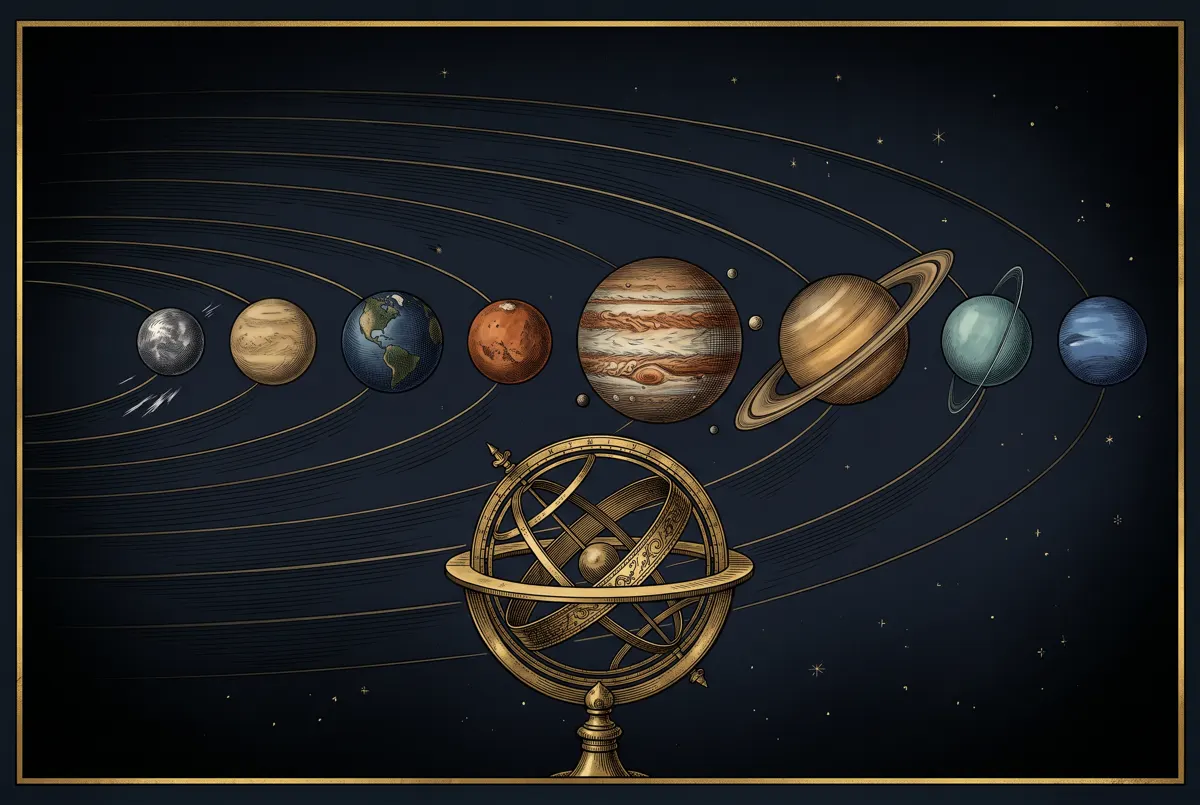
The orbit map distinguishes physical bodies, calculated points, and symbolic cycles where possible.
What does your own chart say about you?
Choose love, work or purpose. Your reading is written from your chart. Your reading uses your own birth details.
Walk through Alex’s whole example first


 The Road of AgesSee the turning points of your whole life, from your birth date
See your road's shape
The Road of AgesSee the turning points of your whole life, from your birth date
See your road's shape
Prefer to explore first?
 The Road of AgesThe turning points of your whole life, from your own chart
Walk my road
The Road of AgesThe turning points of your whole life, from your own chart
Walk my road
Free, by email
Your daily Almanac letter
One short letter at 7 each morning: the day’s theme read for your own chart, and one thing to do with it.
The story behind Lunar Eclipse
Lunar eclipses are safe to view and have been used in sky calendars, omen traditions, and astronomical prediction for millennia.
A one-minute story
The Wandering Stars
How the moving planets were watched, named and found, and what a transit is.

The spiritual meaning of Lunar Eclipse
Spiritually, Lunar Eclipse asks what truth is ready to leave the shadows.
Why Lunar Eclipse matters
Lunar Eclipse matters because it intensifies culmination, release, revelation, and emotional turning points.
How to read Lunar Eclipse
Read Lunar Eclipse timing by checking the activated house axis, natal contacts, and what is ready to peak, end, or be witnessed.
Lunar Eclipse in practice: an example
A Lunar Eclipse across the Second and Eighth Houses can illuminate money, debt, trust, grief, and shared-resource themes.
Where readings of Lunar Eclipse go wrong
A common error is to use lunar eclipses to predict disaster. They show strong timing, not guaranteed events.
Sources and editorial method
This entry summarizes the tradition in the Almanac's own words; where no source is listed, it is an editorial summary rather than a primary text, and symbolic readings are named as the tradition's, not as fact.
- Source
- The Great Almanac Dictionary
- Category
- Transits & Cycles
- Last updated
- 2026-09-26
Release through eclipse timing
Lunar Eclipse in a book is one thing; Lunar Eclipse in your own birth chart is your life. The Oracle casts your real chart and tells you what it means for your love, your work, and your year ahead, in conversation. It opens with the 7-day Seeker trial.
Speak with the OracleThe Cosmic Codex reads a whole year of transits against your own chart, Lunar Eclipse included where it touches your love, your work, your timing. Open the Cosmic Codex
Related terms
More in Transits & Cycles
- Mercury Cycle
- Planetary Day
- Progressed Lunation
- Solar Arc Hit
- Transit Activation
- Venus Cycle
- Blue Moon
- First Pass
From the reference page to your own chart
Every word here
is in your own chart.
- A personal reading about love, work or purpose, written from your chart
- A practical next step to consider
- It opens with 7 days free, with the AI Oracle and daily guidance
$0 today, then $12/month after 7 days. Cancel anytime.
Common questions
What is a lunar eclipse?
Lunar Eclipse occurs at Full Moon when Earth stands between the Sun and Moon near a lunar node, causing the Moon to pass through Earth shadow.
Where does a lunar eclipse come from?
Lunar eclipses are safe to view and have been used in sky calendars, omen traditions, and astronomical prediction for millennia.
What does a lunar eclipse mean in astrology?
Read Lunar Eclipse timing by checking the activated house axis, natal contacts, and what is ready to peak, end, or be witnessed.
What does a lunar eclipse look like in a birth chart?
A Lunar Eclipse across the Second and Eighth Houses can illuminate money, debt, trust, grief, and shared-resource themes.
What does a lunar eclipse mean spiritually?
Spiritually, Lunar Eclipse asks what truth is ready to leave the shadows.
Free, by email
The Almanac, in your inbox at 7
One short letter at 7 each morning: the day’s theme read for your own chart, and one thing to do with it.