
Emanuel Swedenborg
1688 to 1772
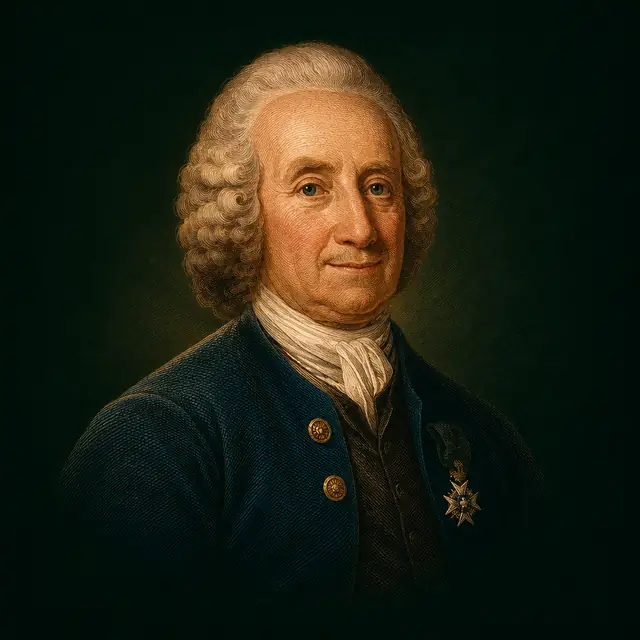
Who was Emanuel Swedenborg, and what is truly known of them?
What is known
Swedish scientist and writer on the world of spirits, born at Stockholm. He served on the Board of Mines from 1716 and published large works on metals and on the human body. In 1744 and 1745, by his own account, he began to see and speak with spirits and angels; he resigned his post in 1747 and gave the rest of his life to it. The Arcana Coelestia came out in London without his name in eight volumes from 1749 to 1756, and Heaven and Hell in 1758. Immanuel Kant answered him with a mocking book in 1766. He died in London, and readers of his books founded the New Church there in 1787.
The teaching
Taught from his own books, above all Heaven and Hell (1758), the Arcana Coelestia and True Christian Religion.
Waking after death
Swedenborg teaches that death is only the passing of the spirit out of the body, and that a person wakes in the other world as the same person, with the same memory, thoughts and loves, in a body that looks and feels like the old one. Angels sit by the one who has died until he wakes, and a newcomer often does not know at first that he has died. He finds himself in the world of spirits, a middle region between heaven and hell where everyone first arrives, and friends and kin who died before come to meet him.
There he passes through three states. In the first he lives in his outward self, much as he lived on earth, speaking and behaving as he did in company. In the second his inward self is laid open, and what he truly thought and loved comes out, for nothing hidden stays hidden there. In the third, those bound for heaven are taught by angels and prepared for it. Some pass through in days or weeks and others stay for years, but none, he says, for more than thirty.
The ruling love
The key to everything is love. A person's life is his love, and every person has a ruling love that orders all the rest as a king orders his kingdom. That love remains after death and is not changed, and it decides where a person goes. No one is sent to hell. A spirit whose love is of self and of the world finds the company of heaven painful and turns of its own accord towards those who love as it does, while one whose love is of the Lord and the neighbour is drawn towards heaven. Everyone goes at last where he wishes to be, because he goes where his love is.
Two loves lie at the root of all the others: love to the Lord and love towards the neighbour, which make heaven, and love of self and love of the world, which make hell. To love the neighbour is to will good to others and to do it, in one's work and dealings, for the sake of the good itself.
Correspondences
Everything in the natural world corresponds to something in the spiritual world, as an effect corresponds to its cause. The world we see stands to the world we do not see in a relation of likeness and dependence, and the knowledge of that relation, the science of correspondences, was the chief learning of the most ancient people and is the key to Scripture. Light corresponds to truth and wisdom, heat to love, water to the truths of faith, bread to the good of love, a horse to the understanding, a garden to intelligence. The face corresponds to the mind, which is why the face of a spirit shows plainly what it loves.
Heaven has its own sun, which is not the sun of this world. It is the Lord, seen high above the angels; its heat is love and its light is wisdom. The sun of nature is its dead counterpart, and gives warmth and light to bodies only because the living sun gives life to souls.
Heaven in the human form
Heaven is made of the human race: there are no angels who were not first men and women on earth, and no devils who were not people once. Seen as one whole, heaven has the form of a human being, which Swedenborg calls the Grand Man. Each community of angels belongs to some province of that body, the heart, the lungs, the eye, the skin, according to the kind of use its members love, and the Lord is the life of the whole.
There are three heavens, one within another: the inmost or celestial heaven, whose angels are ruled by love to the Lord and know truth by perceiving it; the middle or spiritual heaven, ruled by love towards the neighbour and the truth of faith; and the lowest or natural heaven. Angels live in houses and cities, work, worship, marry and grow wiser for ever. Space and time there are states of the mind: those alike in love are near, those unlike are far apart, and to think of someone with longing is to be near them. Children who die are raised in heaven and grow up to be angels.
Hell
Hell is the opposite of heaven in every part. It is made of those whose ruling love was love of self and of the world, who wished to rule over others and to own what was theirs. In their own dim light they seem to one another as men; in the light of heaven they are seen as their love truly is, monstrous. Their punishments are the evils they love, which bring their own pains with them, and the Lord turns no one away. Between heaven and hell there is a balance, and in that balance every person on earth stands free to choose.
The inner sense of the Word
Scripture has a letter and a spirit, a sense for the world and a sense for heaven, held together as body and soul. In the Arcana Coelestia Swedenborg reads Genesis and Exodus verse by verse for that inward sense. The six days of creation are the six states of a person's rebirth: the first is the darkness before it begins; light comes when the person first knows that good and truth are something higher; and the seventh day, the sabbath, is the state of one who has become heavenly and acts from love. Adam is the most ancient church, the flood is that church's end, and the stories of the patriarchs tell the regeneration of the soul.
The one God and the life of charity
God is one in essence and in person, and the Lord Jesus Christ is that one God. The Trinity is in him, not as three persons but as soul, body and the working that goes out from them: the Father is the divine love within, the Son the divine human in which it was made visible, and the Holy Spirit the divine going forth. Swedenborg rejects salvation by faith alone. Faith and charity make one, as light and heat do, and faith without the life of charity is dead.
All religion has to do with life, he teaches, and the life of religion is to do good. A person is reformed by shunning evils as sins against God, in thought and in deed, and in the measure that he does so the Lord fills him with good. Heaven is within a person before it is around him.
A kingdom of uses
Heaven is a kingdom of uses. Every angel has work, and the joy of heaven is the delight of doing good to others for its own sake, each according to his gifts. The same holds on earth: to do one's daily work faithfully, honestly and well, for the good it does, is charity itself, and the plain tradesman who works so is nearer heaven than the pious man who only prays.
Not to seek the spirits
Swedenborg holds that his own sight was given him by the Lord for the sake of a church to come, and that it is not to be sought. In this age, he writes, to speak with spirits is seldom granted and is dangerous, because the spirits who come to those who seek them often deceive, and some wish only harm. The way he teaches others is not vision but life: to shun evils, to love the neighbour and to read the Word for its inward sense.
Orders and memberships
No order is documented. He founded no church and no society himself. A “Rite of Swedenborg” in Freemasonry was made up in the nineteenth century and borrowed his name; no lodge record shows that he was ever a Mason.
The legend
That in 1759, at a dinner in Gothenburg, he described a fire then burning in Stockholm, some four hundred kilometres away. Kant gathered the story from others and reports it in a letter; no account written that evening survives. The same holds for the tale that he told the Queen of Sweden a secret known only to her dead brother.
Their works
- Heaven and HellBook, printed 1758
His account of the world of spirits, heaven and hell as he said he had seen them: how souls awake after death, find their own place by what they love, and live in societies of their own kind. It is the most read of his books.
Ask the Oracle about it - Arcana CoelestiaBook, printed 1749 to 1756
Heavenly Secrets, eight volumes printed in London without his name, reading Genesis and Exodus verse by verse for an inner, spiritual sense, with accounts of things seen and heard in the world of spirits.
Ask the Oracle about it - Journal of DreamsDiary, 1743 and 1744
The private notes of his dreams and inner crises in the years before his spiritual sight began, printed in 1859. They show the scientist in turmoil before the seer.
Ask the Oracle about it - Spiritual DiaryDiary, 1747 to 1765
The notebooks in which he recorded his daily experiences among spirits and angels for twenty years, from the first visions to his late works. They were never meant for print and were published only after his death, in the nineteenth century.
Ask the Oracle about it - True Christian ReligionBook, printed 1771
His last large work, printed at Amsterdam, a full statement of the faith of the New Church he believed was coming. Readers of his books founded the New Church in London in 1787, fifteen years after his death.
Ask the Oracle about it
How the house tells a life
This life is told from the record, with what is documented, what is legend and what was forged kept apart. A membership in an order is stated only where documents show it. A person’s chart explains none of their deeds.
The arts it feeds
Death and what followsThe mysticsThe spirit realmThe sixth sense
Lives near it in time
Thinkers and teachers
Francis BaconTommaso CampanellaJohannes KeplerJakob BöhmeAthanasius KircherRobert BoyleThe Baal Shem TovBenjamin FranklinGeorge WashingtonThomas PaineAugustin BarruelCharles-François DupuisThe whole tree

