
Apuleius
About AD 124 to after 170
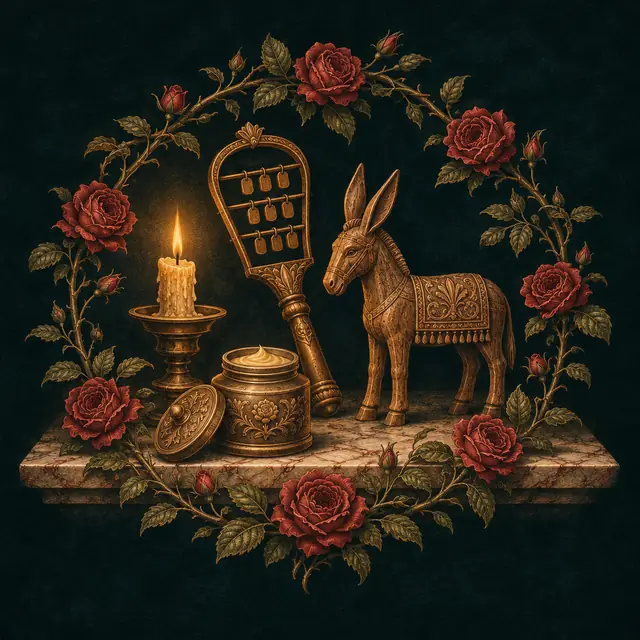
Who was Apuleius, and what is truly known of them?
What is known
Latin writer and Platonist born at Madauros in Roman North Africa, who studied at Carthage and Athens. About AD 158 he was tried at Sabratha before the governor on a charge of having used magic to win a rich widow, Pudentilla, whom he had married. His defence, the Apology, survives and is the fullest ancient account of what the Romans counted as magic; he seems to have been acquitted. His novel Metamorphoses, known as The Golden Ass, is the only Latin novel to survive whole: Lucius meddles with a witch’s ointment, is turned into an ass, and is restored by the goddess Isis and initiated into her rites. It holds the tale of Cupid and Psyche. He also wrote On the God of Socrates, on the spirits between gods and men.
The teaching
Taught from his own books, the Apology, On the God of Socrates, On Plato and his Doctrine and the Metamorphoses.
What magic means
Apuleius begins from the word. In the Persian tongue, he says, a magus is what we call a priest. Magic in that sense is the art of worshipping the gods, handed down since Zoroaster and Oromazes, which Plato says the Persians taught their princes as a royal discipline: it is pious, wise in divine things, and no crime at all. In the common sense a magus is someone who, by speaking with the immortal gods, can do whatever he wishes by the strength of his spells; and if that were true of him, he asks, who would dare accuse so powerful a man?
The charge of magic, he teaches, has always fallen on philosophers. Those who look into the causes of things are called godless, as Anaxagoras, Democritus and Epicurus were; those who look into providence and honour the gods are called magicians, as Epimenides, Orpheus, Pythagoras and Ostanes were. The crowd cannot tell the study of nature from sorcery.
A philosopher's curiosity
Every object his accusers held against him becomes a lesson. He bought rare fish to dissect them, as Aristotle and Theophrastus did, to learn how they are made: that is natural philosophy, not a love charm. He owned a mirror, and a philosopher should. Socrates told his pupils to look at themselves often, so that the handsome might not shame their beauty with vice and the plain might make up for their looks with virtue; and the mirror asks the questions of optics, whether images flow off bodies or rays go out from the eyes, and why the right hand appears as the left.
Poverty, he says, has long been the handmaid of philosophy: frugal, content with little, the guardian of a good name. The small figure he carried and prayed to was no skeleton, as they claimed, but a graceful Mercury; and beyond all such images he worships the one Plato calls the king, the cause and origin of all nature, the highest father of the soul, whom no words can reach.
The beings of the air
On the God of Socrates sets out the world in three dwellings. The gods live in the aether: some we see, the Sun, the Moon and the stars, and some we know only with the mind. Human beings live on the earth. Between lies the air, and since every element has its own living creatures, the air has them too: the daimones, who carry between gods and men, taking prayers up and bringing gifts and warnings down.
He defines them in five strokes: in kind they are living beings, in mind rational, in soul open to feeling, in body made of air, in time everlasting. The first three they share with us, the fourth is their own, and the fifth they share with the gods. Because they feel, they can be angered and appeased, and so the rites and gifts that please them differ from place to place; the gods themselves stand far above every passion and touch no human affair directly. Through the daimones come prophecy and dreams, omens and oracles, and the wonders that magicians work.
The guardian of each soul
The human soul itself, while it lives in the body, is a daimon, which the Romans call the genius, born with each person; to be happy, eudaimon, is to have a good daimon, which is a good soul. When it leaves the body it becomes a lemur. A soul that lived well becomes a Lar and guards its house; one that lived ill wanders as a larva, an empty fright to the good and a harm to the wicked; one whose desert is uncertain is counted among the Manes. Higher still are daimones never bound to a body, Sleep and Love among them, and from these, as Plato teaches, a witness and guardian is given to each person, who sees every deed and even every thought, and who at death leads the soul to judgement and testifies there.
So the lecture ends as an exhortation. The guardian of Socrates spoke to him because he kept his soul clean, and anyone may tend their own daimon by philosophy. People spend on horses, houses and fine clothes and leave their own minds untilled; they should spend on what is truly theirs, the soul, as Socrates did.
Plato's teaching in brief
In his handbook of Plato he gives the school's foundations plainly. There are three first principles: God, who is one, without body, beyond telling, the father and maker of all; matter, without form or quality, which receives every shape; and the ideas, the simple and eternal patterns of all that is made. The soul of the world moves it, and the human soul has three parts: reason, set in the head, spirit, in the breast, and desire, below the midriff. Virtue is the right order of the three under reason, and the end of life is to become as like God as a human being can.
Curiosity and the goddess who sees
His novel teaches the same things as a story. Lucius falls through curiosity: he wants to watch magic worked, rubs on the wrong ointment and is made a beast, and through every misfortune he stays a man inside, seeing and hearing what people do in front of an ass. When Isis restores him, her priest tells him that his slippery youth fell into slavish pleasures and that he has paid the price of an unlucky curiosity; blind Fortune tossed him about, and now he has passed into the care of a Fortune who sees.
The tale of Cupid and Psyche, told at the novel's centre, turns on a forbidden look as well, and is told whole on its own page among the stories. The night of his initiation is taught in full on the page of The ancient mysteries, under Orders and mystery schools. After it the goddess calls him twice more, to the night rites of Osiris and to a third, and he ends among her servants at Rome, his head shaven, glad to serve. What he once tried to steal through a witch's box, the gods give in their own time and on their own terms.
Orders and memberships
In the Apology he says he had been initiated into several mystery cults in Greece and kept their tokens. The last book of the novel describes initiations of Isis and Osiris so closely that many think it draws on his own, though he never says so. Augustine reports that he later held a public priesthood at Carthage.
The legend
That he was a magician in earnest. By the fourth century pagans set his wonders beside those of Christ, as Lactantius and Augustine complain, and Augustine was unsure whether the change into an ass was something Apuleius reported of himself or made up.
What was forged, or is false
The Latin Asclepius, a Hermetic dialogue, was handed down among his works and long taken for his translation; most scholars now think it is not. The Herbarium of “Apuleius Platonicus”, a book of plant remedies of the fourth century, is by another hand.
Their works
- Metamorphoses, or The Golden AssNovel, about AD 160 to 180
Eleven books in which Lucius, too curious about magic, rubs on a witch’s ointment and becomes an ass. He passes through robbers, priests and millers, and hears many tales, Cupid and Psyche among them, until the goddess Isis restores him and he is initiated into her mysteries. It is the only Latin novel that survives whole.
Ask the Oracle about it - ApologySpeech, about AD 158
The speech he gave at Sabratha before the governor, answering the charge that he had used magic to win the rich widow Pudentilla. He mocks his accusers, explains his fish, his mirror and his small statue, and argues that a philosopher’s curiosity is not sorcery. It is the fullest ancient account of what Romans counted as magic.
Ask the Oracle about it - On the God of SocratesTreatise, 2nd century AD
A lecture on the daimones, spirits that dwell in the air between gods and men and carry prayers and gifts between them, among them the guardian spirit that warned Socrates. Augustine attacked it in the City of God, and it became a main source for the Middle Ages on spirits.
Ask the Oracle about it - On Plato and his DoctrineTreatise, 2nd century AD
A short handbook of Plato’s teaching on nature and on ethics, from the Platonism of the schools in Apuleius’s day. Plain in style beside his other works, it shows him as a teacher of philosophy as well as a writer of tales.
Ask the Oracle about it - FloridaCollection, 2nd century AD
Twenty three passages from his public speeches at Carthage, chosen for their brilliance: on the parrot, on the flute player Marsyas, on travels in the east. They show the showman orator who held crowds in the theatre of Carthage.
Ask the Oracle about it - AsclepiusTranslation, 4th century AD
The Latin version of a lost Greek Hermetic dialogue, in which Hermes teaches Asclepius about God, the world and the statues into which the Egyptians drew down spirits. Copied in manuscripts with Apuleius’s philosophical works, it was the one Hermetic text the Latin Middle Ages knew.
It travelled under his name, but the translation is not his and was made after his time.
Ask the Oracle about it
How the house tells a life
This life is told from the record, with what is documented, what is legend and what was forged kept apart. A membership in an order is stated only where documents show it. A person’s chart explains none of their deeds.
The arts it feeds
Orders and mystery schoolsThe spirit realmMagic and protection
Lives near it in time
Lives and legends
PythagorasApollonius of TyanaSimon MagusVettius ValensMary the ProphetessIamblichusZosimos of PanopolisJabir ibn HayyanAbu Ma’sharMichael ScotAbraham AbulafiaMoses de LeónThe whole tree

