
Adam Weishaupt
1748 to 1830
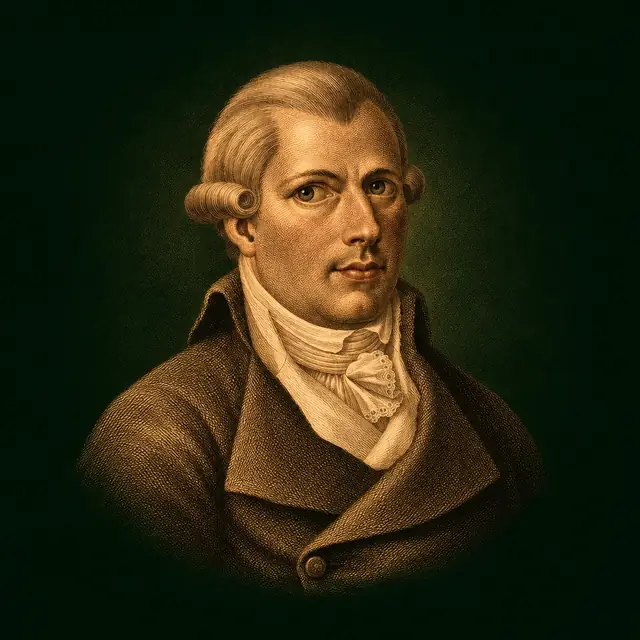
Who was Adam Weishaupt, and what is truly known of them?
What is known
Bavarian law professor, born at Ingolstadt and schooled by the Jesuits. In 1773 he took the chair of canon law at Ingolstadt, the first layman to hold it. On 1 May 1776 he founded with four students a secret society, soon called the Order of the Illuminati, to spread the Enlightenment and to weaken the hold of the clergy on the state; he wrote in it as “Spartacus”. Adolph Knigge joined in 1780, built its grades on Masonic lines and left after a quarrel in 1784. The Elector of Bavaria banned secret societies in 1784 and the Illuminati by name in 1785. Weishaupt lost his chair and fled, and the order’s seized papers were printed by the government in 1787. He lived on at Gotha and died there in 1830.
The teaching
Taught from his own writings in defence of the order, with its papers seized and printed in 1787.
A school of humanity
Weishaupt teaches that human beings can be made better, step by step, by reason and education, and that this is the work of a society of chosen people who first improve themselves and then help to improve the world around them. The order's aim, its names and reports and its grades are taught on the branch of the Templars and Illuminati; here is what is most his own in it.
Know yourself
The first work is self-knowledge. A member is to watch himself, his passions, his habits and his faults, and to write down what he finds; his superior watches him too, and through the reports comes to know him, it may be, better than he knows himself. Self-love hides a person's failings from him, so no one improves by his own eyes alone: each needs a guide who sees him clearly and will tell him. Every member is a pupil first, and in time a guide to others.
Reading for character
The young members read before they act. They are given the moralists of antiquity and the best writers of their own age, and they are to draw from their reading rules for their own conduct, not opinions to show off. Learning in the order is for character: a well-read man who is no better for his reading has missed its point.
Why secrecy
The order is secret, Weishaupt argues, because the good are few and scattered and the wicked many and joined. A reform of minds that showed itself openly in a land ruled by priests and princes would be crushed before it had begun; hidden, it can gather the good, train them and set them where they can do good, until enough people are enlightened that the abuse of power can no longer stand. Secrecy, he says, is for protection and not for plotting.
The art of governing
In his later books he turned to the art of governing itself. Taking the brotherhood of Pythagoras as his pattern, he holds that to govern people well is first to know them, their passions and their interests, and that a society of the wise does most for a state by forming the characters of those who will lead it, not by seizing its offices. He weighs the danger too: a society that gathers influence in secret draws suspicion and hatred, as the brotherhood of Pythagoras did, and as his own order did in Bavaria.
The perfecting of the race
Behind all of it stands one faith: the human race is moving, slowly and with many relapses, toward its perfection, and every improvement of a single person is a step in that movement. Reason, education and good morals are the means, not force, and the end is a humanity that needs no master because it governs itself well.
Orders and memberships
Founder of the Bavarian Illuminati in 1776, and a Freemason from 1777, when he joined a lodge at Munich. Both are documented. At its height the order had perhaps two thousand members, most of them in German lands, and it was finished by 1787.
The legend
That the order outlived its ban and has directed revolutions, banks and governments ever since. Barruel and Robison printed that in 1797; no document shows the order at work after the 1780s. Its own papers show a plan to place members in lodges, schools and offices in the German states, and no plan for the world.
What was forged, or is false
Sayings about ruling mankind that are passed round under his name without a source, and the tale that he took the place of George Washington. Later writers also laid a Jewish or a satanic plot on the order; nothing in its papers supports either, and both are false.
Their works
- Original Writings of the Order of the IlluminatiPapers, 1787
The order’s papers seized in raids of 1786 and printed by the Bavarian government to show what it had been. They hold Weishaupt’s letters as Spartacus, its statutes and its plans to place members in lodges, schools and offices. They are the main record of the order, and they show no plan for the world.
Printed by the order’s enemies from seized papers, not published by Weishaupt himself.
Ask the Oracle about it - Apology for the IlluminatiBook, 1786
Written in exile after the ban, his defence of the order and of his own conduct. He argued that it had aimed at moral improvement and the spread of reason, not at the overthrow of church or state.
Ask the Oracle about it - The Improved System of the IlluminatiBook, 1787
His own printing of the order’s grades and arrangements, made in answer to the government’s publication of its papers. It shows the order as he wished it to be understood, as a school of virtue for chosen young men.
Ask the Oracle about it - PythagorasBook, 1790
A book written at Gotha on the art of governing and on secret societies, taking the brotherhood of Pythagoras as its pattern. It is one of several later works in which he reflected on what his own order had tried and failed to do.
Ask the Oracle about it
How the house tells a life
This life is told from the record, with what is documented, what is legend and what was forged kept apart. A membership in an order is stated only where documents show it. A person’s chart explains none of their deeds.
The arts it feeds
Lives near it in time
Lives and legends
Court de GébelinGiacomo CasanovaMartinez de PasquallyFranz Anton MesmerEtteillaCount CagliostroNapoleon BonaparteMarie Anne LenormandFrancis BarrettMarie LaveauEdward Bulwer-LyttonAllan KardecThe whole tree

