Zodiac Sign Dates 2026 to 2030The Exact Time the Sun Enters Each Sign
A zodiac sign does not change on the same date every year. The Sun crosses each 30 degrees at an exact moment that moves by hours from year to year, and the date you see depends on your time zone.
Direct answer
Short version
The Sun enters each tropical zodiac sign at an exact moment. In 2026 it enters Aries on 20 March at 14:46 UTC and Leo on 22 July at 19:13 UTC. Each moment moves about six hours later the next year and jumps back after a leap day. The tables below give all twelve ingresses for 2026 to 2030 in UTC. To find the sign for a birth, convert the birth time to UTC and read which ingress came last.

What does your own chart say about you?
Choose love, work or purpose for a personal insight and a useful next step. Your reading uses your own birth details.
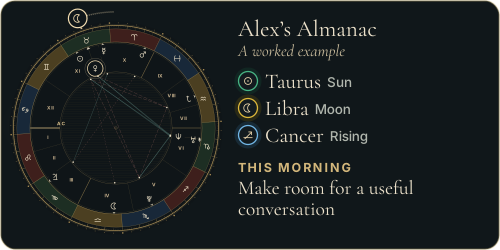
Walk through Alex’s whole example first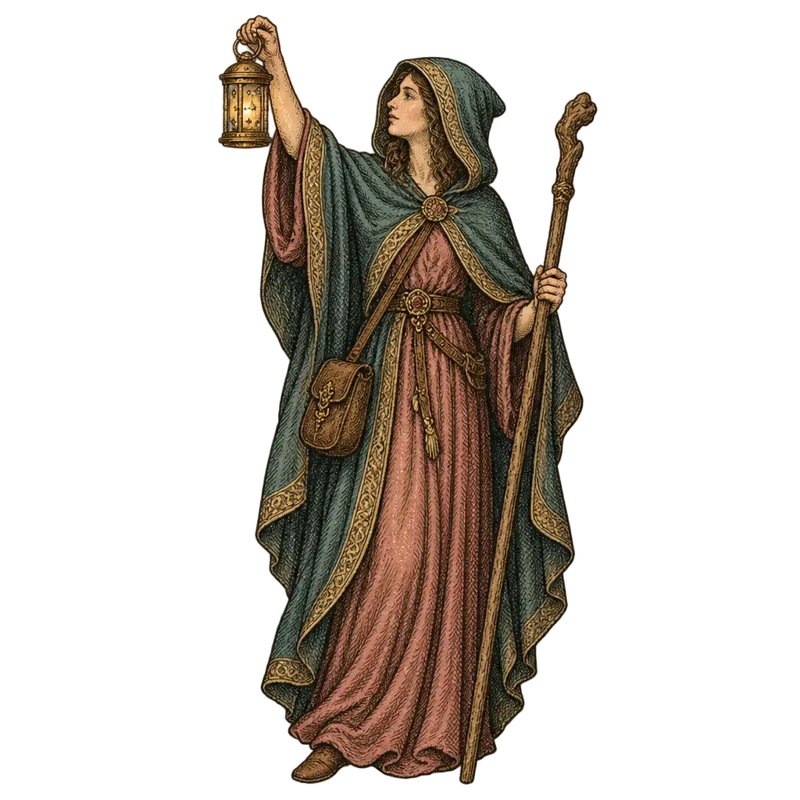
 The Road of AgesSee the turning points of your whole life, from your birth date
Free first look
The Road of AgesSee the turning points of your whole life, from your birth date
Free first look
Prefer to explore first?
 The Road of AgesThe turning points of your whole life, from your own chart
Walk my road
The Road of AgesThe turning points of your whole life, from your own chart
Walk my road
Visual guide
Zodiac Sign Dates 2026 to 2030: The Exact Time the Sun Enters Each Sign
What it means when the Sun enters a sign
The tropical zodiac divides the Sun’s yearly path, the ecliptic, into twelve arcs of 30 degrees, counted from the point where the Sun crosses the celestial equator northward at the March equinox. The Sun enters a sign at the instant its ecliptic longitude reaches a multiple of 30 degrees: 0 for Aries, 30 for Taurus and so on around the circle. That is why the four seasons open on four particular signs. Aries begins at the March equinox, Cancer at the June solstice, Libra at the September equinox and Capricorn at the December solstice, and the other eight changes fall between them. Sidereal signs, used in Indian astrology, count from a point fixed against the stars, about 24 to 25 degrees along the ecliptic from the equinox, so the Sun enters each of them roughly three and a half weeks after the dates on this page.
Exact ingress times, 2026 to 2030 (UTC)
The minute the Sun enters each sign, in Coordinated Universal Time. Read across a row to watch one sign’s moment drift from year to year.
| Sign | 2026 | 2027 | 2028 | 2029 | 2030 |
|---|---|---|---|---|---|
| Aries | 20 Mar, 14:46 | 20 Mar, 20:25 | 20 Mar, 02:17 | 20 Mar, 08:02 | 20 Mar, 13:52 |
| Taurus | 20 Apr, 01:39 | 20 Apr, 07:18 | 19 Apr, 13:10 | 19 Apr, 18:56 | 20 Apr, 00:44 |
| Gemini | 21 May, 00:37 | 21 May, 06:18 | 20 May, 12:10 | 20 May, 17:56 | 20 May, 23:41 |
| Cancer | 21 Jun, 08:25 | 21 Jun, 14:11 | 20 Jun, 20:02 | 21 Jun, 01:48 | 21 Jun, 07:31 |
| Leo | 22 Jul, 19:13 | 23 Jul, 01:05 | 22 Jul, 06:54 | 22 Jul, 12:42 | 22 Jul, 18:25 |
| Virgo | 23 Aug, 02:19 | 23 Aug, 08:14 | 22 Aug, 14:01 | 22 Aug, 19:52 | 23 Aug, 01:36 |
| Libra | 23 Sep, 00:05 | 23 Sep, 06:02 | 22 Sep, 11:45 | 22 Sep, 17:39 | 22 Sep, 23:27 |
| Scorpio | 23 Oct, 09:38 | 23 Oct, 15:33 | 22 Oct, 21:13 | 23 Oct, 03:08 | 23 Oct, 09:01 |
| Sagittarius | 22 Nov, 07:23 | 22 Nov, 13:16 | 21 Nov, 18:54 | 22 Nov, 00:49 | 22 Nov, 06:45 |
| Capricorn | 21 Dec, 20:50 | 22 Dec, 02:42 | 21 Dec, 08:20 | 21 Dec, 14:14 | 21 Dec, 20:10 |
| Aquarius | 20 Jan, 01:45 | 20 Jan, 07:30 | 20 Jan, 13:22 | 19 Jan, 19:01 | 20 Jan, 00:54 |
| Pisces | 18 Feb, 15:52 | 18 Feb, 21:33 | 19 Feb, 03:26 | 18 Feb, 09:08 | 18 Feb, 15:00 |
Times are UTC, to the nearest minute, from the Swiss Ephemeris. A second ephemeris agreed with it to within 20 seconds on every crossing checked. Capricorn’s row is the December ingress that opens the sign; the sign runs on into the following January.
Why the moment moves from year to year
A calendar year is 365 days, but the Sun takes about 365.24 days to return to the same longitude, so each ingress lands about six hours later on the clock than it did a year before. A leap day then pulls it back by about eighteen hours. The Aries ingress shows the pattern: 14:46 in 2026, 20:25 in 2027, 02:17 in 2028, 08:02 in 2029 and 13:52 in 2030, every one of them on 20 March. The Gregorian leap-year rule keeps the equinox near that date across the decades. For most other signs the change can land a day earlier or later than in the year before, which is why a single printed range never fits every year.
On which dates the Sun changes sign, 1950 to 2050
No sign changes on one fixed date. Counting the UTC date of the ingress in each of the 101 calendar years from 1950 to 2050, every sign changes on at least two different dates, and five of the twelve on three.
| Sign | Most common date | Other dates (years) |
|---|---|---|
| Aries | 20 Mar (77 of 101 years) | 21 Mar (22), 19 Mar (2) |
| Taurus | 20 Apr (65 of 101 years) | 19 Apr (36) |
| Gemini | 21 May (62 of 101 years) | 20 May (39) |
| Cancer | 21 Jun (80 of 101 years) | 20 Jun (14), 22 Jun (7) |
| Leo | 22 Jul (61 of 101 years) | 23 Jul (40) |
| Virgo | 23 Aug (69 of 101 years) | 22 Aug (32) |
| Libra | 23 Sep (60 of 101 years) | 22 Sep (41) |
| Scorpio | 23 Oct (83 of 101 years) | 22 Oct (10), 24 Oct (8) |
| Sagittarius | 22 Nov (80 of 101 years) | 21 Nov (16), 23 Nov (5) |
| Capricorn | 21 Dec (56 of 101 years) | 22 Dec (45) |
| Aquarius | 20 Jan (81 of 101 years) | 19 Jan (16), 21 Jan (4) |
| Pisces | 18 Feb (53 of 101 years) | 19 Feb (48) |
In UTC the Sun enters Leo on 22 July in 61 of those 101 years and on 23 July in 40, so a single fixed start date can only be right for part of the years.
Why the signs are not the same length
Each sign is 30 degrees wide, but the Sun does not cross them at a steady rate. The Earth is nearest the Sun in early January, when the Sun appears to move fastest along the ecliptic, and farthest from it in early July, when the Sun moves slowest. Counting from the ingress times above, the Sun spends 31.45 days in Cancer, the longest, and 29.44 days in Capricorn, the shortest, in the zodiac year that opens in March 2026. The three ten-degree decans inside a sign share the difference, so a decan is a little under ten days in winter and a little over ten in summer.
How many days the Sun spends in each sign, from March 2026
Every sign is 30 degrees wide. The days it takes the Sun to cross one are not the same.
| Sign | The Sun enters (UTC) | Days in the sign |
|---|---|---|
| Aries | 20 Mar 2026, 14:46 | 30.45 |
| Taurus | 20 Apr 2026, 01:39 | 30.96 |
| Gemini | 21 May 2026, 00:37 | 31.32 |
| Cancer | 21 Jun 2026, 08:25 | 31.45 |
| Leo | 22 Jul 2026, 19:13 | 31.30 |
| Virgo | 23 Aug 2026, 02:19 | 30.91 |
| Libra | 23 Sep 2026, 00:05 | 30.40 |
| Scorpio | 23 Oct 2026, 09:38 | 29.91 |
| Sagittarius | 22 Nov 2026, 07:23 | 29.56 |
| Capricorn | 21 Dec 2026, 20:50 | 29.44 |
| Aquarius | 20 Jan 2027, 07:30 | 29.59 |
| Pisces | 18 Feb 2027, 21:33 | 29.95 |
Cancer is the longest at 31.45 days and Capricorn the shortest at 29.44, for the zodiac year that opens at the March 2026 equinox.
Your local date is not the table’s date
The times above are in UTC, the same instant for everyone on Earth. A birth certificate shows local time, and the same instant can carry a different date there. A birthplace ahead of UTC reaches the ingress later on its clock, sometimes on the next date. A birthplace behind UTC reaches it earlier, sometimes on the previous date. Convert the birth time to UTC first, using the offset and daylight-saving rule that applied at that place on that date, and only then compare it with the ingress. The examples below take the 2026 Leo ingress to three cities.
If you were born within a day of a change
Astrologers often call these birthdays cusp dates. The calculation is not vague: at any instant the Sun is in exactly one sign, so a birth before the ingress belongs to the earlier sign and a birth after it to the next. What stays open is interpretation. Some readers feel that a person born near a change carries something of both signs. That is a symbolic reading, and nothing on this page measures it. If your birth moment sits within a few hours of an ingress, confirm the time on the birth certificate and the time zone before trusting a sign, because an error of one hour is enough to cross the line. The Sun sign is also only one placement. Your Moon, Ascendant and planets are fixed by their own positions, whichever sign the Sun was in.
Concrete examples
| Example | What it means in practice |
|---|---|
| The Sun enters Leo in New York (UTC-4, daylight time) | On the clocks of New York the 2026 Leo ingress reads 3:13 pm on 22 July. A baby born there at 10:00 am has the Sun in Cancer, and one born at 4:00 pm has it in Leo. |
| The Sun enters Leo in London (UTC+1, British Summer Time) | On the clocks of London the 2026 Leo ingress reads 8:13 pm on 22 July. A baby born there at 6:00 pm has the Sun in Cancer, and one born at 9:00 pm has it in Leo. |
| The Sun enters Leo in Sydney (UTC+10, standard time) | On the clocks of Sydney the 2026 Leo ingress reads 5:13 am on 23 July. A baby born there at 11:00 pm on 22 July has the Sun in Cancer, and one born at 6:00 am on 23 July has it in Leo. |
Related Almanac guides
More from the journal
Sources and editorial method
Research and editorial references used for this page include:
- Swiss Ephemeris programmer documentation - Apparent geocentric tropical positions, the basis of every time on this page.
- U.S. Naval Observatory: Astronomical Almanac glossary - Definitions of ecliptic, equinox and solstice.
- PyEphem - The second, independent ephemeris the times were checked against.
- The Almanac’s calculation and interpretation method
Each time is the moment the Sun’s apparent geocentric ecliptic longitude, true equinox of date, reaches a multiple of 30 degrees, solved on the Swiss Ephemeris and rounded to the nearest minute in UTC. The same 187 crossings were solved again on PyEphem and agreed to within 20 seconds. The date table counts the UTC date of each ingress in every calendar year from 1950 to 2050. Local times in the examples use the offsets stated beside them. Nothing was copied from another calendar, and the meaning of a sign is outside what these numbers measure.
From the reference page to your own chart
Every word here
is in your own chart.
- Your chart and numbers, read for you in about a minute
- Ask the Oracle anything about them
- Every personal tool and daily guidance
Free reading, no card needed. Optional membership: payment details required, 7 days free, then $12/month. Cancel before it renews and you pay nothing.
Common questions
What time does the Sun enter Leo in 2026?
The Sun enters Leo on 22 July at 19:13 UTC in 2026. In New York that is 3:13 pm on 22 July, in London 8:13 pm on 22 July and in Sydney 5:13 am on 23 July.
Why do printed dates for my sign differ from year to year?
A printed range such as a fixed start and end date is a convenient average. The true boundary is a moment that shifts by hours each year and is pulled back by leap days, and the date it lands on depends on the time zone. Over 101 years every sign changes on at least two different UTC dates.
Is the change of sign the same moment everywhere in the world?
Yes. The Sun crosses the boundary at one instant for everyone. Only the clock reading, and sometimes the date, differs from place to place, which is why a birth near a change should be converted to UTC before its sign is read.