How to Read a Natal Chart Clearly
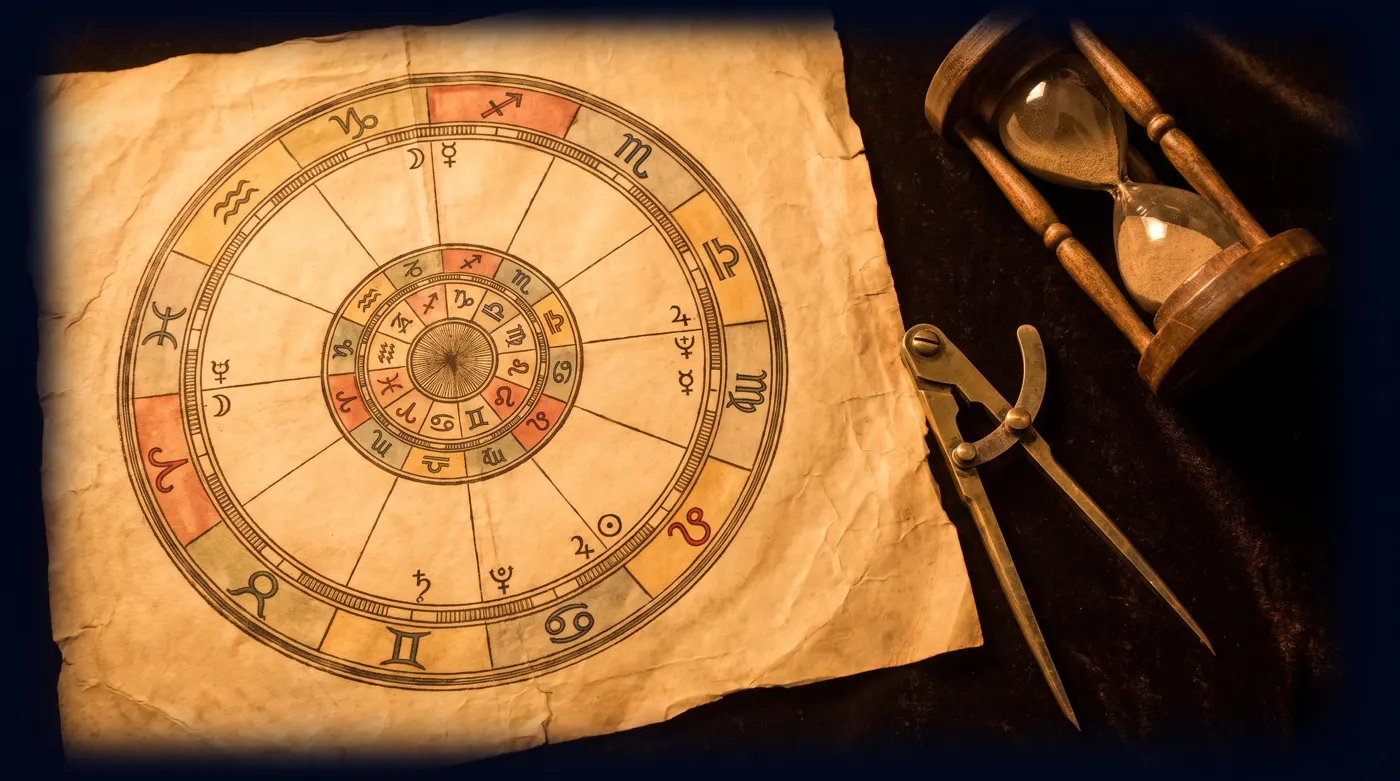
A clear natal chart reading moves in layers so the chart becomes a sentence, not a pile of disconnected placements.
Direct answer
Short version
To read a natal chart clearly, start with the Big Three, identify the chart ruler and house emphasis, read planets by sign and house, add major aspects, then check current transits only after the natal pattern is understood.
The Instruments
Ten readings, worked out from your own birth chart
An instrument is a reading this house works out for you. Give your birth date, time and place once, and each one reads today’s real sky against the chart you were born under. Eight are personal; two are calendars anyone can open. A free account opens one instrument a day. The plans open every instrument, every day.
- Natal Chart Every planet, house and aspect in your chart
- Active Transits Where the planets are now, read against your chart
- Daily Counsel What to pursue today, and what to leave alone
- Personal Timing Your best days to decide, weeks ahead
- Fellowship Your chart and another, read side by side
- Theme of the Day The one thing today is asking of you
- Sacred Numbers Your life path, your cycles, your name in numbers
- Aeolian Harmonics Classical music chosen to match your chart
- Mercury Retrograde Every Mercury retrograde this year, with its dates Open to all
- Void-of-Course Moon When the Moon is between signs, hour by hour Open to all

Visual guide
How to Read a Natal Chart Clearly
Start with structure
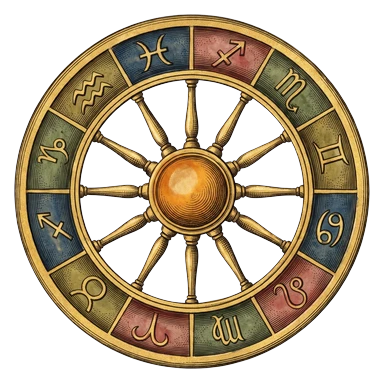
Before interpreting every planet, name the chart architecture: Ascendant, Sun, Moon, Midheaven, chart ruler, and any crowded house or sign. This prevents the reading from becoming a random list.
Read planet, sign, and house together
A planet tells what function is speaking. The sign tells how it speaks. The house tells where it lands. Venus in Capricorn in the 10th is not the same as Venus in Capricorn in the 4th.
Use aspects as relationships
Aspects show how parts of the person interact. A square is not a curse; it is a pressure pattern. A trine is not a free life; it is an ease pattern that still needs direction.
End with one practical synthesis
A good reading should end with one or two sentences that explain what the chart is asking the person to mature, steward, repair, or express.
Concrete examples
| Example | What it means in practice |
|---|---|
| Scattered reading | You are a Leo, you are emotional, you like beauty. |
| Clear reading | Your Leo Sun in the 6th grows confidence through craft, service, and repeated discipline. |
| Synthesis | Visibility becomes healthy when it serves a useful daily practice, not when it chases applause. |
Related Almanac guides
More from the journal
Sources and editorial method
Research and editorial references used for this page include:
- Google Search Central: Creating helpful, reliable, people-first content - Used as the editorial standard for direct answers, useful depth, and reader-first structure.
- Astrodienst: Transits - Used for the basic definition of transits as current planetary passages over birth positions.
- Astrodienst: The four Elements - Used for the traditional grouping of zodiac signs by element.
This static article is written for crawlable, reader-first depth: a direct answer, visual framework, examples, internal next steps, and clear limits around prediction or fatalism.
Put this insight to work
Use this article as the map, then open the matching tool when you want the idea applied to your own chart and timing.
Cast my natal chartCommon questions
What is the first thing to read in a natal chart?
Start with Ascendant, Sun, Moon, chart ruler, Midheaven, and house emphasis.
Should I read every placement?
Eventually, yes, but beginners should synthesize major structures first.
What makes a chart reading clear?
Layered interpretation: planet, sign, house, aspect, ruler, timing, and real-life application.