

What Is Celestial Intelligence? History and Modern Uses
“Celestial intelligence” is not one standard modern concept. Historically, celestial intelligences were immaterial intellects believed by some ancient and medieval philosophers to move or govern heavenly spheres. Today the phrase may be used poetically for sky wisdom or commercially for AI-assisted astrology.
$0 today, then $12/month after 7 days. Cancel anytime.
Direct answer
Short version
In historical philosophy, a celestial intelligence was an incorporeal intellect associated with the motion or form of a celestial sphere within a geocentric cosmos. In modern usage, the phrase may describe symbolic interpretation of the heavens or an AI system that analyzes astronomical or astrological data. These meanings should not be conflated, and none proves that planets are conscious.

What does your own chart say about you?
Choose love, work or purpose. Your reading is written from your chart. Your reading uses your own birth details.
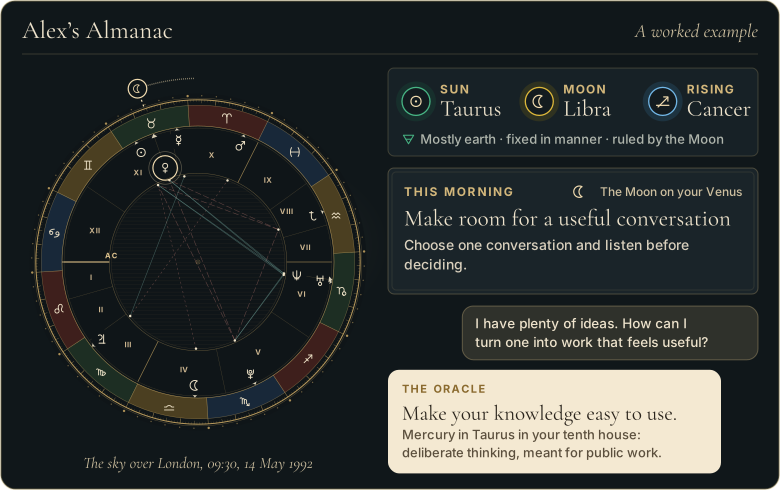
Walk through Alex’s whole example first
 The Road of AgesSee the turning points of your whole life, from your birth date
See your road's shape
The Road of AgesSee the turning points of your whole life, from your birth date
See your road's shape
Prefer to explore first?
 The Road of AgesThe turning points of your whole life, from your own chart
Walk my road
The Road of AgesThe turning points of your whole life, from your own chart
Walk my road
Free, by email
Your daily Almanac letter
One short letter at 7 each morning: the day’s theme read for your own chart, and one thing to do with it.
Quick facts
| Usage | What it means | Important limit |
|---|---|---|
| Ancient and medieval philosophy | An immaterial intellect or separated substance connected with a celestial sphere and cosmic motion. | Part of historical metaphysics and premodern cosmology, not a finding of modern astronomy. |
| Theological interpretation | Celestial movers were sometimes identified or compared with angels. | Traditions disagreed; the equation is not a simple biblical doctrine. |
| Poetic or spiritual usage | Wisdom, order, or meaning contemplated through the heavens. | Metaphor should not be presented as evidence that celestial bodies think or command. |
| Modern AI usage | Software combining calculation, stored knowledge, and generated language about the sky. | The intelligence belongs to the computational system and human context, not to the planets. |
The historical meaning of celestial intelligence
Ancient and medieval cosmologies often pictured the heavens as nested spheres carrying the Moon, planets, fixed stars, and outermost motion around a stationary Earth. Philosophers needed to explain why these regular motions occurred. In Aristotelian and later Neoplatonic traditions, immaterial movers, intellects, or “separated substances” could serve as causes or objects of desire for celestial motion. The phrase celestial intelligence belongs to that intellectual world.
Arabic and Islamic philosophers developed influential emanation schemes in which intelligences were associated with successive spheres. Latin Jewish and Christian thinkers encountered, translated, criticized, and adapted these ideas. Some identified celestial intelligences with angels; others distinguished philosophical movers from revealed angelology or rejected parts of the cosmology. There was never one universal table accepted by every school.
Why the historical idea is not modern astronomy
Modern astronomy does not use nested solid spheres or immaterial intelligences to explain planetary motion. Heliocentric models, elliptical orbits, gravitation, and later physics replaced the older framework. Planets are physical bodies moving under natural forces. Describing the history accurately does not require mocking it; the older model joined the best available observations with philosophical assumptions that were later revised.
No accepted astronomical evidence shows that planets possess minds, intentions, or messages for individual people. “The sky is speaking” can function as poetry or religious metaphor, but it should not be disguised as an empirical claim. Astronomical calculation can be extraordinarily precise while a symbolic interpretation built from those positions remains interpretive.
What celestial intelligence can mean today
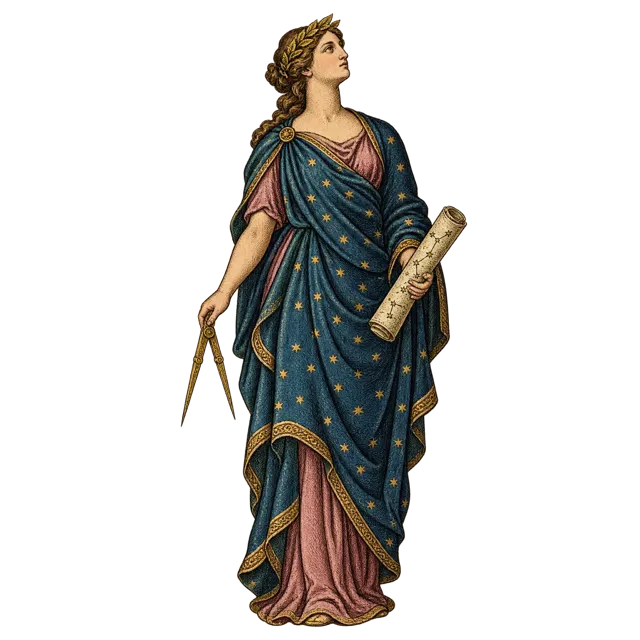
A contemporary writer may use the phrase in at least three ways. First, as a historical reference to the intelligences of premodern cosmology. Second, as metaphor for the patterns, seasons, and perspective people encounter by observing the heavens. Third, as a name for software that calculates sky data and produces interpretations. Context should make the intended meaning explicit.
The software meaning is especially easy to misunderstand. An AI language model does not receive messages from planets. It processes inputs and generates output according to its design, data, prompts, and constraints. An astronomy program computes positions; an interpretive system maps those positions to a symbolic tradition; a language model may express the result. Those are distinct operations and should be described separately.
How to evaluate a modern celestial-intelligence claim
- Ask which meaning is intended: historical intellect, theological being, metaphor, calculation engine, or generative AI.
- Ask what data entered the system and whether date, time, location, time zone, and ephemeris are accurate.
- Separate calculated facts (such as a longitude) from symbolic interpretation and generated advice.
- Look for sources, uncertainty, correction paths, privacy terms, and a clear account of human oversight.
- Reject claims that the system is divine, conscious because it describes the sky, or entitled to obedience.
- Keep medical, legal, financial, safety, and pastoral decisions with qualified people and direct evidence.
One phrase, three different statements
Historical statement: “Avicennian cosmology associated a hierarchy of intelligences with celestial spheres.” This is a claim about intellectual history and can be checked in scholarly sources. Metaphorical statement: “The seasonal sky offers a kind of celestial intelligence.” This is poetic and may be meaningful, but it is not a scientific claim. Technical statement: “A celestial-intelligence system calculated Jupiter’s longitude and generated an interpretation.” This describes software and should disclose its method and limits.
Confusion begins when a sentence moves silently from one category to another, for example, using accurate ephemeris data to imply that generated advice comes from a conscious planet, or invoking medieval angelic language to give a modern model spiritual authority. Clear labels protect both historical understanding and present-day users.
Responsible use of AI with celestial data
NIST’s AI risk guidance emphasizes validity, reliability, safety, accountability, transparency, explainability, privacy, and human oversight. For an interpretive sky system, that means documenting what is calculated, what is generated, which claims are not validated, how personal data is handled, and when a person must disregard the output. Fluent language should never be mistaken for spiritual authority or certainty.
The most defensible use is educational and reflective: explain a tradition, show the underlying positions, offer multiple interpretations, invite correction, and preserve human decision-making. The least defensible use hides uncertainty, intensifies fear, claims supernatural access, or gives consequential instructions without evidence and qualified review.
Sources and editorial method
Research and editorial references used for this page include:
- Stanford Encyclopedia of Philosophy: Arabic and Islamic Influence on the Latin West - Scholarly account of emanation, intelligences, and celestial spheres in the transmission of medieval philosophy.
- Stanford Encyclopedia of Philosophy: Maimonides - Describes the medieval cosmological hierarchy of intelligences and spheres in its philosophical context.
- NIST AI Risk Management Framework - Authoritative framework for evaluating AI risks, transparency, reliability, safety, and human oversight.
These references support the factual, historical, textual, or interpretive claims on this page. Interpretive traditions are identified as such, and factual claims are kept separate from symbolic claims.
Related reading
From the reference page to your own chart
Every word here
is in your own chart.
- A personal reading about love, work or purpose, written from your chart
- A practical next step to consider
- It opens with 7 days free, with the AI Oracle and daily guidance
$0 today, then $12/month after 7 days. Cancel anytime.
Common questions
Are celestial intelligences angels?
Some medieval thinkers identified or compared the movers of celestial spheres with angels, while philosophical and theological traditions varied. The terms are historically related in some systems but not simply identical everywhere.
Does celestial intelligence mean planets are conscious?
Not in any scientifically established sense. Historical cosmology, poetic metaphor, and modern software labels do not provide evidence that planets possess minds.
What is AI-based celestial intelligence?
It is a modern label for software that may combine astronomical calculation, astrological rules, stored reference material, and generated language. Its outputs come from computation and human design, not messages from the sky.
How can I use celestial intelligence safely?
Identify the meaning, inspect calculation and sources, distinguish fact from interpretation, protect personal data, keep human oversight, and never treat generated output as divine or professional authority.
More from the journal
Free, by email
The Almanac, in your inbox at 7
One short letter at 7 each morning: the day’s theme read for your own chart, and one thing to do with it.
