Mercury RetrogradeWhat Actually Changes
Mercury retrograde is an apparent motion, not a force. It is useful as a prompt to slow down and check your work, and useless as an explanation for everything that goes wrong.
$0 today, then $12/month after 7 days. Cancel anytime.
Direct answer
Short version
Mercury retrograde is an optical effect: Earth overtakes Mercury in its orbit, so Mercury appears to move backwards against the stars for about three weeks, three or four times a year. Nothing about the planet changes. In practice the period is best used as a scheduled review: reread contracts, confirm arrangements, back up what matters, and be slower to assume you were understood.

What does your own chart say about you?
Choose love, work or purpose. Your reading is written from your chart. Your reading uses your own birth details.
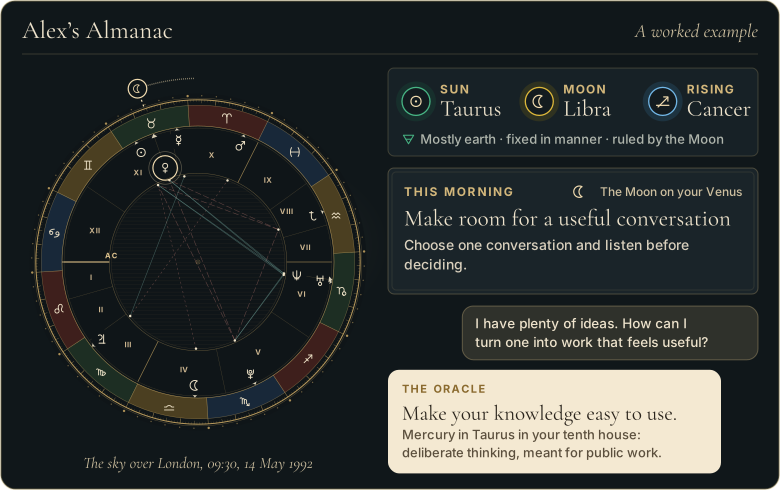
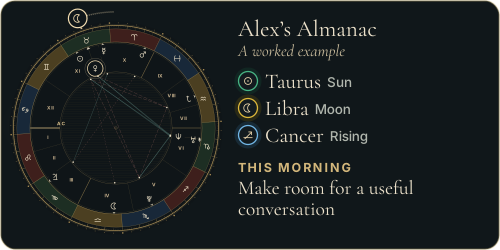
Walk through Alex’s whole example first
 The Road of AgesSee the turning points of your whole life, from your birth date
See your road's shape
The Road of AgesSee the turning points of your whole life, from your birth date
See your road's shape
Prefer to explore first?
 The Road of AgesThe turning points of your whole life, from your own chart
Walk my road
The Road of AgesThe turning points of your whole life, from your own chart
Walk my road
Free, by email
Your daily Almanac letter
One short letter at 7 each morning: the day’s theme read for your own chart, and one thing to do with it.
Visual guide
Mercury Retrograde: What Actually Changes
What is actually happening in the sky
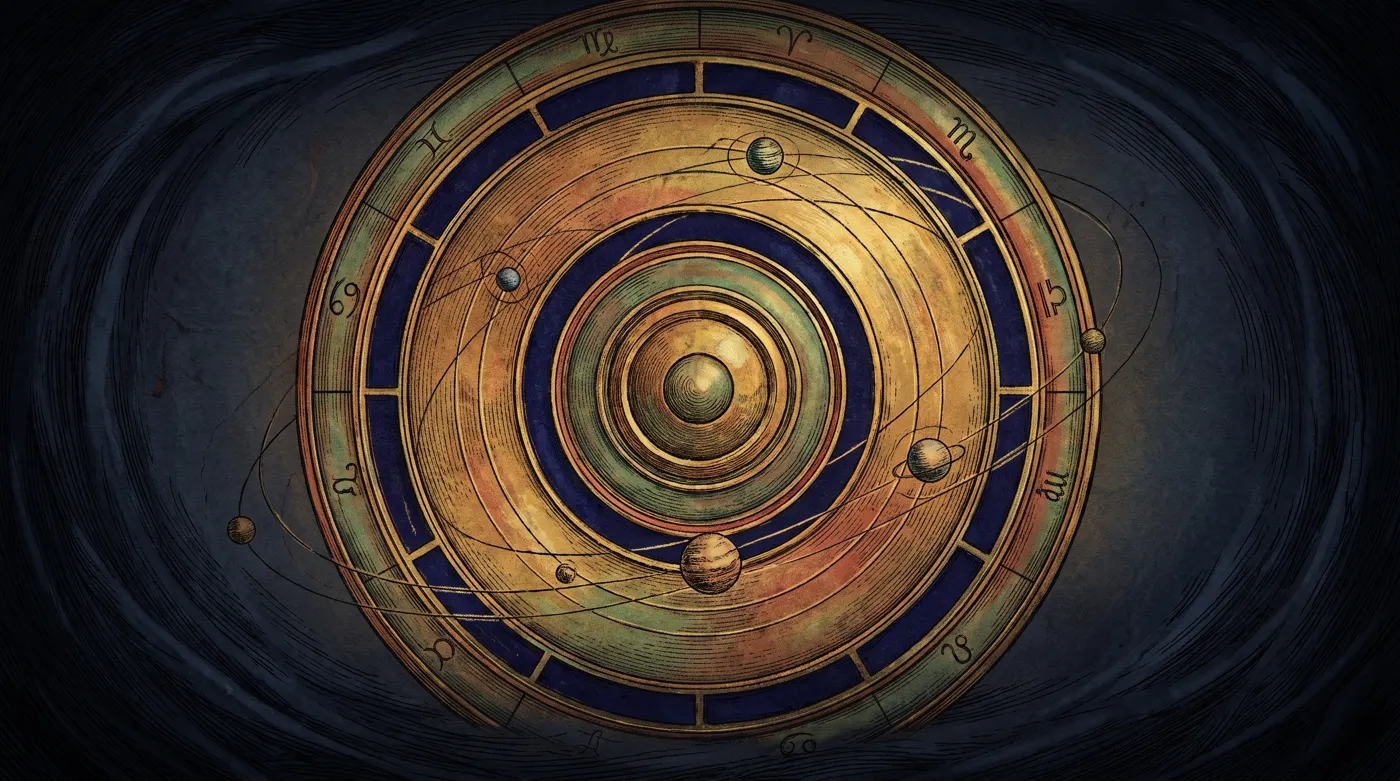
Mercury orbits the Sun faster than Earth does. When Earth passes it on the inside, Mercury appears from here to slow, stop, and travel backwards for roughly three weeks before turning again. The planet does not reverse. The word retrograde describes what it looks like from one moving vantage point, which is the same reason a train beside yours seems to slide backwards when yours pulls away.
What the tradition claims, stated fairly
Traditional practice associates Mercury with speech, writing, contracts, short journeys, messages, and mechanisms, and treats the retrograde as a season for revisiting rather than beginning. That is a claim about meaning and timing, not about physics, and it should be held as one. It does not become more true by being repeated confidently.
What it does not cause
It does not break machinery, cancel flights, end relationships, or make a decision wrong. Devices fail at the same rate all year. If a message went astray during a retrograde, the useful question is what made it easy to go astray, because that answer is still there in November. Attributing an ordinary failure to a planet removes the only part you could actually fix.
How to use the window honestly
Treat it as a recurring calendar prompt rather than a hazard warning. Three or four times a year, spend the period tidying what is unfinished, rereading what you signed, and repairing conversations you let drift. That is a good habit whatever you believe about the sky, which is exactly why the practice survives.
Concrete examples
| Example | What it means in practice |
|---|---|
| A contract lands mid-retrograde | Read it twice and ask the questions you would normally skip. Sign it if it is right; a date is not a verdict. |
| A message is misread | Ask what was ambiguous in the wording. The fix is a clearer sentence, not a calendar. |
| Nothing unusual happens at all | The common case, and the one nobody posts about. Record it. |
Prayerful reflection
Let me be careful with my words this season without becoming afraid of them, and let me not blame the sky for what patience would have solved.
Related Almanac guides
More from the journal
Sources and editorial method
Research and editorial references used for this page include:
- Astrodienst: Transits - Used for the basic definition of transits as current planetary passages over birth positions.
- Astrodienst: The four Elements - Used for the traditional grouping of zodiac signs by element.
This guide distinguishes traditional symbolism from calculated positions. Examples illustrate possible reflections, not predictions about a particular person.
From the reference page to your own chart
Every word here
is in your own chart.
- A personal reading about love, work or purpose, written from your chart
- A practical next step to consider
- It opens with 7 days free, with the AI Oracle and daily guidance
$0 today, then $12/month after 7 days. Cancel anytime.
Common questions
How often does Mercury go retrograde?
Three or four times a year, for roughly three weeks each time.
Should I avoid signing anything?
No. Read carefully and ask questions, which is good practice in any month. A deadline that ignores the sky is still a deadline.
Does the retrograde affect everyone equally?
The tradition says the effect is felt most where Mercury sits in an individual chart. Whatever you make of that, no transit overrides preparation, honesty, or ordinary care.
Free, by email
The Almanac, in your inbox at 7
One short letter at 7 each morning: the day’s theme read for your own chart, and one thing to do with it.