Planetary Transits Explained
Planetary transits show how the current sky touches the birth chart, turning static symbolism into living timing.
Direct answer
Short version
A planetary transit is the current position of a planet compared with a natal chart point. It becomes useful when you know the planet, aspect, orb, house, speed, repetition, and practical life area involved.
The Instruments
Ten readings, worked out from your own birth chart
An instrument is a reading this house works out for you. Give your birth date, time and place once, and each one reads today’s real sky against the chart you were born under. Eight are personal; two are calendars anyone can open. A free account opens one instrument a day. The plans open every instrument, every day.
- Natal Chart Every planet, house and aspect in your chart
- Active Transits Where the planets are now, read against your chart
- Daily Counsel What to pursue today, and what to leave alone
- Personal Timing Your best days to decide, weeks ahead
- Fellowship Your chart and another, read side by side
- Theme of the Day The one thing today is asking of you
- Sacred Numbers Your life path, your cycles, your name in numbers
- Aeolian Harmonics Classical music chosen to match your chart
- Mercury Retrograde Every Mercury retrograde this year, with its dates Open to all
- Void-of-Course Moon When the Moon is between signs, hour by hour Open to all

Visual guide
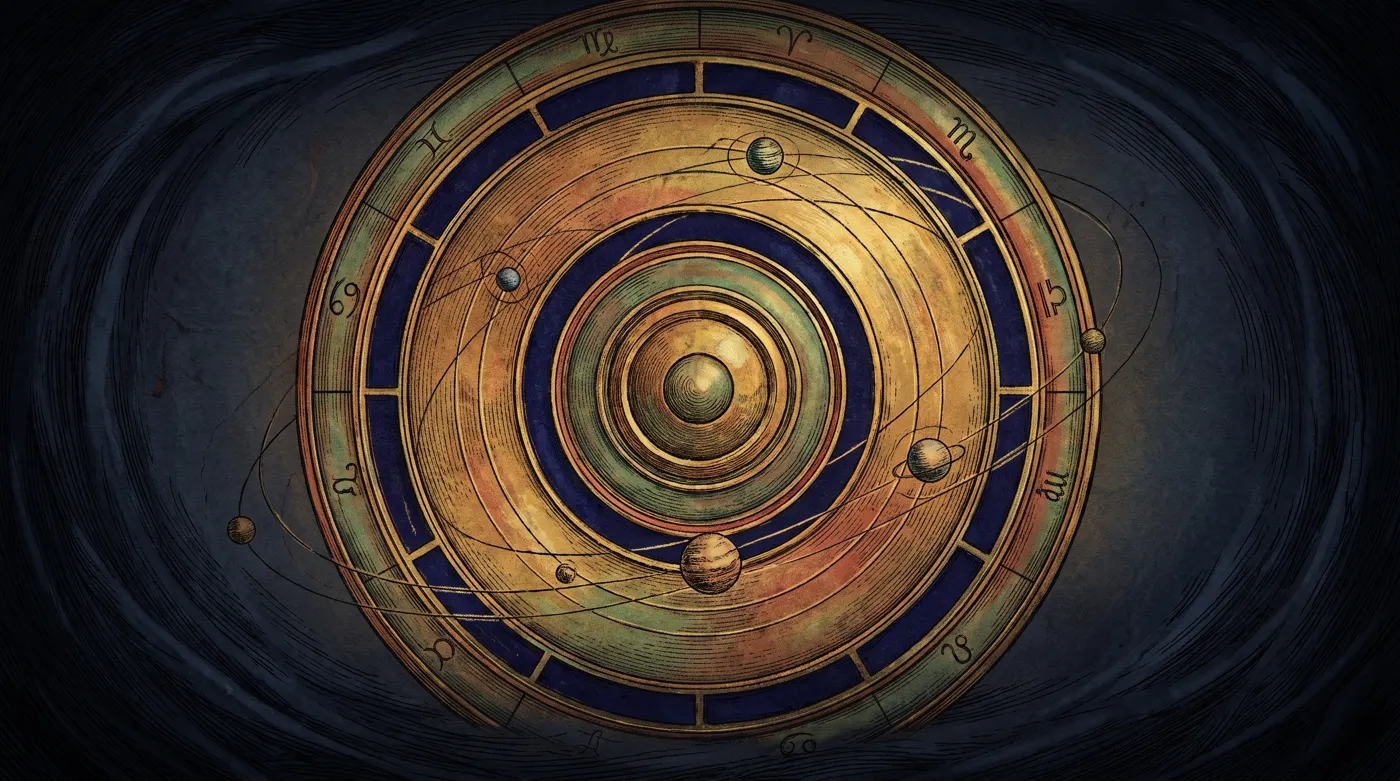
Planetary Transits Explained
Fast and slow transits
The Moon can describe hours of emotional weather. Mercury, Venus, Mars, and the Sun describe shorter personal timing. Jupiter and Saturn describe longer growth and maturity cycles. Uranus, Neptune, and Pluto describe deep seasons when they are close to important natal points.
Why orb matters
A wide transit can be background. A close transit is louder. Exact contacts, repeated contacts, and retrograde passes deserve more attention than distant aspects that barely touch the chart.
Why houses matter
The same transit changes meaning by house. Venus may bring relationship ease in the 7th, money choices in the 2nd, creative recovery in the 5th, or quiet healing in the 12th.
How to use transits without fear
A transit describes timing and pressure. It does not remove agency. The best question is: what wise action does this season ask for?
Concrete examples
| Example | What it means in practice |
|---|---|
| Jupiter conjunct Moon | Emotional capacity expands. Hospitality, family growth, appetite, and hope may increase, but promises still need proportion. |
| Saturn conjunct Sun | Identity meets structure. This can feel heavy, but it can build earned confidence. |
| Neptune square Moon | Emotional fog increases. Prayer and imagination may be strong, but facts need verification. |
Related Almanac guides
More from the journal
Sources and editorial method
Research and editorial references used for this page include:
- Google Search Central: Creating helpful, reliable, people-first content - Used as the editorial standard for direct answers, useful depth, and reader-first structure.
- Astrodienst: Transits - Used for the basic definition of transits as current planetary passages over birth positions.
- Astrodienst: The four Elements - Used for the traditional grouping of zodiac signs by element.
This static article is written for crawlable, reader-first depth: a direct answer, visual framework, examples, internal next steps, and clear limits around prediction or fatalism.
Put this insight to work
Use this article as the map, then open the matching tool when you want the idea applied to your own chart and timing.
See active transitsCommon questions
What is a planetary transit?
It is a current planet contacting a natal chart point by position or aspect.
Which transits matter most?
Close, repeated, slow, angular, and natal-chart-relevant transits usually matter most.
Are transits predictions?
They are better used as timing and pressure indicators than guaranteed event predictions.