
Léo Taxil
1854 to 1907
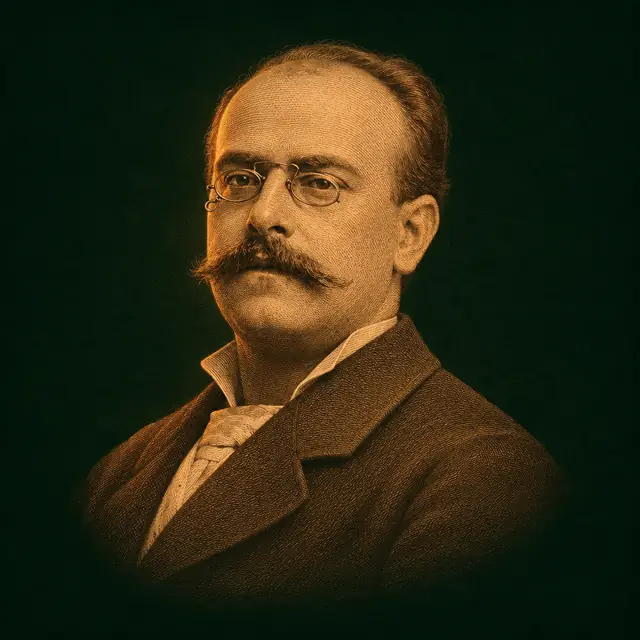
Who was Léo Taxil, and what is truly known of them?
What is known
Pen name of Gabriel Jogand-Pagès, a French journalist born at Marseille, who made his living in the 1870s and early 1880s by scurrilous pamphlets against the Church and was fined for them. In 1885 he announced his return to the Catholic faith and for twelve years sold “revelations” about the Freemasons, among them The Devil in the Nineteenth Century (1892 to 1895), written with a ship’s doctor. Pope Leo XIII received him in 1887 and bishops praised the books. On 19 April 1897, before a hall of priests and reporters in Paris, he declared that every word had been a hoax and thanked the clergy for their help, and the meeting broke up in uproar.
The teaching
Taught from his own books of revelations, 1885 to 1897, and his confession of 19 April 1897.
What the hoax claimed
Taxil's revelations told of a Freemasonry behind Freemasonry. Above the ordinary lodges, the claim ran, stood a supreme rite, Palladism, whose members worshipped Lucifer as the good god and held the God of the Christians, whom they called Adonai, to be the evil one. Albert Pike was said to have founded it at Charleston and to rule it from there as a pope of all the lodges, with a second chief at Rome, and its lodges, called triangles, were said to admit women as well as men.
The books filled it with wonders: rites at which demons appeared in visible form, a sacred image of Baphomet, hosts stolen from churches and profaned, and a line of high priestesses, of whom the most famous was Diana Vaughan, said to descend from a seventeenth-century alchemist and a demoness, to have broken with the rite, and to have become a Catholic.
The words put in Pike's mouth
The best known of the forged texts is a set of instructions said to have been sent by Pike in 1889 to the supreme councils of the world. In it Lucifer is declared to be God, the god of light and goodness, at war with Adonai, the god of darkness, and the Masons of the highest degrees are charged to keep the religion of Lucifer pure. Pike wrote nothing of the kind. The text comes out of the hoax and is still quoted as his.
How the hoax was built
The hoax was built to be believed. It used real names, Pike and the Italian grand master Adriano Lemmi among them, real lodges and real symbols, so that every claim touched something a reader could find. It gave its readers what they already feared, and when they believed it gave them more, each revelation stranger than the last, so that to doubt the newest was to doubt all that had gone before. Its witnesses could never be met, since they were written by Taxil and his helpers, and it let the praise of churchmen vouch for it.
In his confession Taxil told the hall that he had made Palladism and that he now destroyed it, and he spoke of the twelve years as a joke played on the credulous.
What the confession leaves
The plain fact is that no devil-worshipping rite ever stood behind the lodges, no Diana Vaughan ever lived as he described her, and every document of Palladism came from his desk and his helpers'. The claim outlived its maker's confession and is still repeated, and that is its lesson: a story built to be believed goes on being believed after its author has taken it back, and a claim is tested by its sources, not by how often it is told. How such a claim is tested is taught in Testing a claim.
Orders and memberships
He was initiated a Freemason in Paris in 1881 and expelled within the year, before reaching the degree of Master. That is the whole of his knowledge of the lodges from inside.
The legend
That Freemasonry hides an inner rite of devil worship directed from Charleston. It is still repeated, and it has no source but him.
What was forged, or is false
All of it, by his own confession: “Palladism”, the devil-worshipping high Masonry said to be led by Albert Pike; the convert priestess Diana Vaughan, whose name he borrowed from his typist; and the words praising Lucifer that are still quoted as Pike’s, which first appear in the writings of his hoax.
Their works
- The Devil in the Nineteenth CenturyBook, 1892 to 1895
A work in many parts written with a ship’s doctor under the name Doctor Bataille, telling of devil worship among Freemasons the world over. Bishops praised it and many believed it. By his own confession in 1897 every word was a hoax.
A hoax, confessed by its author.
Ask the Oracle about it - Memoirs of an Ex-PalladistBook, 1895 to 1897
The memoirs of Diana Vaughan, the convert priestess of Palladism he invented, whose name he borrowed from his typist. Catholic readers wrote to her and prayed for her, and she was revealed as fiction at his confession.
A hoax; Diana Vaughan never existed as he described her.
Ask the Oracle about it - The Three-Point BrothersBook, 1885
His first book of revelations about the Freemasons after his return to the faith, which he had joined and been expelled from in 1881. It began the twelve years of his hoax.
Ask the Oracle about it - La Bible amusanteBook, 1882
One of his anticlerical books from before his false conversion, mocking the stories of the Bible. It shows the trade in scandal he later turned against the Masons.
Ask the Oracle about it - The confession of 19 April 1897Speech, 1897
His address before a hall of priests and reporters in Paris, in which he declared that all his revelations had been a hoax and thanked the clergy for their help. It was printed in the press days later, and the meeting broke up in uproar.
Ask the Oracle about it
How the house tells a life
This life is told from the record, with what is documented, what is legend and what was forged kept apart. A membership in an order is stated only where documents show it. A person’s chart explains none of their deeds.
The arts it feeds
Lives near it in time
Lives and legends
The Fox sistersAnna KingsfordAnnie BesantWilliam Wynn WestcottCharles LeadbeaterMacGregor MathersArthur Edward WaiteJoséphin PéladanFlorence FarrRudolf SteinerStanislas de GuaitaPapusThe whole tree

