What the Twelve Houses Actually Divide
Signs divide the ecliptic; houses divide the sky over one place at one minute. That is why houses need a birth time and signs do not, and why two calculators can disagree about them.
Direct answer
Short version
The twelve houses come from the daily rotation of the Earth, so they turn a full circle every twenty four hours, about one degree every four minutes. Signs come from the Earth’s orbit and change roughly once a month. A birth time that is out by an hour moves the houses by about fifteen degrees and can move an Ascendant into another sign, while the same error barely touches a Sun sign.
What does your own chart say about you?
Choose love, work or purpose for a personal insight and a useful next step. Your reading uses your own birth details.
Walk through Alex’s whole example first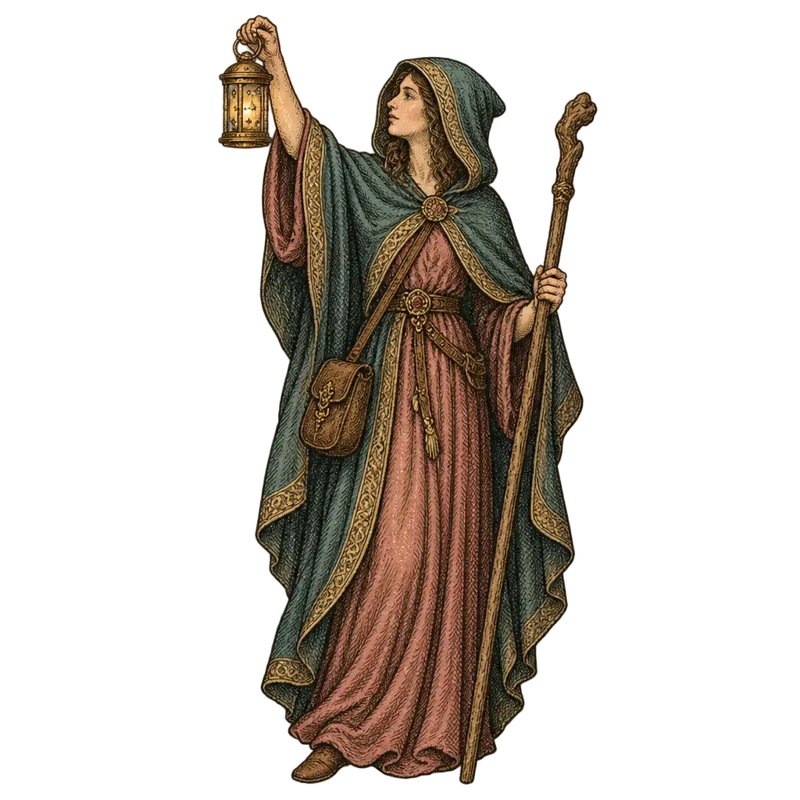
 The Road of AgesSee the turning points of your whole life, from your birth date
Free first look
The Road of AgesSee the turning points of your whole life, from your birth date
Free first look
Prefer to explore first?
 The Road of AgesThe turning points of your whole life, from your own chart
Walk my road
The Road of AgesThe turning points of your whole life, from your own chart
Walk my road
Visual guide
What the Twelve Houses Actually Divide
Two different circles
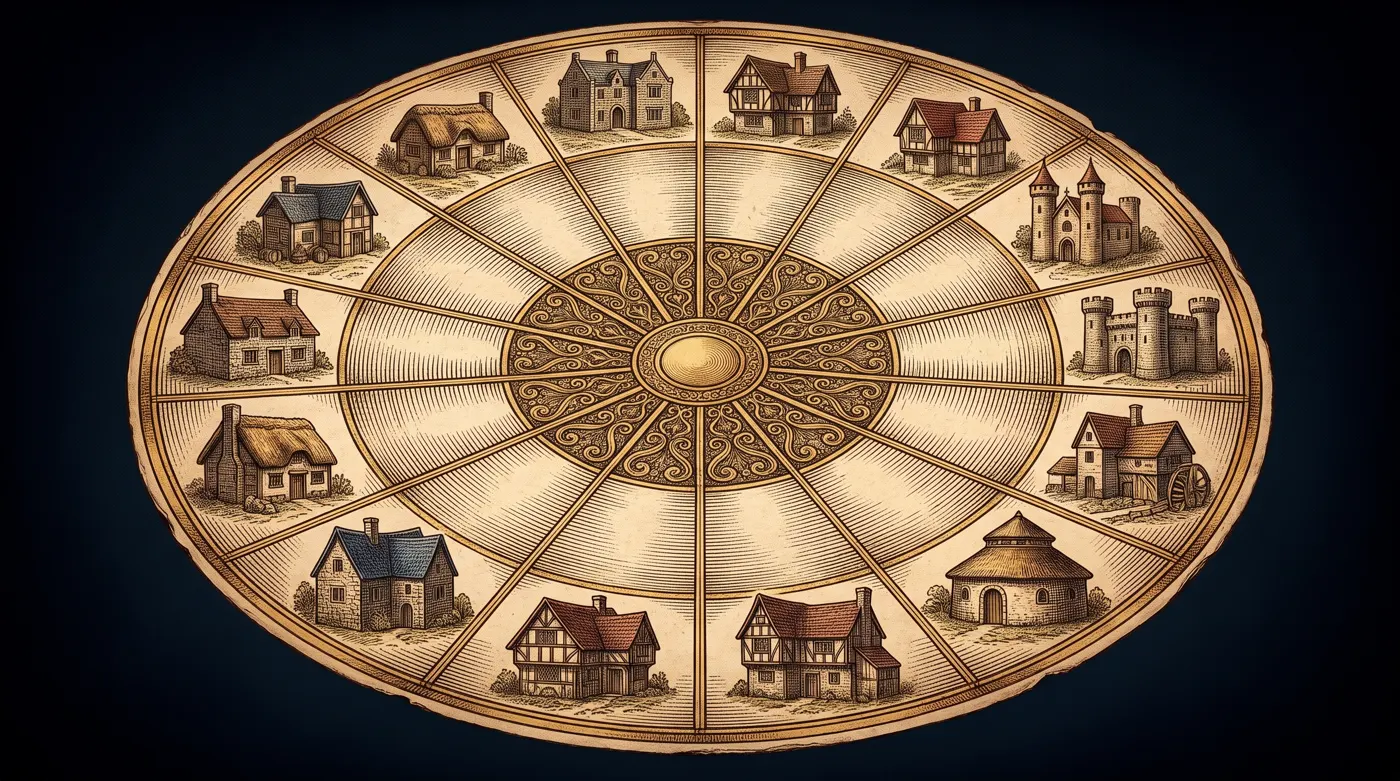
The zodiac of signs is a division of the ecliptic, the path the Sun appears to trace through the year, and it moves slowly: the Sun spends about a month in each sign. The houses are a division of the local sky at one place and one moment, set by the horizon and the meridian, and they turn with the Earth. A whole circle of houses passes overhead every day. Because the two are measured against different motions, a chart needs a date for one and a date, a time and a place for the other. Most confusion about house meanings begins with mistaking the second circle for the first.
Why a birth time is the whole question
The Ascendant is the degree of the ecliptic rising on the eastern horizon, and it moves about one degree every four minutes. An hour of uncertainty is therefore roughly fifteen degrees, which is enough to change the sign on several cusps and sometimes to move a planet from one house into the next. A chart drawn from a remembered time is not wrong so much as provisional, and the honest way to read one is to work first with what does not depend on the time at all: the planets, their signs, their aspects and their phases.
Why house systems disagree
There is more than one defensible way to divide a sky. Whole sign gives each sign a house and is the oldest system in continuous use. Placidus divides time rather than space and is the common modern default. Others divide the equator, the prime vertical, or the ecliptic itself. At moderate latitudes the main systems agree closely enough that most planets fall in the same houses; at high latitudes some of them distort badly or fail altogether. Two calculators that disagree about your fourth house have usually not made an error. They have made different, stated choices.
Reading a house without over-reading it
A house describes a field of life, and it is one factor among several. Most charts leave several houses empty, because ten bodies cannot occupy twelve rooms, and an empty house has never meant an absent area of life; it means the matter is read through the ruler of its cusp instead. Equally, a crowded house is emphasis rather than destiny. The useful question about any house is what it asks you to attend to, and that question survives even when the birth time is uncertain and the system is in doubt.
Concrete examples
| Example | What it means in practice |
|---|---|
| A birth time recorded only to the hour | Treat the Ascendant and houses as provisional and read the planets by sign and aspect first, since those do not move. |
| Two calculators, two different fourth houses | You have met the house system question rather than an error. Note which system each one used before you compare them. |
| An empty house | The ordinary case. Read it through the planet that rules its cusp, and do not treat the emptiness as a missing part of a life. |
Prayerful reflection
Let me hold what I know precisely and what I only estimate as two different kinds of knowledge.
Related Almanac guides
More from the journal
Sources and editorial method
Research and editorial references used for this page include:
- Astrodienst: Transits - Used for the basic definition of transits as current planetary passages over birth positions.
- Astrodienst: The four Elements - Used for the traditional grouping of zodiac signs by element.
This guide distinguishes traditional symbolism from calculated positions. Examples illustrate possible reflections, not predictions about a particular person.
From the reference page to your own chart
Every word here
is in your own chart.
- Your chart and numbers, read for you in about a minute
- Ask the Oracle anything about them
- Every personal tool and daily guidance
Free reading, no card needed. Optional membership: payment details required, 7 days free, then $12/month. Cancel before it renews and you pay nothing.
Common questions
Why do I need my birth time?
Because the houses and the Ascendant are set by the Earth turning, which moves them about one degree every four minutes. An hour of uncertainty is roughly fifteen degrees, enough to change the sign on several house cusps.
Which house system is correct?
There is no settled answer. The main systems agree closely at moderate latitudes and diverge sharply near the poles. Placidus is the common default and whole sign is the oldest in continuous use; the useful discipline is to name the one you used.
Is an empty house a problem?
No. Ten bodies cannot fill twelve houses, so most charts leave several empty. The house is still read, through the planet that rules its cusp and wherever that planet happens to sit.