
SynastryComparing Two Charts Without Deciding Anything
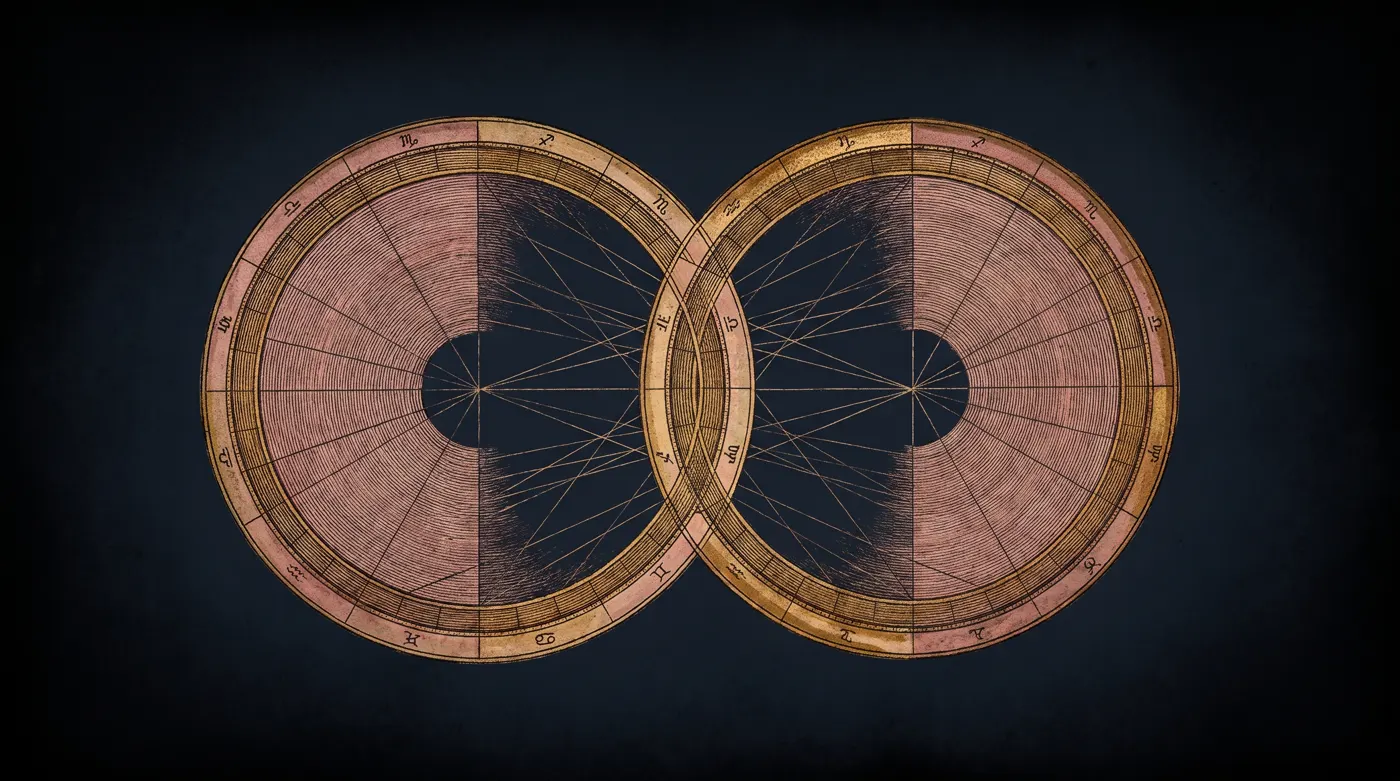
Synastry lays two birth charts over each other and reads where they touch. It describes a meeting rather than a verdict, and it needs both birth times before it can say anything about houses.
Direct answer
Short version
Synastry compares two natal charts by measuring the aspects between one person’s placements and the other’s, and by noting which of your houses their planets fall into. Moon, Venus, Mars, Mercury and Saturn contacts carry the most weight in most traditions. A composite chart is a different technique that builds a single chart from the midpoints of both. Neither can tell two people whether to stay.

Understand your own relationship patterns.
Explore what you need in love and a next step for your situation. Your reading uses your own birth details.
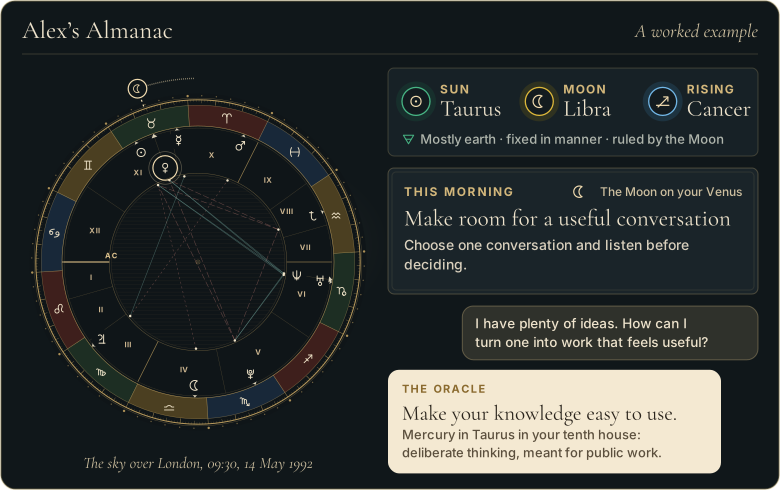
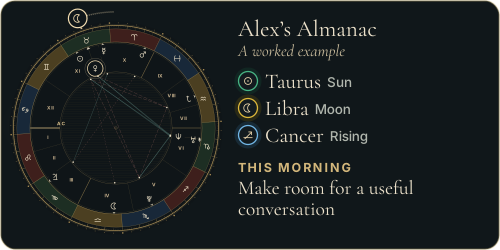
Walk through Alex’s whole example first
 The Road of AgesSee the turning points of your whole life, from your birth date
Free first look
The Road of AgesSee the turning points of your whole life, from your birth date
Free first look
Prefer to explore first?
 The Road of AgesThe turning points of your whole life, from your own chart
Walk my road
The Road of AgesThe turning points of your whole life, from your own chart
Walk my road
Visual guide
Synastry: Comparing Two Charts Without Deciding Anything
What synastry actually compares
Synastry is the comparison of two complete natal charts. The first half measures aspects between the two sets of placements: your Moon against their Venus, their Mars against your Saturn, and so on across both charts. The second half is the overlay, which asks where each person’s planets fall among the other person’s houses, and therefore which areas of life each activates in the other. Both halves are ordinary geometry applied twice. What distinguishes a careful synastry from a careless one is not technique but restraint about what the geometry is taken to mean.
Which contacts the tradition weighs
Most traditions weigh the personal bodies most heavily, because they differ meaningfully between two people born in the same years. Moon contacts are read for emotional recognition and habit, Venus for affection and taste, Mars for desire and friction, Mercury for whether two people can actually talk. Saturn contacts are read for weight, duration and sometimes restriction, and they appear in long marriages and in difficult relationships alike. Outer planet contacts between people born within a few years of each other are usually shared with a whole generation and should not be read as personal without other support.
Synastry and composite answer different questions
Synastry compares two charts and describes a meeting between two people who each remain themselves. A composite chart is built by taking the midpoint of each pair of placements and drawing a single new chart, which is read as the relationship considered as its own entity. They are different techniques answering different questions, and mixing them produces confusion rather than depth. If a reading moves between the two without saying so, ask which chart a given statement came from. A relationship described from a composite is not a description of either person in it.
What a chart comparison cannot do
It cannot tell two people whether to be together, and it cannot rank a relationship against others. What it describes is a shape of meeting: where things are easy, where they take work, and which areas of life each person tends to activate in the other. How two people handle that shape is not in either chart, because it depends on maturity, honesty, circumstance and repeated choice. The most useful synastry reading in practice is one that names a recurring friction accurately enough that both people recognise it and can talk about it directly.
Concrete examples
| Example | What it means in practice |
|---|---|
| One person’s Moon on the other’s Venus | Read as easy affection and quick familiarity. It says nothing about whether either person is kind under pressure. |
| Saturn contacts across the two charts | Read as weight and duration, sometimes as restriction. Present in long marriages and in difficult relationships alike. |
| A comparison with no birth time on one side | Read the planet to planet aspects and leave the houses out. Half a technique used honestly beats a whole one guessed. |
Prayerful reflection
Let me judge a relationship by how we actually treat each other rather than by how our charts compare.
Related Almanac guides
More from the journal
Sources and editorial method
Research and editorial references used for this page include:
- Astrodienst: Transits - Used for the basic definition of transits as current planetary passages over birth positions.
- Astrodienst: The four Elements - Used for the traditional grouping of zodiac signs by element.
This guide distinguishes traditional symbolism from calculated positions. Examples illustrate possible reflections, not predictions about a particular person.
From the reference page to your own chart
Every word here
is in your own chart.
- Your chart and numbers, read for you in about a minute
- Ask the Oracle anything about them
- Every personal tool and daily guidance
Free reading, no card needed. Optional membership: payment details required, 7 days free, then $12/month. Cancel before it renews and you pay nothing.
Common questions
Do we both need birth times?
For the full technique, yes. Planet to planet aspects work without them, but the house overlays and the angles need a time for each person, and those are half of what synastry reads.
Is there a compatibility score?
Some software produces one. It is a summary of choices somebody made about weighting rather than a measurement, and two programs will give two different numbers for the same couple.
What if the synastry looks difficult?
Difficult contacts appear in long marriages and in short relationships alike. A comparison describes the shape of a meeting; how two people handle that shape is not in the chart.