What a Stellium Means in a Birth Chart
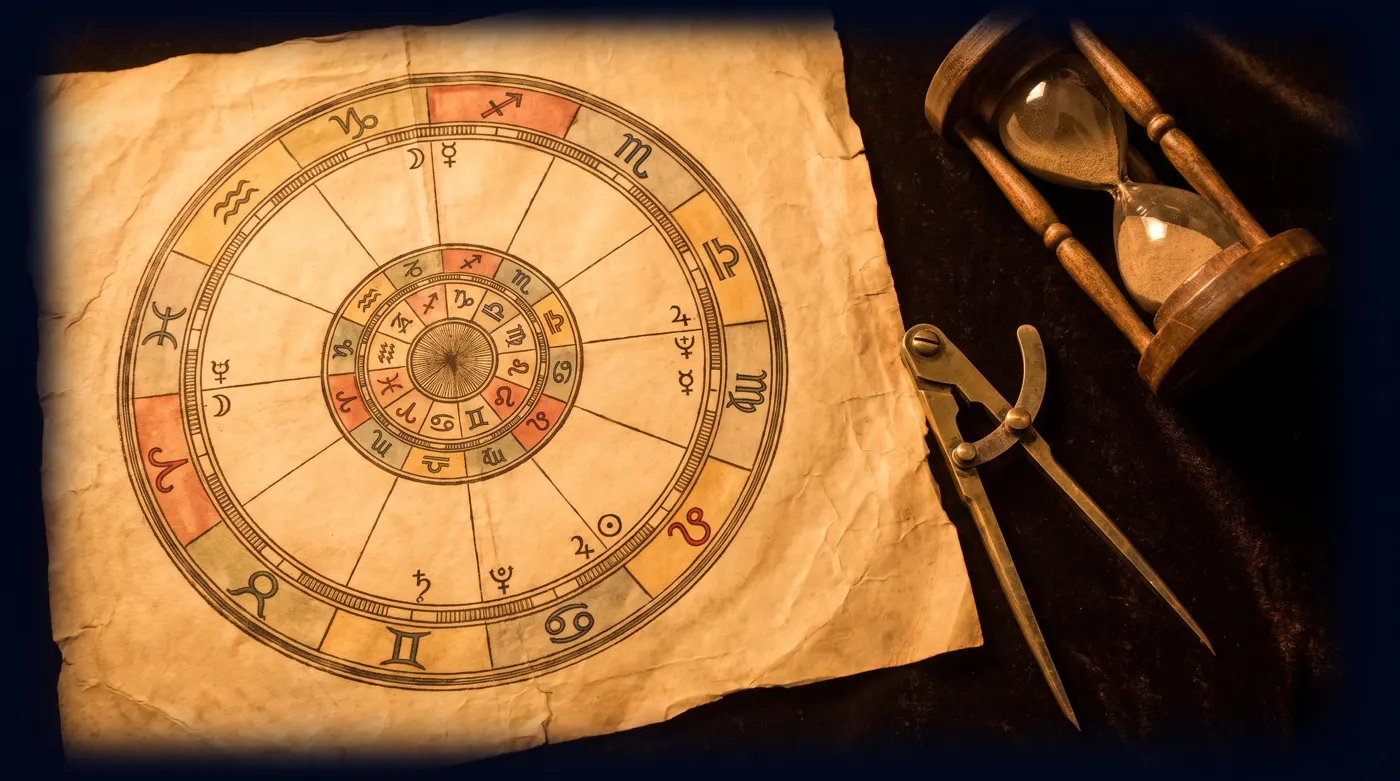
A stellium is three or more planets gathered in one sign or one house. It concentrates a chart rather than improving it, and the first honest question is which planets are in it.
Direct answer
Short version
Most practitioners call three or more planets in a single sign or house a stellium, and some require four, or insist that at least one be a personal planet. There is no governing body to settle it. What matters more than the count is which bodies are gathered, since three outer planets in one sign are shared by everyone born in those years and say almost nothing personal.
What does your own chart say about you?
Choose love, work or purpose for a personal insight and a useful next step. Your reading uses your own birth details.
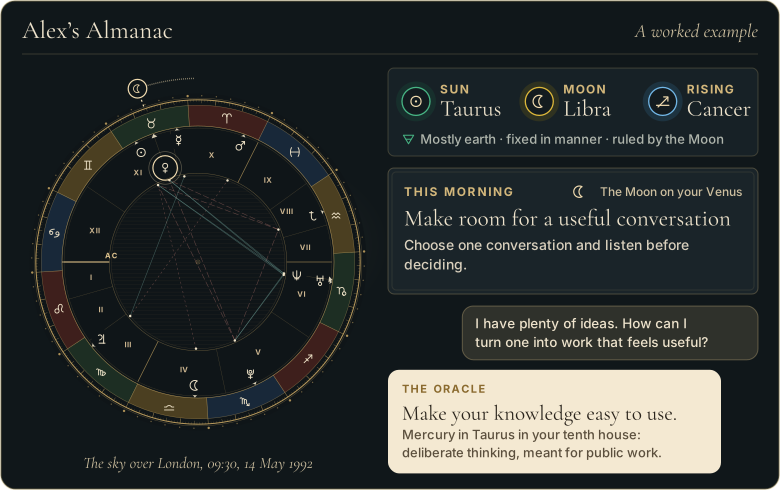
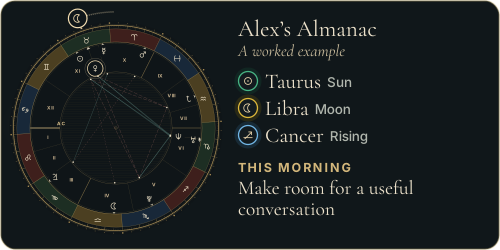
Walk through Alex’s whole example first
 The Road of AgesSee the turning points of your whole life, from your birth date
Free first look
The Road of AgesSee the turning points of your whole life, from your birth date
Free first look
Prefer to explore first?
 The Road of AgesThe turning points of your whole life, from your own chart
Walk my road
The Road of AgesThe turning points of your whole life, from your own chart
Walk my road
Visual guide
What a Stellium Means in a Birth Chart
What counts, and why it is argued about
Three planets in one sign is the most common definition, four is the stricter one, and some practitioners count only groups that include a personal planet or the Ascendant ruler. The disagreement is not sloppiness so much as a real question about what the word is for: if a stellium is meant to mark something distinctive about a person, then three slow planets that a whole cohort shares does not qualify, and if it is meant to describe a concentration of emphasis, it does. Say which definition you are using and the reading stays legible to anybody else.
What a concentration is read to describe
A stellium is read as a chart with a great deal of its weight in one place. The sign describes the manner of that weight and the house the field of life it presses on, so a gathering in the tenth house is read through work and public standing, and one in the fourth through home and origin. The tradition treats this as emphasis rather than fortune: a person with a stellium tends to meet the same theme repeatedly, in a way that others find hard to talk them out of. What it costs is range, since attention spent in one room is attention not spent in the other eleven.
The ruler carries the group
When several planets gather in a sign, the planet ruling that sign is doing an unusual amount of work: it disposes of every one of them. Its own sign, house and condition therefore matter more in a chart with a stellium than in one without, and a reading that describes the gathering without following its ruler has stopped halfway. If the ruler sits in a difficult condition, the whole group tends to be experienced as harder to organise; if it is well placed, the concentration is easier to spend deliberately. This is one of the places where traditional technique earns its keep.
What it does not decide
It does not make a chart stronger, more spiritual or more difficult than another. Charts with no stellium at all are not diffuse and charts with one are not focused by default; concentration is a shape rather than a quality. It also does not predict a career, a crisis or a calling, and a reading that turns three planets in the tenth into a promise of prominence has replaced description with flattery. The useful question is narrower and more answerable: where does this person keep returning, and what has that repetition cost and given them.
Concrete examples
| Example | What it means in practice |
|---|---|
| Sun, Mercury and Venus in one sign | Common, because those three travel close to each other. Personal, and worth reading in full. |
| Three outer planets in one sign | Shared with everyone born across several years. Read it as a generational field, not a personal signature. |
| A stellium split across a house cusp | Where the birth time matters. Confirm the time before deciding which field the weight is pressing on. |
Prayerful reflection
Let me spend the weight I was given on purpose rather than in the same groove without noticing.
Related Almanac guides
More from the journal
Sources and editorial method
Research and editorial references used for this page include:
- Astrodienst: Transits - Used for the basic definition of transits as current planetary passages over birth positions.
- Astrodienst: The four Elements - Used for the traditional grouping of zodiac signs by element.
This guide distinguishes traditional symbolism from calculated positions. Examples illustrate possible reflections, not predictions about a particular person.
From the reference page to your own chart
Every word here
is in your own chart.
- Your chart and numbers, read for you in about a minute
- Ask the Oracle anything about them
- Every personal tool and daily guidance
Free reading, no card needed. Optional membership: payment details required, 7 days free, then $12/month. Cancel before it renews and you pay nothing.
Common questions
How many planets make a stellium?
Three is the common threshold and four the stricter one, and some practitioners require a personal planet among them. There is no authority to settle it, so a reading should say which rule it used.
Is a stellium good or bad?
Neither. It describes a chart with a great deal of its weight in one sign or house, which concentrates emphasis and costs range. What that produces depends on the planets involved and on the person.
Does the house or the sign matter more?
They answer different questions: the sign is the manner, the house is the field. A stellium usually needs both, which means it usually needs an accurate birth time.