

The inner life
Anima and Animus
Direct answer
Anima and Animus: Anima and animus are Jung's names for the inner figure of the other sex: the feminine image in a man's unconscious and the masculine image in a woman's.
$0 today, then $19/month after 7 days. Cancel anytime.
At a glance
- Also called
- anima in dreams
- Found in
- Consciousness & Spiritual Psychology
- Related
- Archetype, Collective Unconscious, Individuation, Shadow Work
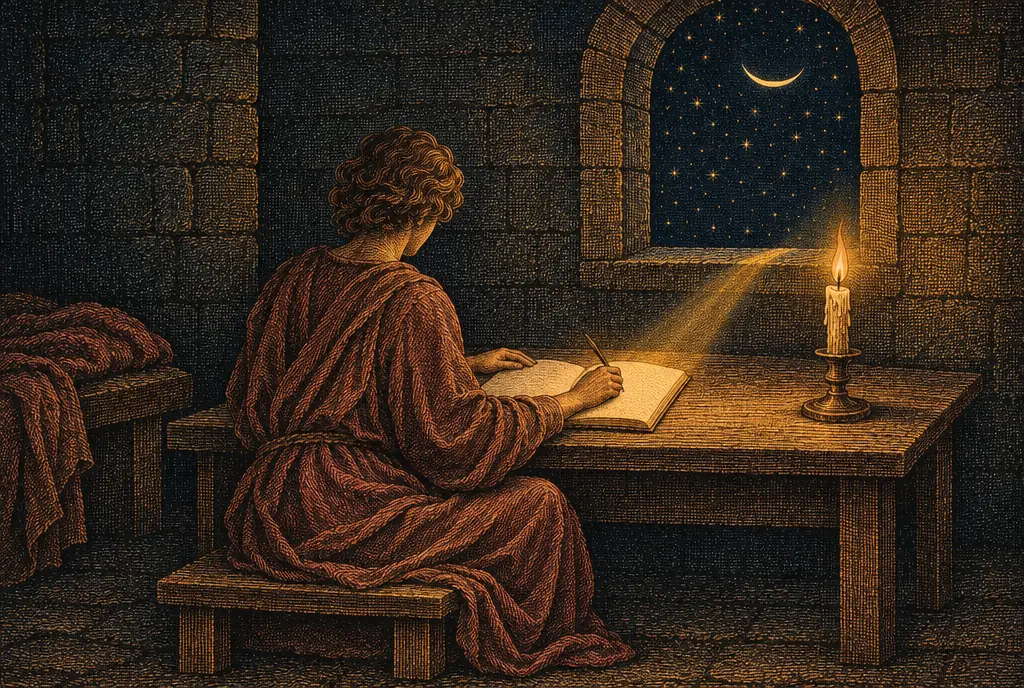
Anima and animus are Jung's names for the inner figure of the other sex: the feminine image in a man's unconscious and the masculine image in a woman's.
A plain educational schematic; it does not diagnose a condition or replace professional care.
Understand the chapter you are in.
Your life’s turning points, measured from your birth.
Walk through Alex’s whole example first


Prefer to explore first?
 The Road of AgesThe turning points of your whole life, from your own chart
Walk my road
What is the anima?
Jung held that everyone carries an unconscious counterpart of the other sex. He called the feminine figure in a man the anima, Latin for soul, and the masculine figure in a woman the animus, spirit. They show themselves in dreams as an unknown woman or man, and in waking life as the pull of sudden fascination, when the inner image is projected onto a real person.
In his scheme they stand deeper than the shadow and act as guides to the rest of the unconscious. Coming to terms with them was, for Jung, a main task of the second half of life. The idea rests on fixed notions of masculine and feminine that many later Jungians have revised or dropped.
On the tree of the hidden arts: Dreams.
What sets Anima and Animus apart
Among Jung's archetypes these two are defined by a mechanism, projection. The inner figure is first met outside, in a person who seems to carry it, and the strength of the attraction or irritation is the sign. Jung called the pair the syzygy, a yoked couple, and ranked the encounter above the meeting with the shadow: he wrote that if the shadow is the apprentice piece of a person's development, the anima is the masterpiece.
- Latin: anima, soul; animus, spirit or mind
- Fullest account: Aion, 1951, chapter on the syzygy
- Four anima stages: Eve, Helen, Mary, Sophia
- How first met: in projection onto a real person, and as dream figures
- Companion essays: Emma Jung, Animus and Anima, English edition 1957
Often mistaken for something else: The shadow is usually pictured as a figure of the dreamer's own sex and holds what was disowned; anima and animus appear as the other sex and hold what was never lived.
The story behind Anima and Animus
Jung developed the pair in the 1910s and 1920s and gave his fullest account in Aion in 1951, in the chapter on the syzygy. In The Psychology of the Transference (1946) he sketched four stages of the anima, named Eve, Helen, Mary and Sophia. Emma Jung wrote two essays on the subject, published together in English as Animus and Anima in 1957. James Hillman argued in 1985 that anima belongs to both sexes.
Why Anima and Animus matters
The pair explains, in Jung's terms, why strangers in dreams feel so charged and why falling in love can feel like recognition.
How to read Anima and Animus
Jungian readers ask of an unknown dream figure of the other sex what quality it carries that the dreamer has not yet lived.
Anima and Animus in practice: an example
A man dreams again and again of an unknown woman who leads him through a house; a Jungian would ask what she is showing him.
Where readings of Anima and Animus go wrong
Anima and Animus is a model from depth psychology, not a finding of research, and its picture of the sexes reflects the Europe of Jung's day.
Sources and editorial method
This entry summarizes the tradition in the Almanac's own words; where no source is listed, it is an editorial summary rather than a primary text, and symbolic readings are named as the tradition's, not as fact.
- Source
- The Great Almanac Dictionary
- Category
- Consciousness & Spiritual Psychology
- Aliases
- anima, animus, anima and animus Jung, anima meaning, animus meaning, anima in dreams
- Last updated
- 2026-09-26
See Anima and Animus in your personal almanac
A definition tells you what it is; your own birth chart tells you what it means for you. The Oracle casts your real chart and answers for your love, your work, and your year ahead, in conversation. It opens with the 7-day Oracle trial.
Speak with the OracleRelated terms
More in Consciousness & Spiritual Psychology
- Cognitive Dissonance
- Dream Sign
- Heart Chakra
- Living in the End
- Past Life
- Rumination
- Soul Purpose
- Tuning Fork
From the reference page to your own chart
Every word here
is in your own chart.
- Your life’s turning points, measured from your birth
- A practical next step to consider
- It opens with 7 days free: the AI Oracle on thirty hidden arts, and your daily horoscope
$0 today, then $19/month after 7 days. Cancel anytime.
Common questions
What is the anima?
In Jung's psychology, the unconscious feminine side of a man, met in dreams and fantasies as a female figure. The word is Latin for soul.
What is the animus?
The unconscious masculine side of a woman in Jung's scheme, often appearing in dreams as a man or a group of men. Jung linked it with opinion and conviction, a view many later writers have criticised.
Do modern Jungians still use anima and animus?
Many do, but in altered form. Some hold that every person has both figures whatever their sex, and others treat them simply as images of otherness in the psyche.


