
The star in the east
Wise men came from the east to Jerusalem, asking where the King of the Jews was born, for they had seen his star. It went before them to Bethlehem, and they offered gold, frankincense and myrrh.
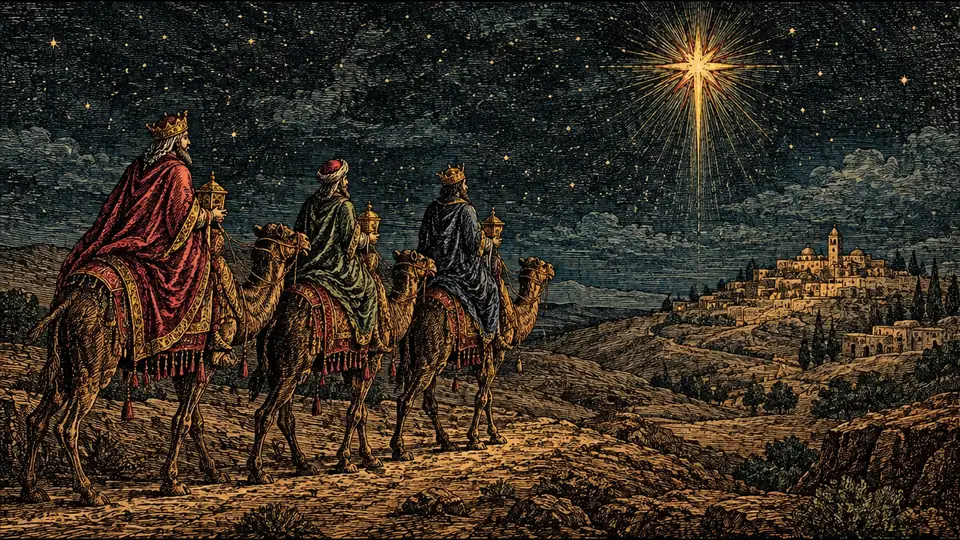
Press play: the paintings change with the story and the words come as the narrator reads them. The whole story is written out below.
Now playing: The star in the east
The whole story
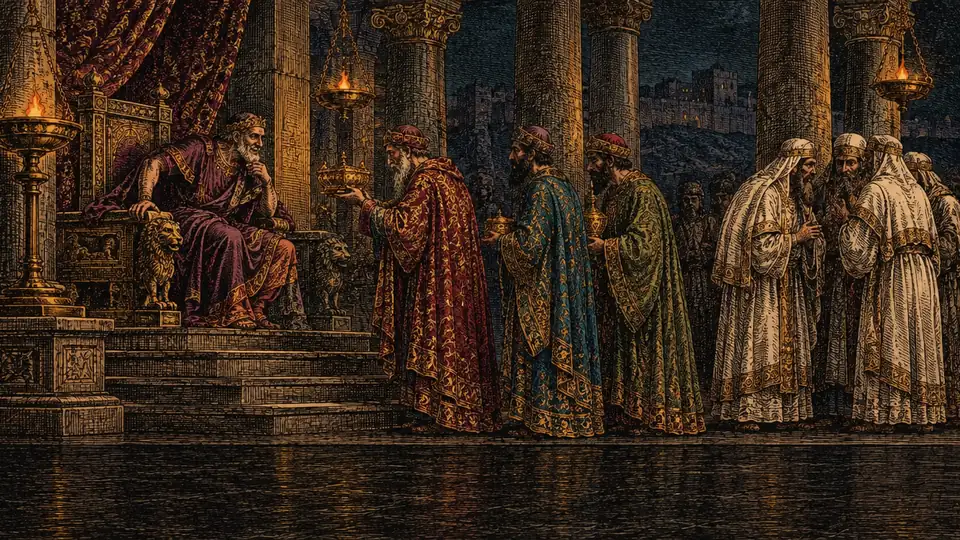
Wise men from the east, the magi, came to Jerusalem asking where the King of the Jews was born. Herod was troubled, and all Jerusalem with him; the chief priests found the answer in Micah: in Bethlehem of Judaea. Herod sent them on, asking them to bring him word, that he might come and worship him also.
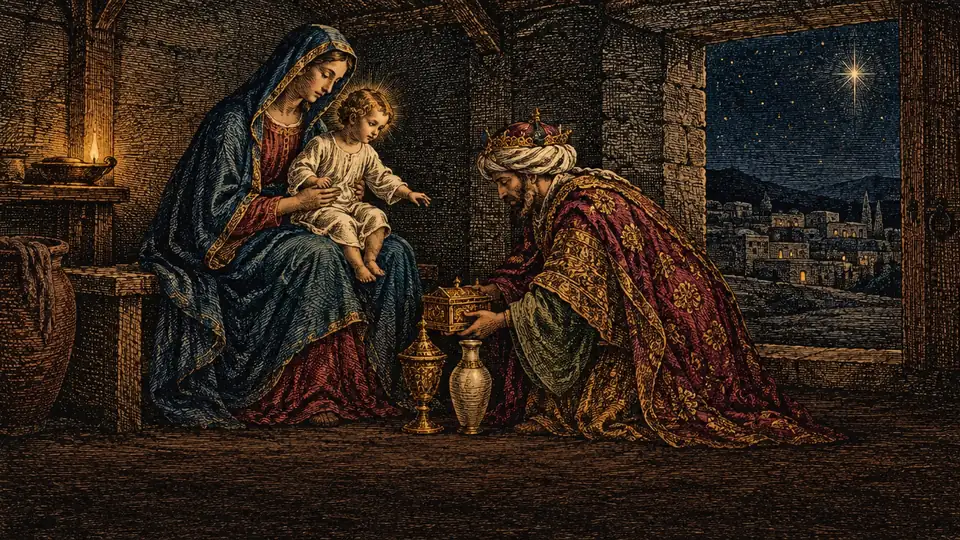
The star went before them until it came and stood over where the young child was, and when they saw it, “they rejoiced with exceeding great joy” (Matthew 2:10). They found him with Mary his mother in a house, fell down and worshipped him, and opened their treasures: gold, frankincense and myrrh. Warned in a dream not to return to Herod, they went home another way.
The magi were most likely learned men and star-watchers of Persia or Babylon, and the Gospel does not say there were three of them, or that they were kings; those ideas came later, from the three gifts. What the star was has been argued for centuries: a new star, a comet, or a meeting of planets such as the great conjunction of Jupiter and Saturn in Pisces in 7 BC, which Johannes Kepler calculated.
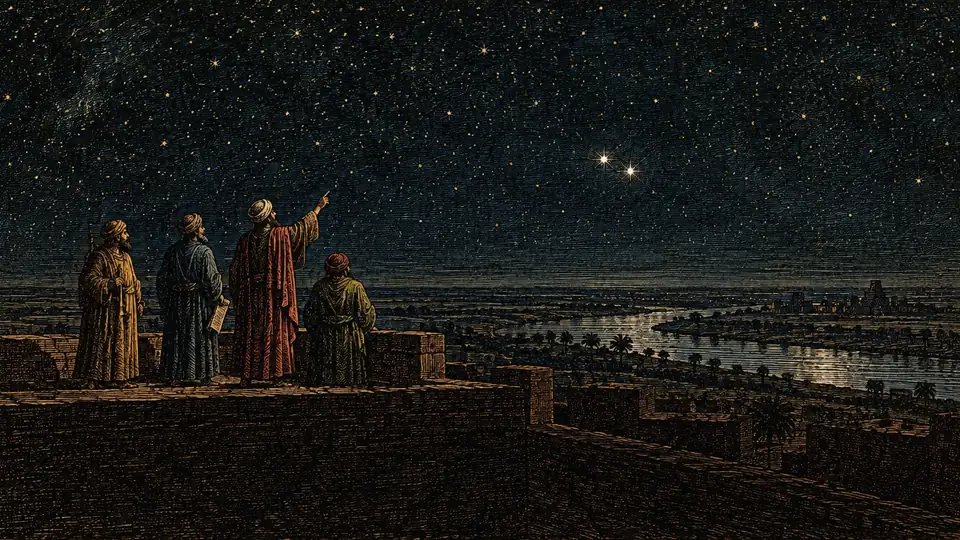
Saying, Where is he that is born King of the Jews? for we have seen his star in the east, and are come to worship him.
Matthew 2:2, KJV
Where it happened
Bethlehem.
The town is known; the Church of the Nativity has marked the cave of the birth since the fourth century.
Every story stands at its place on the Worldwide Watch map: the Bible’s world, on the map.
More from the Gospels
Matthew to John
Sources and editorial method
Research and editorial references used for this page include:
- The King James Bible, as published by bible-api.com
- The Book of Enoch, translated by R. H. Charles (1917), Project Gutenberg
Every story is told from the King James Bible, and from the Book of Enoch in R. H. Charles’s translation (1917) where a story names it. Every quotation was checked word for word against those texts. Where a place is not known, the page says so. The paintings and the narration were made for the house.

