
Born in Bethlehem
Joseph and Mary came to Bethlehem, the city of David, to be taxed. Jesus was born and laid in a manger, for there was no room in the inn, and angels told the shepherds.
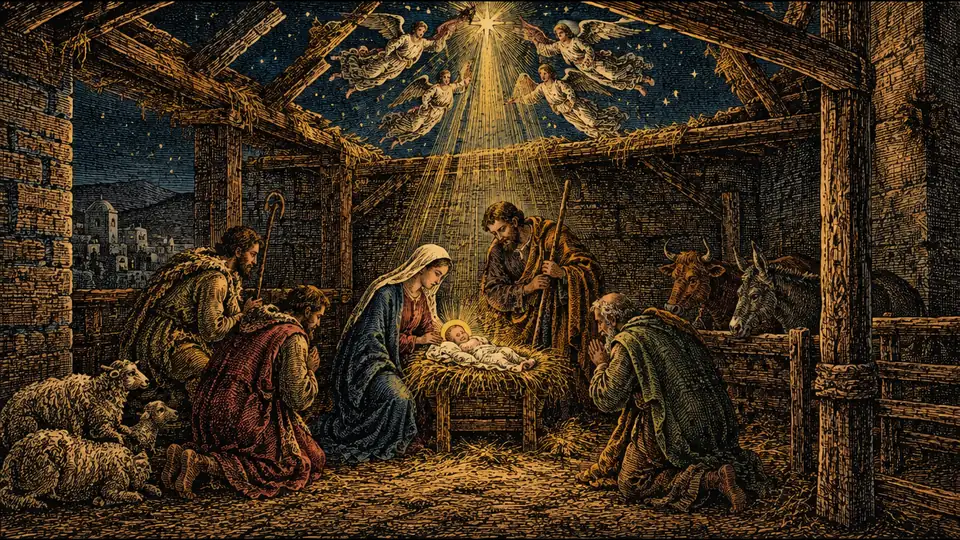
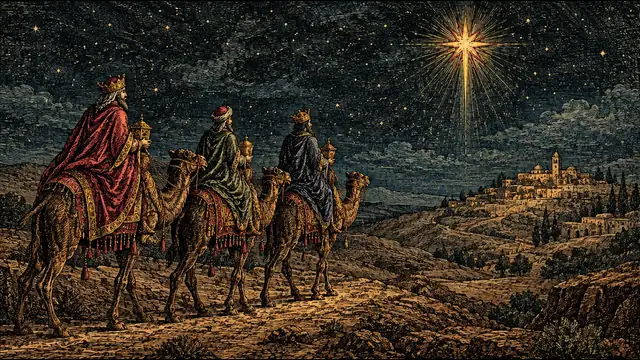
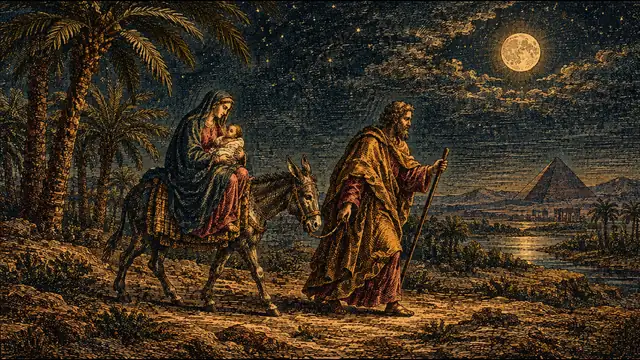
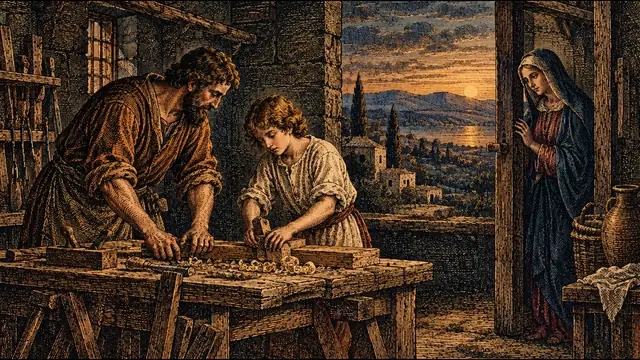
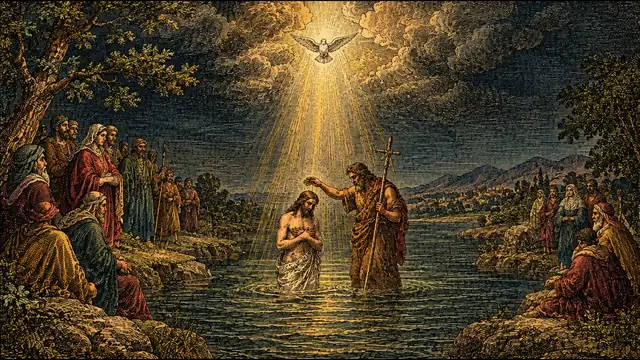
Press play: the paintings change with the story and the words come as the narrator reads them. The whole story is written out below.
Now playing: Born in Bethlehem
The whole story
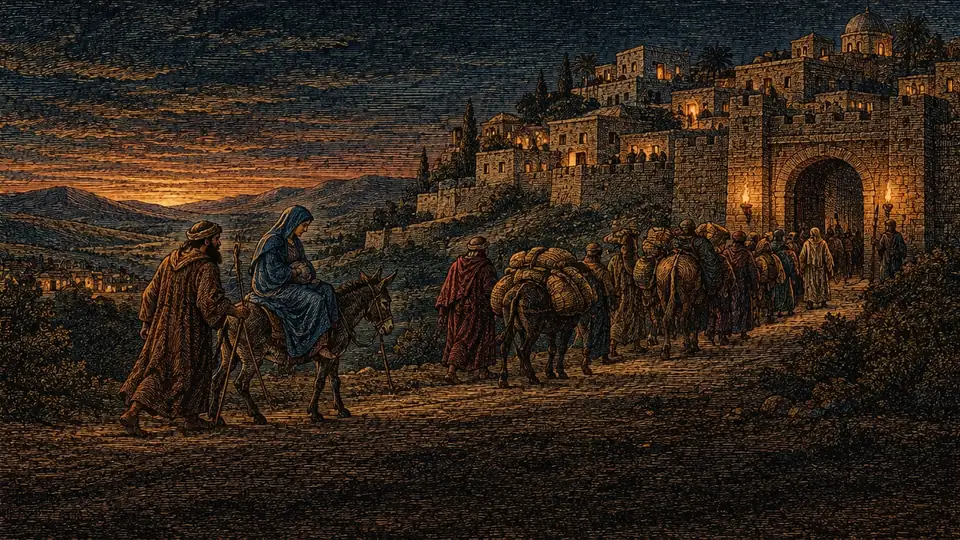
A decree went out from Caesar Augustus that all the world should be taxed, and Joseph went up from Nazareth to Bethlehem, because he was of the house and lineage of David, with Mary, being great with child. While they were there she brought forth her firstborn son, wrapped him in swaddling clothes and laid him in a manger.
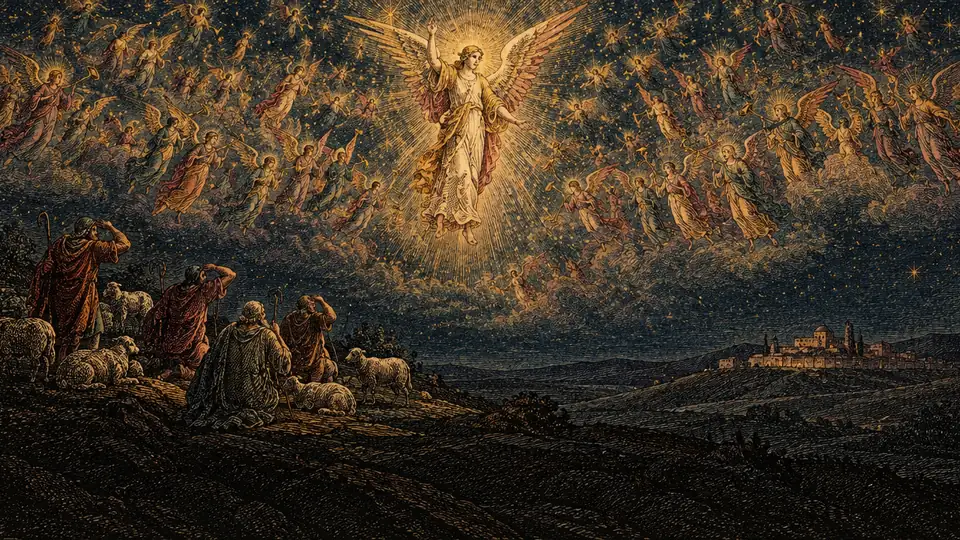
Shepherds abiding in the field, keeping watch over their flock by night, saw the angel of the Lord, and the glory of the Lord shone round about them. Suddenly there was with the angel a multitude of the heavenly host praising God and saying, “Glory to God in the highest, and on earth peace, good will toward men” (Luke 2:14). They came with haste and found the babe lying in a manger.
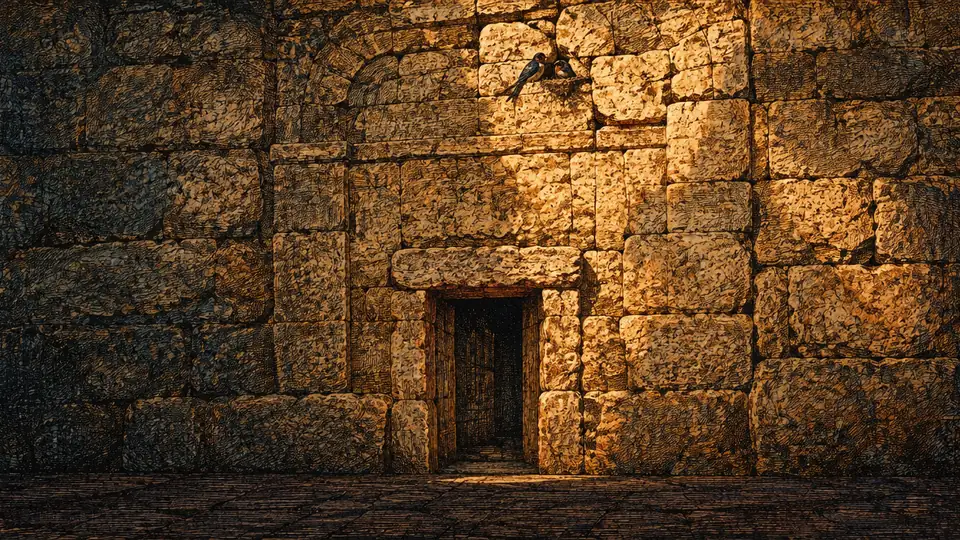
The prophet Micah had named the town centuries before: “But thou, Bethlehem Ephratah, though thou be little among the thousands of Judah” (Micah 5:2). The Church of the Nativity, first built over the cave in the days of Constantine and rebuilt by Justinian, is one of the oldest churches in the world, entered through a low door called the Door of Humility.
For unto you is born this day in the city of David a Saviour, which is Christ the Lord.
Luke 2:11, KJV
Where it happened
Bethlehem.
The town is known; the Church of the Nativity has marked the cave of the birth since the fourth century.
Every story stands at its place on the Worldwide Watch map: the Bible’s world, on the map.
More from the Gospels
Matthew to John
Sources and editorial method
Research and editorial references used for this page include:
- The King James Bible, as published by bible-api.com
- The Book of Enoch, translated by R. H. Charles (1917), Project Gutenberg
Every story is told from the King James Bible, and from the Book of Enoch in R. H. Charles’s translation (1917) where a story names it. Every quotation was checked word for word against those texts. Where a place is not known, the page says so. The paintings and the narration were made for the house.

