
The wall rebuilt
Back from exile, Nehemiah led the people in rebuilding Jerusalem’s wall, each working with one hand and holding a weapon with the other. It was finished in fifty-two days.
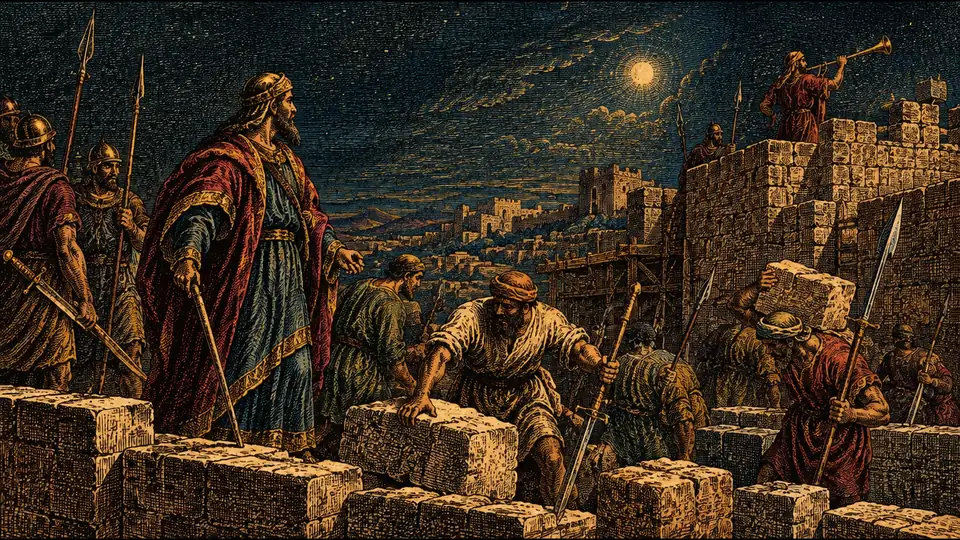
Press play: the paintings change with the story and the words come as the narrator reads them. The whole story is written out below.
Now playing: The wall rebuilt
The whole story
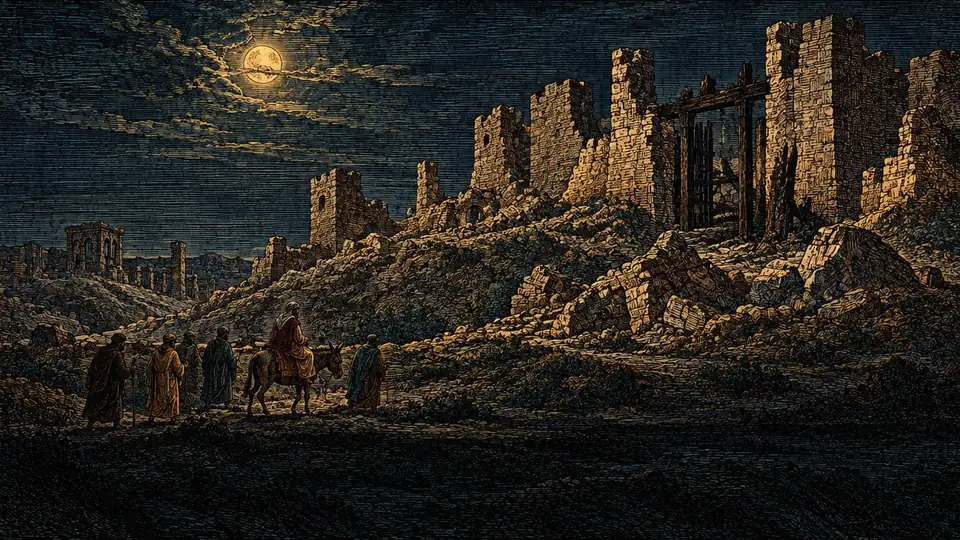
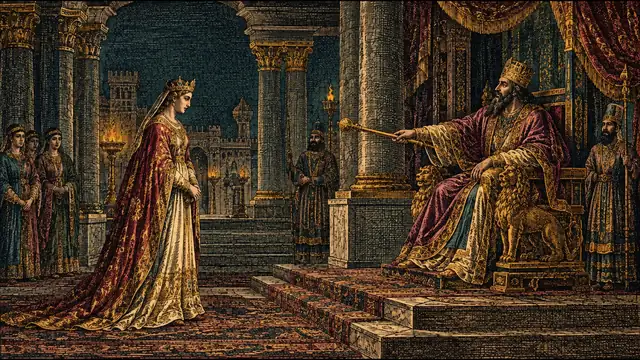
Nehemiah was cupbearer to King Artaxerxes at Shushan when he heard that Jerusalem’s wall was broken down and its gates burned with fire. He wept and fasted, and when the king saw his sad face he asked for leave to build it, with letters for timber. He rode round the ruins by night before telling anyone what God had put in his heart.
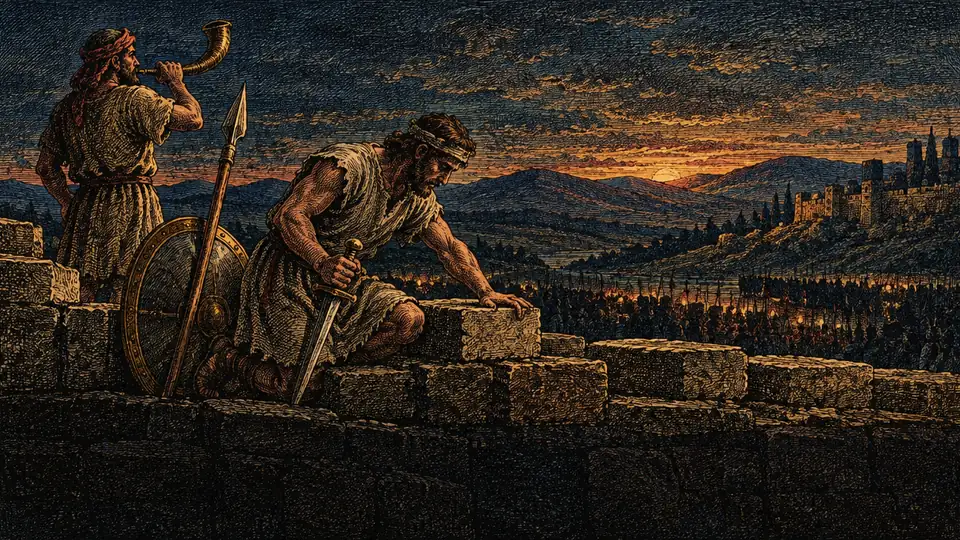
Sanballat, Tobiah and Geshem mocked, and then plotted to fight against the city. So half of Nehemiah’s servants worked and half held spears, shields and bows, and the builders “every one with one of his hands wrought in the work, and with the other hand held a weapon” (Nehemiah 4:17). A trumpeter stood beside him, to gather them wherever the alarm sounded.
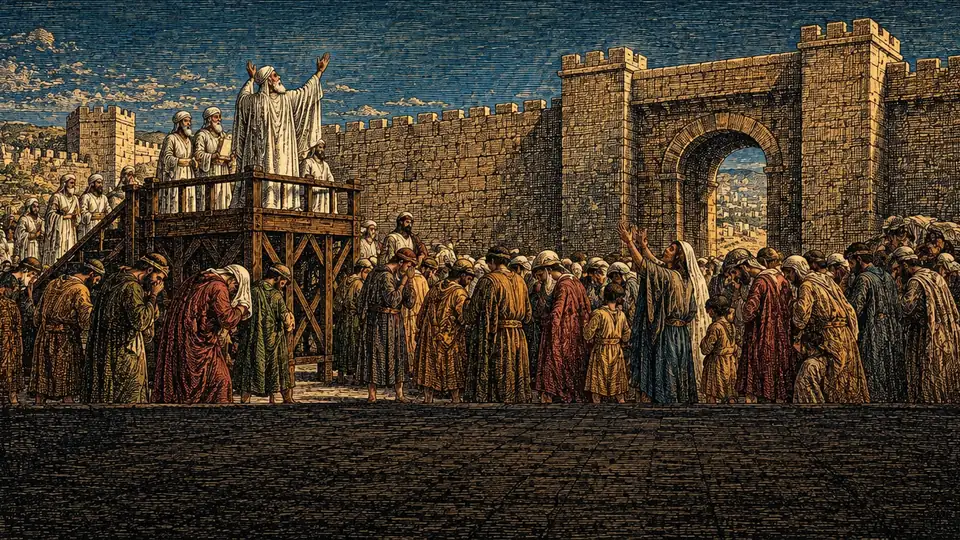
When the wall was finished, Ezra the scribe read the book of the law to all the people from a pulpit of wood, from morning until midday, and they wept, and then kept the feast with great gladness. Parts of a wall of Nehemiah’s time have been identified on the ridge of the City of David, though some date them later.
So the wall was finished in the twenty and fifth day of the month Elul, in fifty and two days.
Nehemiah 6:15, KJV
Where it happened
Jerusalem.
The city is known; the gold mark is the Temple Mount, where Solomon’s temple stood.
Every story stands at its place on the Worldwide Watch map: the Bible’s world, on the map.
More from Prophets and exile
Kings to Nehemiah
Sources and editorial method
Research and editorial references used for this page include:
- The King James Bible, as published by bible-api.com
- The Book of Enoch, translated by R. H. Charles (1917), Project Gutenberg
Every story is told from the King James Bible, and from the Book of Enoch in R. H. Charles’s translation (1917) where a story names it. Every quotation was checked word for word against those texts. Where a place is not known, the page says so. The paintings and the narration were made for the house.

