
The writing on the wall
At Belshazzar’s feast, the fingers of a man’s hand wrote on the palace wall. Daniel read it: the kingdom was numbered, weighed and divided. That night Belshazzar was slain.
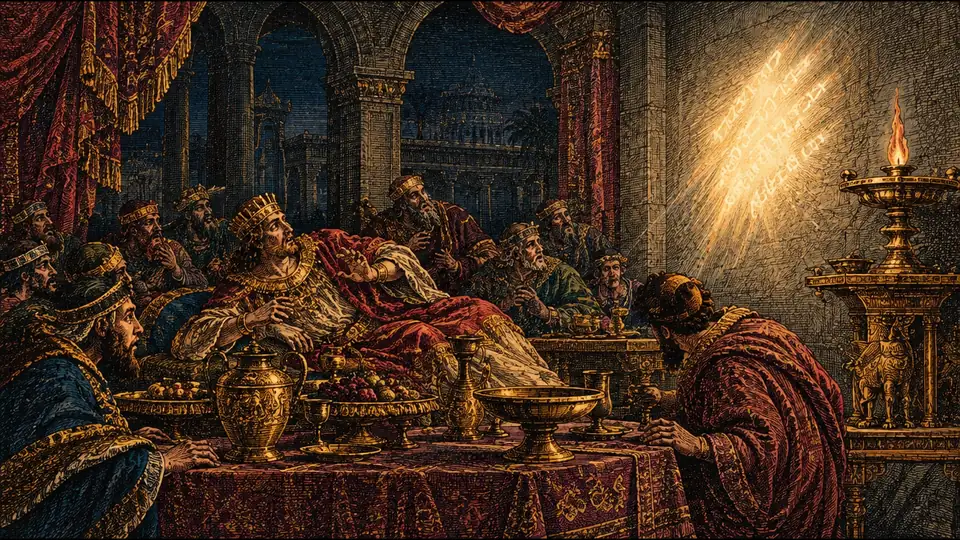
Press play: the paintings change with the story and the words come as the narrator reads them. The whole story is written out below.
Now playing: The writing on the wall
The whole story
Belshazzar made a great feast for a thousand of his lords and drank wine from the gold and silver vessels taken from the temple in Jerusalem, praising gods of gold and silver, brass, iron, wood and stone. In the same hour came forth fingers of a man’s hand and wrote upon the plaster of the wall, and the king’s knees smote one against another.
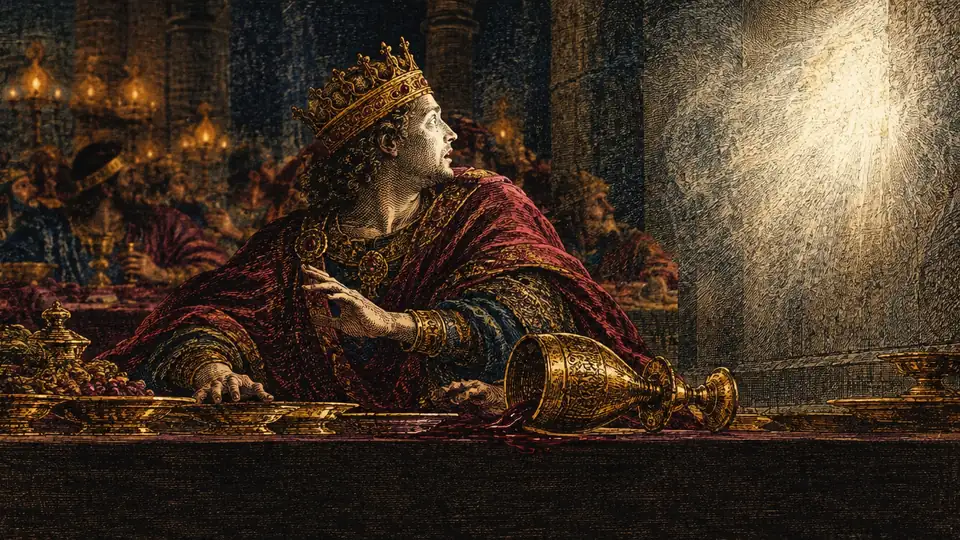
None of the wise men could read the writing until the queen remembered Daniel. He read it and gave its meaning: God had numbered the kingdom and finished it; “Thou art weighed in the balances, and art found wanting” (Daniel 5:27); and the kingdom was divided and given to the Medes and Persians. In that night Belshazzar the king of the Chaldeans was slain.
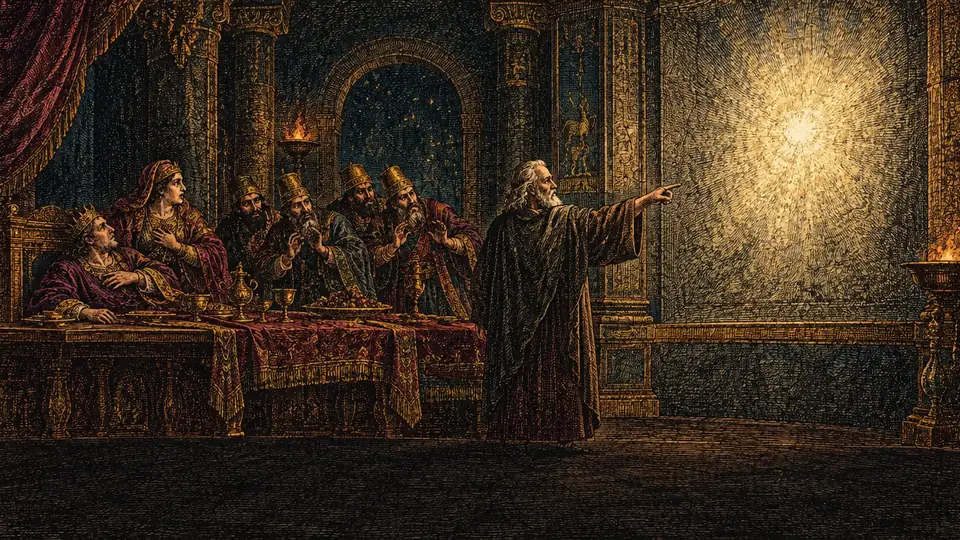
For a long time Belshazzar was known only from Daniel, and some doubted he had lived. Then cuneiform records showed him as the son of Nabonidus, ruling Babylon while his father stayed away in Arabia, which explains why he could offer Daniel only the third place in the kingdom. Babylon fell to Cyrus of Persia in 539 BC.
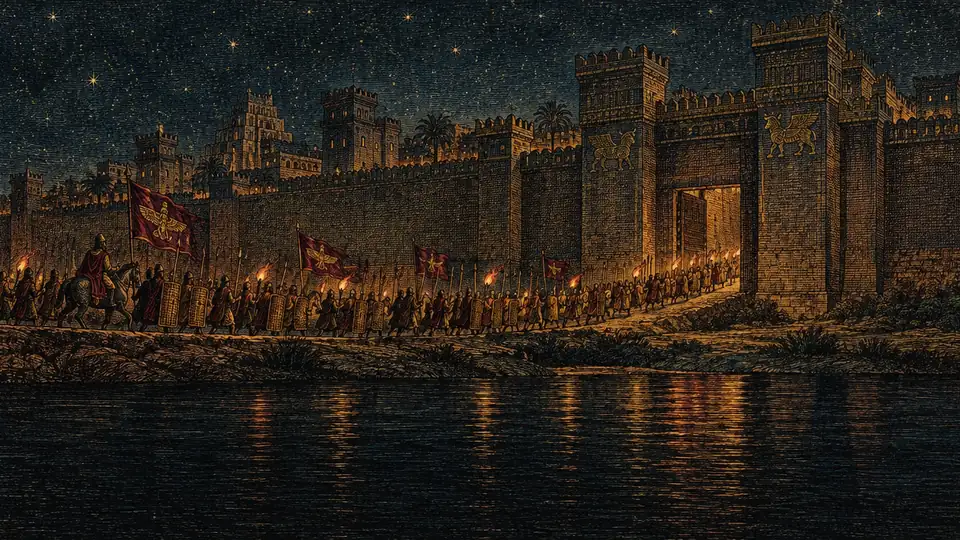
And this is the writing that was written, MENE, MENE, TEKEL, UPHARSIN.
Daniel 5:25, KJV
Where it happened
Babylon, Near Hillah, Iraq.
The ruins of Babylon lie by the Euphrates, south of Baghdad.
Every story stands at its place on the Worldwide Watch map: the Bible’s world, on the map.
More from Prophets and exile
Kings to Nehemiah
Sources and editorial method
Research and editorial references used for this page include:
- The King James Bible, as published by bible-api.com
- The Book of Enoch, translated by R. H. Charles (1917), Project Gutenberg
Every story is told from the King James Bible, and from the Book of Enoch in R. H. Charles’s translation (1917) where a story names it. Every quotation was checked word for word against those texts. Where a place is not known, the page says so. The paintings and the narration were made for the house.

