
By the rivers of Babylon
Nebuchadnezzar took Jerusalem, burned the temple and carried the people away to Babylon, where they wept for Zion.
Press play: the paintings change with the story and the words come as the narrator reads them. The whole story is written out below.
Now playing: By the rivers of Babylon
The whole story
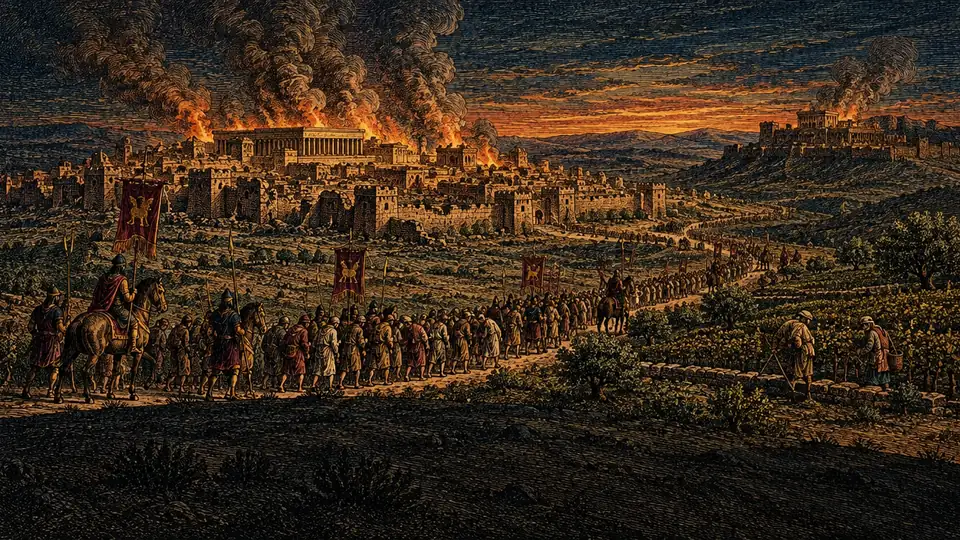
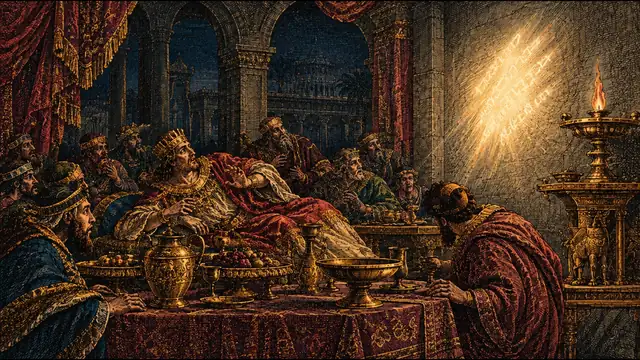
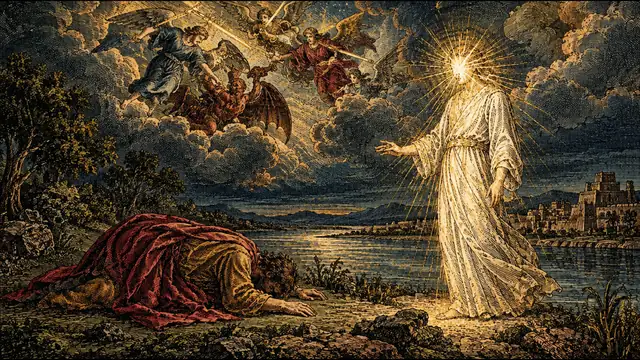
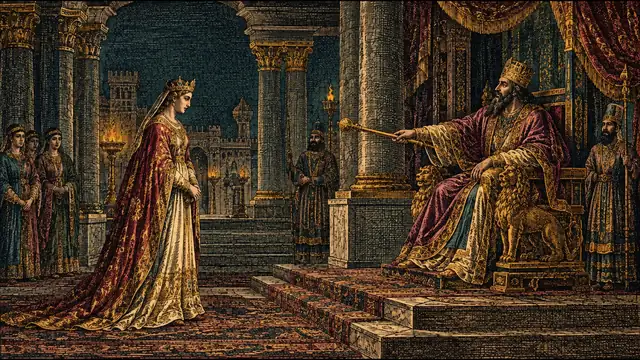
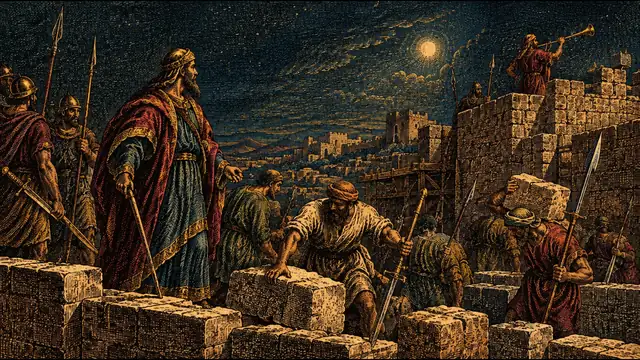
Nebuchadnezzar came against Jerusalem more than once. In 597 BC he carried away King Jehoiachin with the princes, the craftsmen and the smiths, Ezekiel among them. In 586 BC, after a long siege, his captain burned the house of the LORD and the king’s house and broke down the walls, and carried away the rest of the people, leaving only the poor of the land.
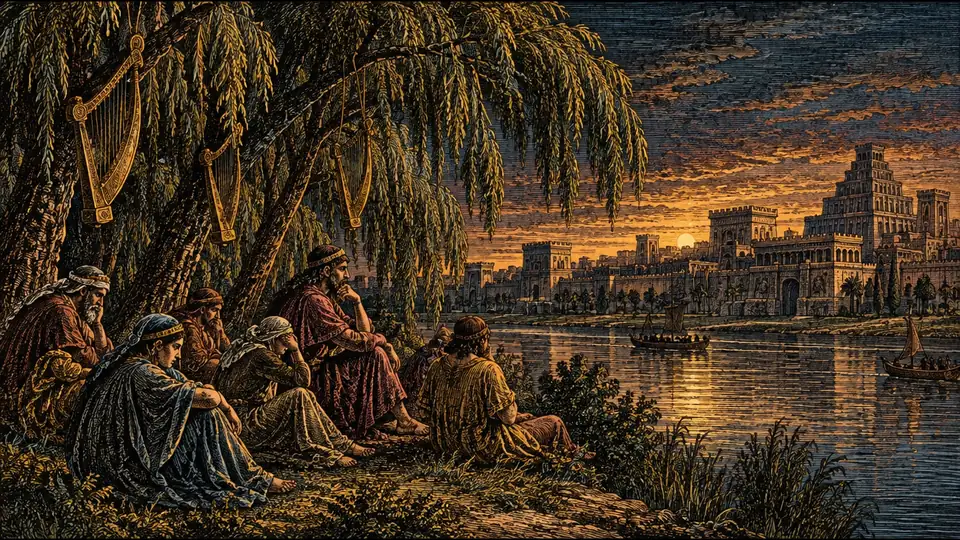
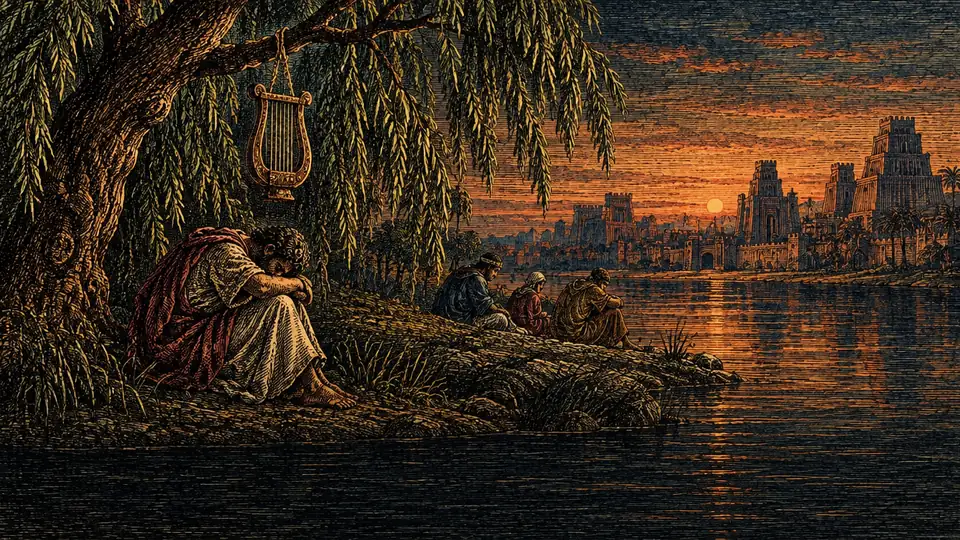
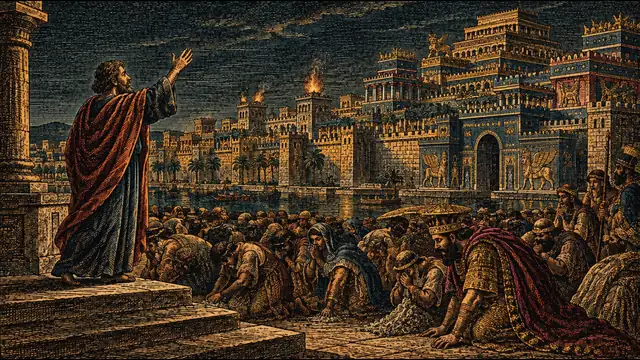
The captives sat down by the rivers of Babylon and wept, and hanged their harps upon the willows, for their captors asked them for a song of Zion: “How shall we sing the LORD’S song in a strange land?” (Psalm 137:4). Jeremiah wrote to them to build houses, plant gardens and seek the peace of the city, for after seventy years they would come home.
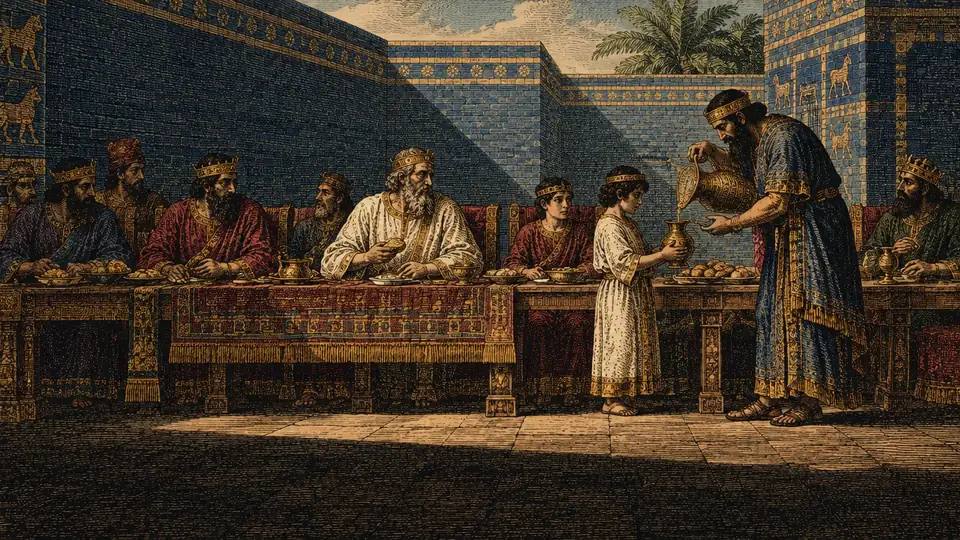
Babylon was then the greatest city in the world, with the Ishtar Gate glazed in blue with bulls and dragons, now rebuilt in a museum in Berlin. Ration tablets found in the city name Jehoiachin, king of Judah, and his sons receiving oil from the royal stores, just as the second book of Kings says he ate bread before the king of Babylon.
By the rivers of Babylon, there we sat down, yea, we wept, when we remembered Zion.
Psalm 137:1, KJV
Where it happened
Babylon, Near Hillah, Iraq.
The ruins of Babylon lie by the Euphrates, south of Baghdad.
Every story stands at its place on the Worldwide Watch map: the Bible’s world, on the map.
More from Prophets and exile
Kings to Nehemiah
Sources and editorial method
Research and editorial references used for this page include:
- The King James Bible, as published by bible-api.com
- The Book of Enoch, translated by R. H. Charles (1917), Project Gutenberg
Every story is told from the King James Bible, and from the Book of Enoch in R. H. Charles’s translation (1917) where a story names it. Every quotation was checked word for word against those texts. Where a place is not known, the page says so. The paintings and the narration were made for the house.

