
For such a time as this
In Shushan the palace, Queen Esther went in to the Persian king unbidden, at the risk of her life, and saved her people from destruction.
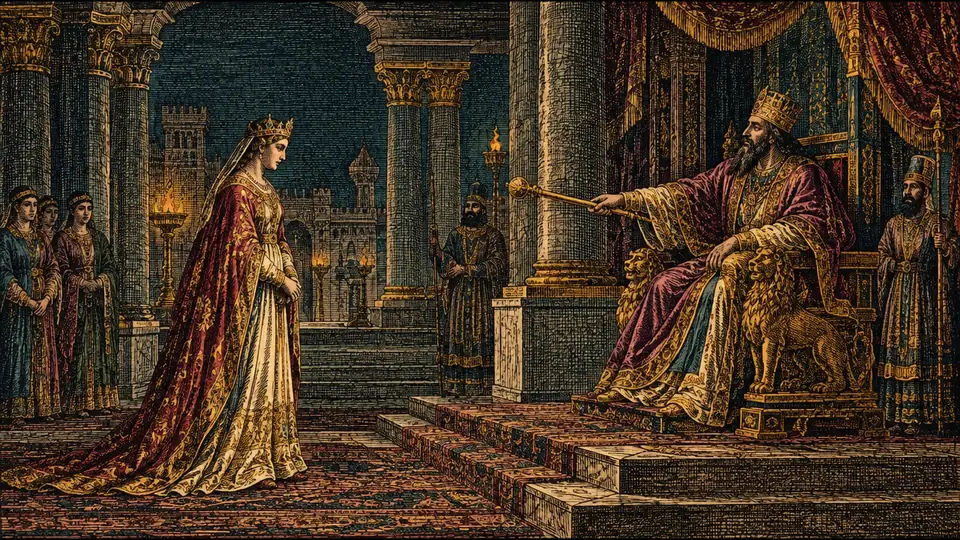
Press play: the paintings change with the story and the words come as the narrator reads them. The whole story is written out below.
Now playing: For such a time as this
The whole story
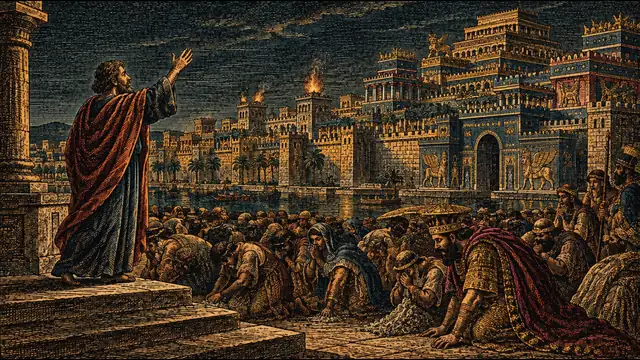
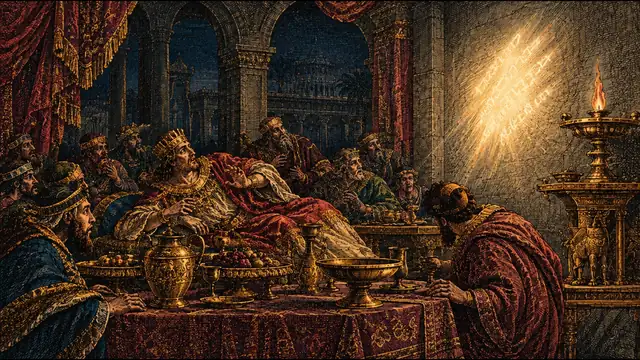
Esther, an orphan raised by her cousin Mordecai, was chosen queen by Ahasuerus, king of Persia, without telling him she was a Jew. When Haman, the king’s chief minister, was angered because Mordecai would not bow to him, he cast lots, called Pur, to choose a day, and obtained a decree to destroy all the Jews of the empire.
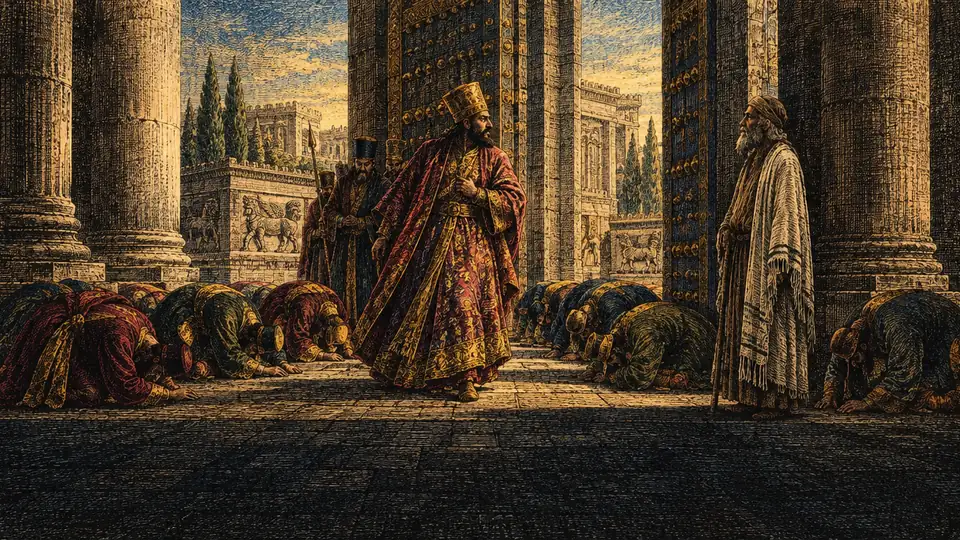
Mordecai sent word to Esther that she might have come to the kingdom for such a time as this. She asked the Jews of Shushan to fast three days for her, and said, “if I perish, I perish” (Esther 4:16). The king held out the golden scepter; at her banquet she named Haman, and he was hanged on the gallows he had made for Mordecai.
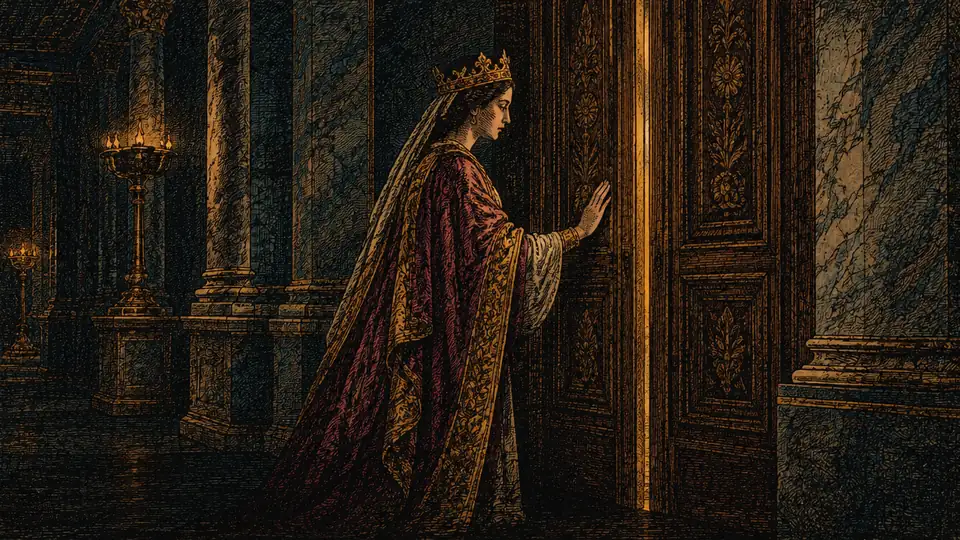
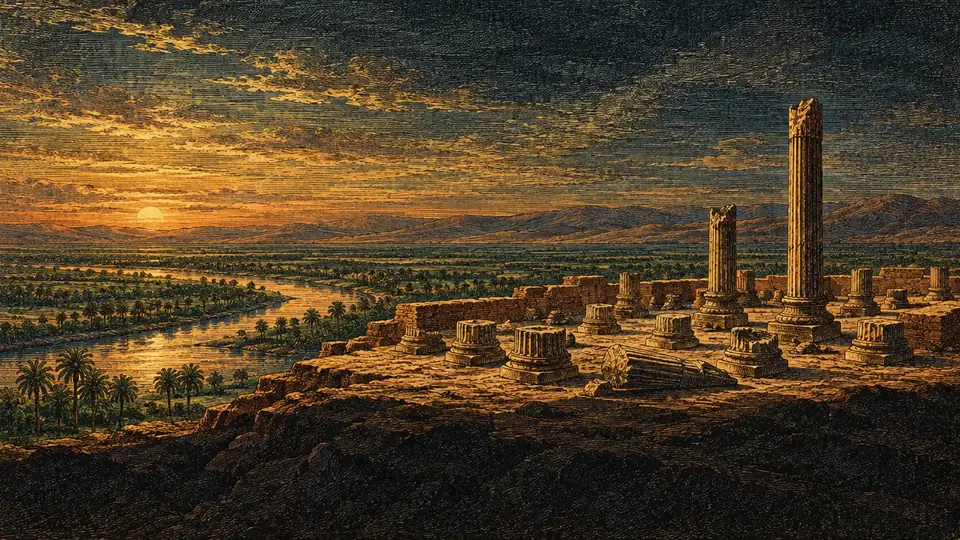
The Jews were given leave to defend themselves, and the days of their deliverance became the feast of Purim, still kept each year with the reading of the scroll of Esther. The palace at Susa has been excavated, with its great hall of columns, and a tomb said to be Esther and Mordecai’s is honored at Hamadan in Iran.
For if thou altogether holdest thy peace at this time, then shall there enlargement and deliverance arise to the Jews from another place; but thou and thy father’s house shall be destroyed: and who knoweth whether thou art come to the kingdom for such a time as this?
Esther 4:14, KJV
Where it happened
Shushan, Susa, southwestern Iran.
Susa, a winter capital of the Persian kings.
Every story stands at its place on the Worldwide Watch map: the Bible’s world, on the map.
More from Prophets and exile
Kings to Nehemiah
Sources and editorial method
Research and editorial references used for this page include:
- The King James Bible, as published by bible-api.com
- The Book of Enoch, translated by R. H. Charles (1917), Project Gutenberg
Every story is told from the King James Bible, and from the Book of Enoch in R. H. Charles’s translation (1917) where a story names it. Every quotation was checked word for word against those texts. Where a place is not known, the page says so. The paintings and the narration were made for the house.

