
Jonah runs from God
Told to preach to Nineveh, Jonah took ship at Joppa for Tarshish, the far end of the sea. A storm came, the sailors cast him overboard, and a great fish swallowed him.
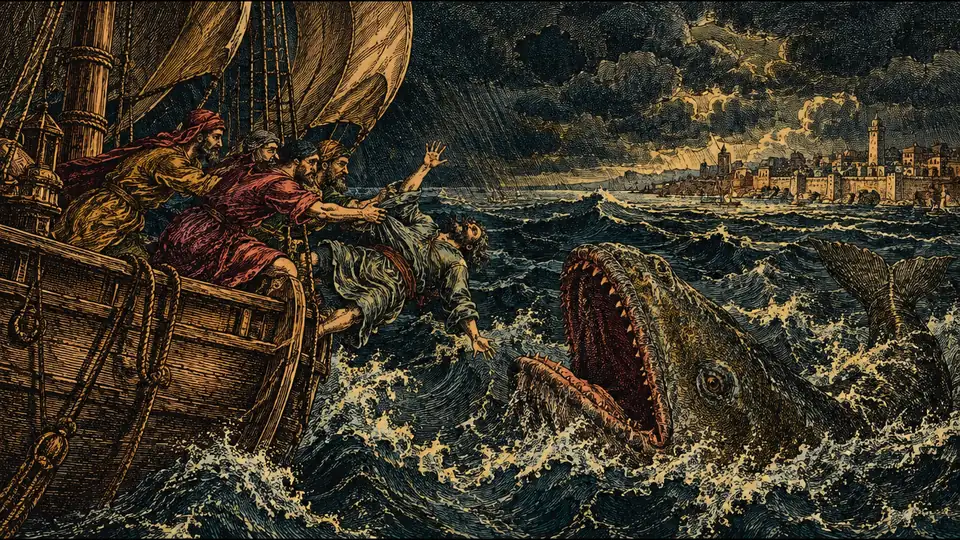
Press play: the paintings change with the story and the words come as the narrator reads them. The whole story is written out below.
Now playing: Jonah runs from God
The whole story
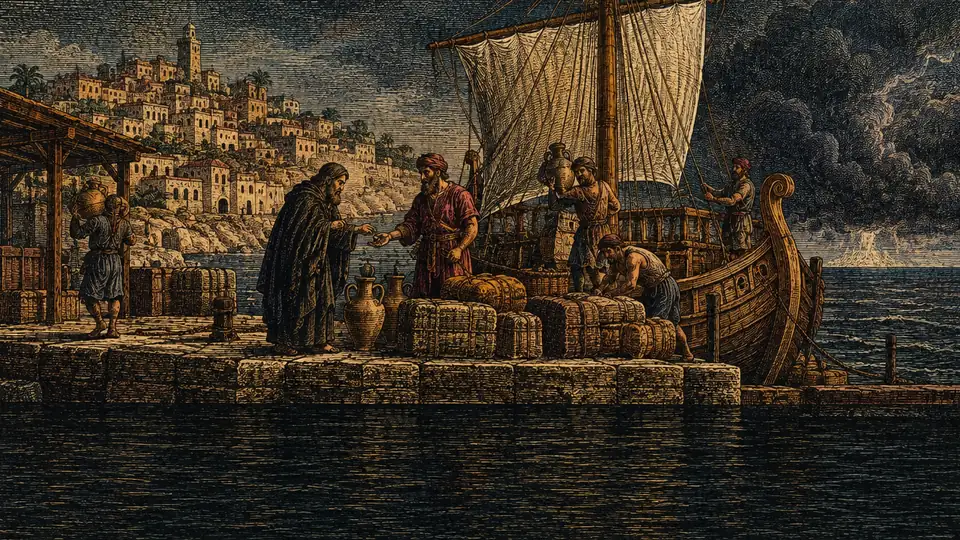
Jonah the son of Amittai was a prophet of the northern kingdom in the days of Jeroboam the Second. Told to cry against Nineveh, he went down to Joppa, found a ship going to Tarshish, paid the fare and fled from the presence of the LORD. When the storm came, the sailors cast lots, and the lot fell on Jonah, who told them to cast him into the sea.
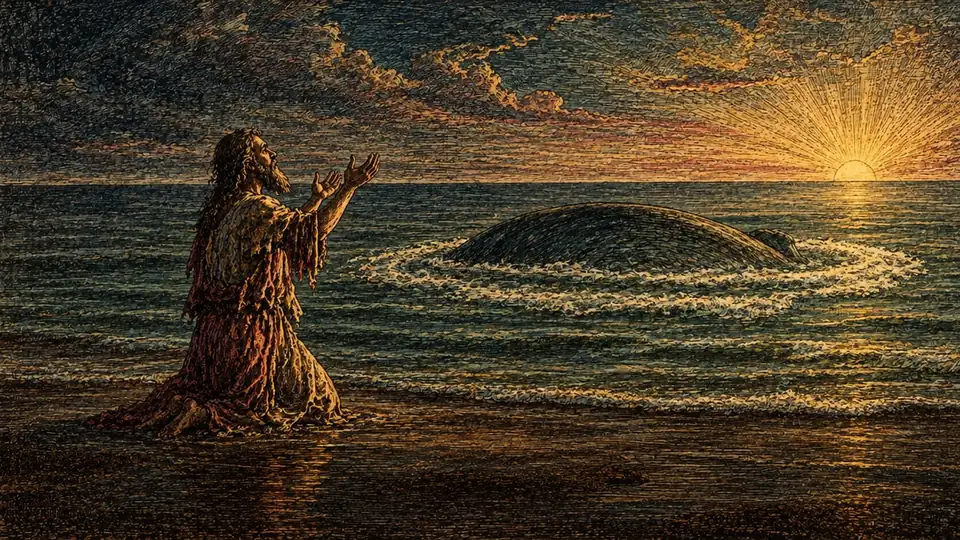
The LORD had prepared a great fish to swallow Jonah, and he was in its belly three days and three nights, and prayed there, until the fish cast him out upon the dry land. Jesus spoke of it: “as Jonas was three days and three nights in the whale’s belly; so shall the Son of man be three days and three nights in the heart of the earth” (Matthew 12:40).
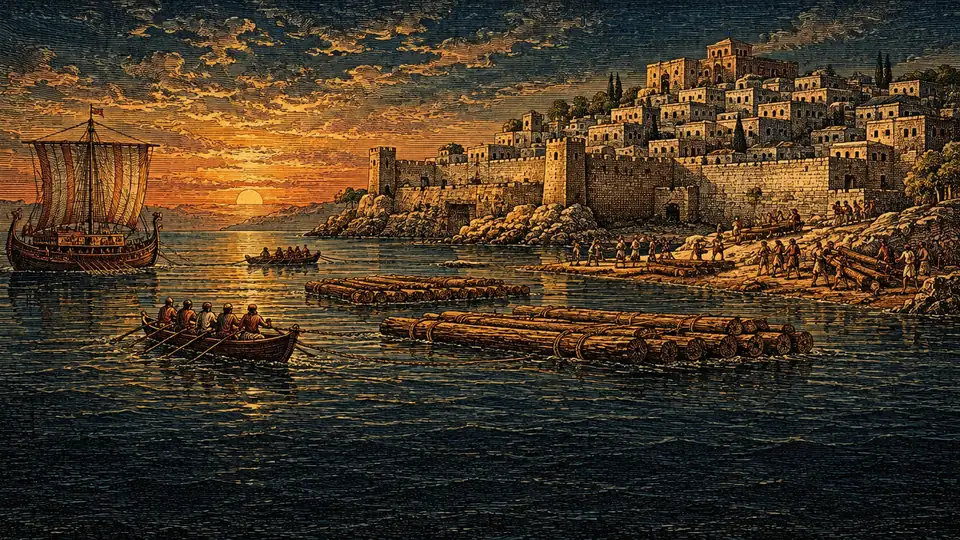
Joppa, now Jaffa, was one of the oldest ports of the coast, where the cedars for Solomon’s temple came in floats from Lebanon. Tarshish was the far west of the known sea, perhaps Tartessos in Spain. Jaffa’s old harbor town still stands on its hill above the water, and Peter later had his vision there in the house of Simon the tanner.
But Jonah rose up to flee unto Tarshish from the presence of the LORD, and went down to Joppa; and he found a ship going to Tarshish: so he paid the fare thereof, and went down into it, to go with them unto Tarshish from the presence of the LORD.
Jonah 1:3, KJV
Where it happened
Joppa, Jaffa, Tel Aviv.
Jaffa, the old port of Tel Aviv.
Every story stands at its place on the Worldwide Watch map: the Bible’s world, on the map.
More from Prophets and exile
Kings to Nehemiah
Sources and editorial method
Research and editorial references used for this page include:
- The King James Bible, as published by bible-api.com
- The Book of Enoch, translated by R. H. Charles (1917), Project Gutenberg
Every story is told from the King James Bible, and from the Book of Enoch in R. H. Charles’s translation (1917) where a story names it. Every quotation was checked word for word against those texts. Where a place is not known, the page says so. The paintings and the narration were made for the house.

