
A chariot of fire
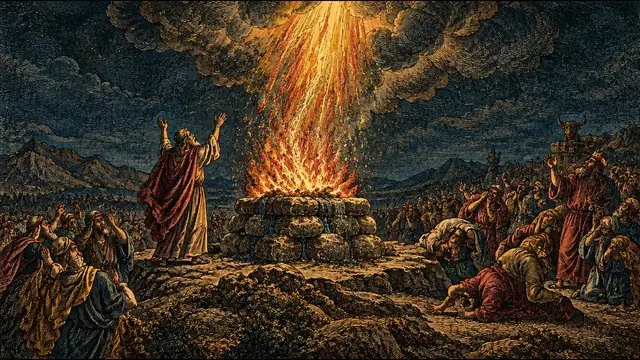
Elijah and Elisha crossed the Jordan on dry ground, and as they walked on talking, a chariot of fire and horses of fire parted them, and Elijah went up by a whirlwind into heaven.
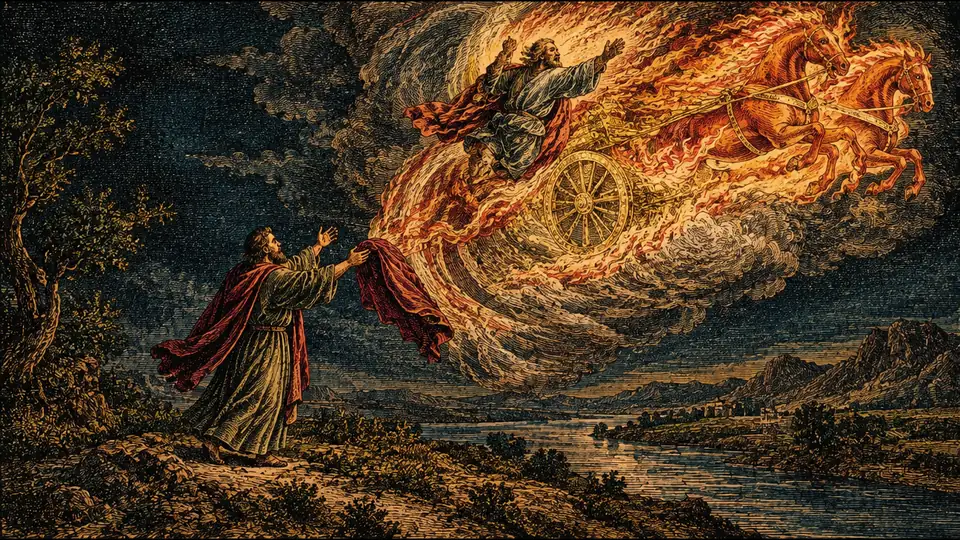
Press play: the paintings change with the story and the words come as the narrator reads them. The whole story is written out below.
Now playing: A chariot of fire
The whole story
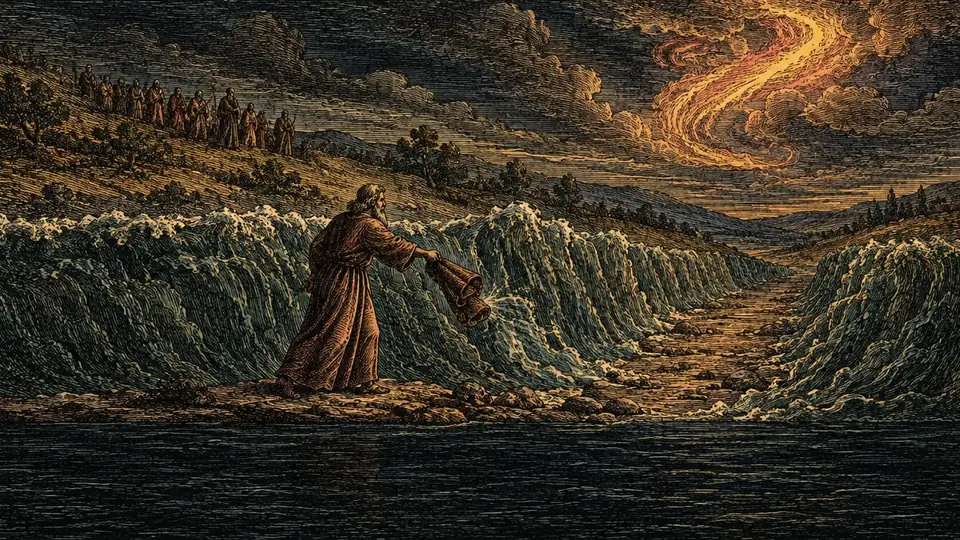
Elijah struck the waters with his rolled mantle and they parted. Asked what he would have before his master was taken, Elisha said, “I pray thee, let a double portion of thy spirit be upon me” (2 Kings 2:9). He cried out, “My father, my father, the chariot of Israel, and the horsemen thereof” (2 Kings 2:12), took up the mantle that fell from Elijah, and struck the Jordan himself, and it parted for him too.
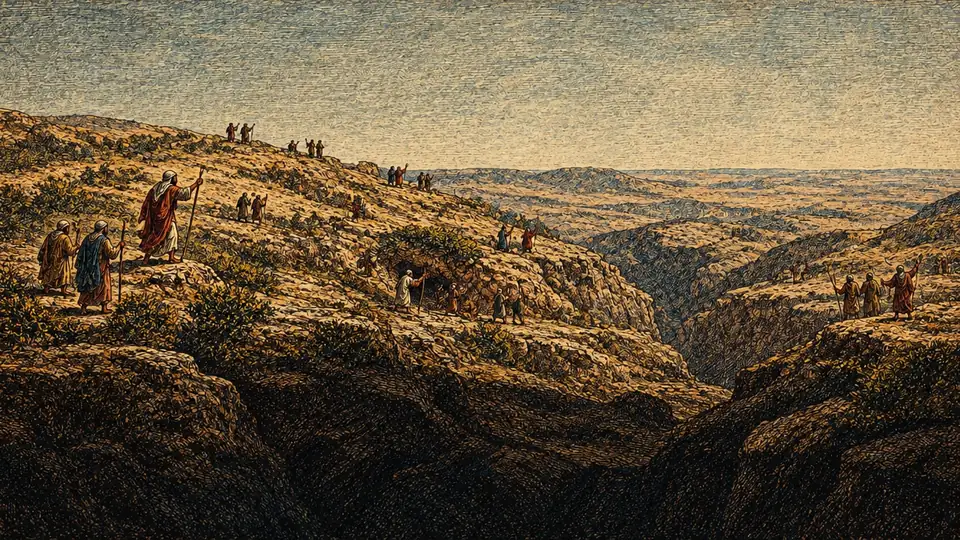
Fifty men of the prophets searched three days for Elijah and found nothing. With Enoch, he is one of only two men in the Bible taken from the earth without dying, and the last of the prophets promised his return: “Behold, I will send you Elijah the prophet before the coming of the great and dreadful day of the LORD” (Malachi 4:5).
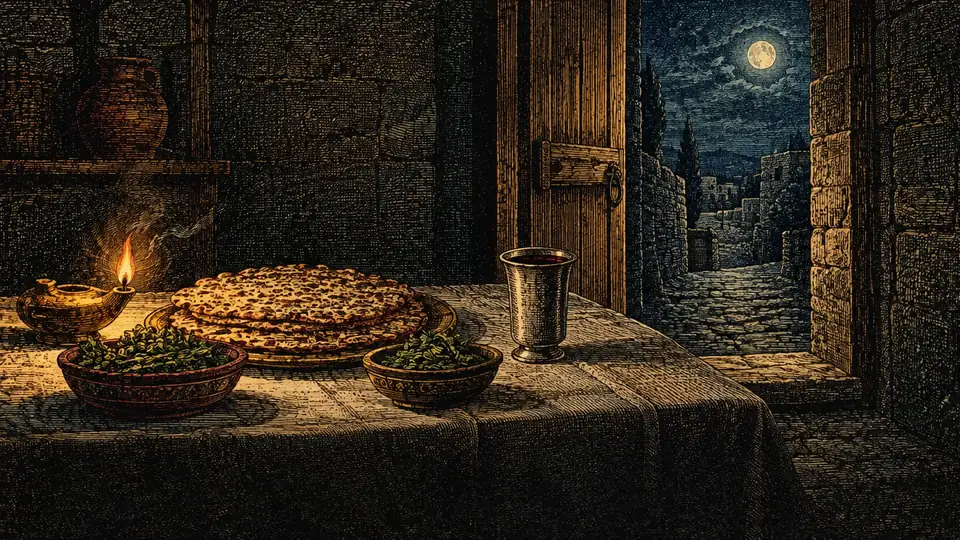
At the Passover meal Jewish families still set a cup for Elijah and open the door for him. The Gospels say John the Baptist came in the spirit and power of Elijah, and Elijah himself appeared with Moses on the mount of the transfiguration. The baptism site by the Jordan honors both men within sight of each other.
And it came to pass, as they still went on, and talked, that, behold, there appeared a chariot of fire, and horses of fire, and parted them both asunder; and Elijah went up by a whirlwind into heaven.
2 Kings 2:11, KJV
Where it happened
Bethabara beyond Jordan, Al-Maghtas and Qasr al-Yahud, by Jericho (site by tradition).
The Bible says only that it happened beyond the Jordan, near Jericho. Tradition remembers the place at Elijah’s hill, Tell Mar Elias, by Al-Maghtas on the east bank.
Every story stands at its place on the Worldwide Watch map: the Bible’s world, on the map.
More from the kingdom
Samuel and Kings
Sources and editorial method
Research and editorial references used for this page include:
- The King James Bible, as published by bible-api.com
- The Book of Enoch, translated by R. H. Charles (1917), Project Gutenberg
Every story is told from the King James Bible, and from the Book of Enoch in R. H. Charles’s translation (1917) where a story names it. Every quotation was checked word for word against those texts. Where a place is not known, the page says so. The paintings and the narration were made for the house.

