
The witch of Endor
The night before his last battle, King Saul, answered by no prophet and no dream, went in disguise to a woman with a familiar spirit at Endor and asked her to bring up Samuel.
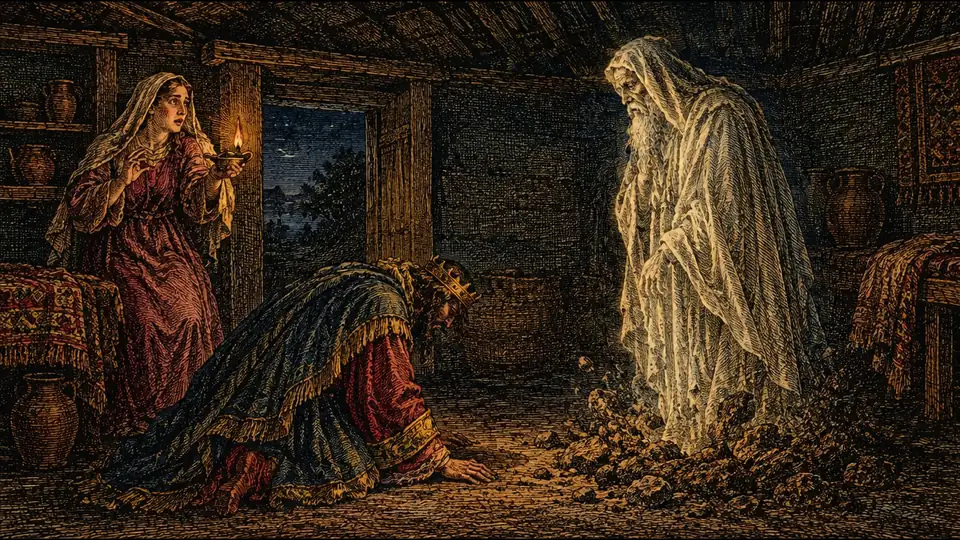
Press play: the paintings change with the story and the words come as the narrator reads them. The whole story is written out below.
Now playing: The witch of Endor
The whole story
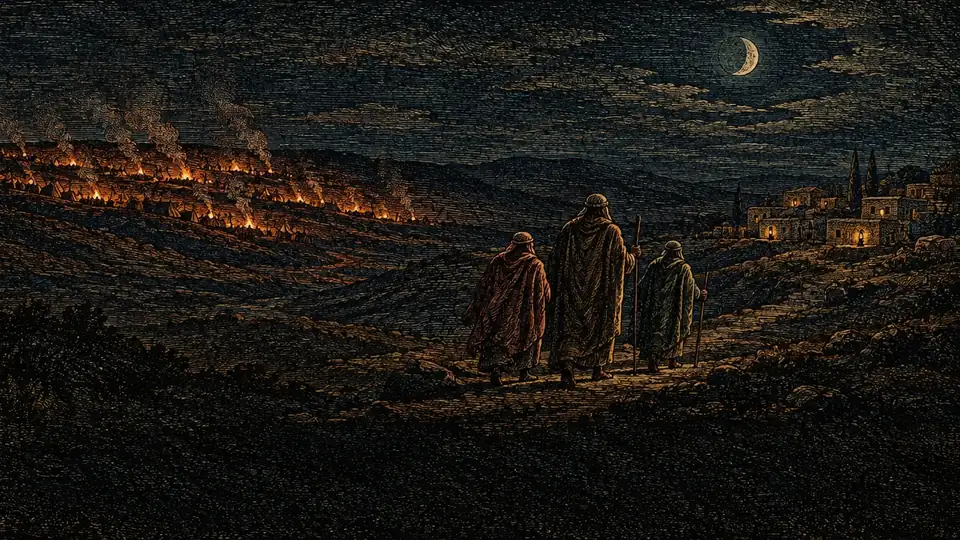
Saul himself had put the mediums and wizards out of the land. Now the Philistines were camped at Shunem, and when he asked the LORD, he was answered “neither by dreams nor by Urim, nor by prophets” (1 Samuel 28:6). So he laid aside his royal robes and went by night with two men to Endor, across the valley from the enemy’s camp.
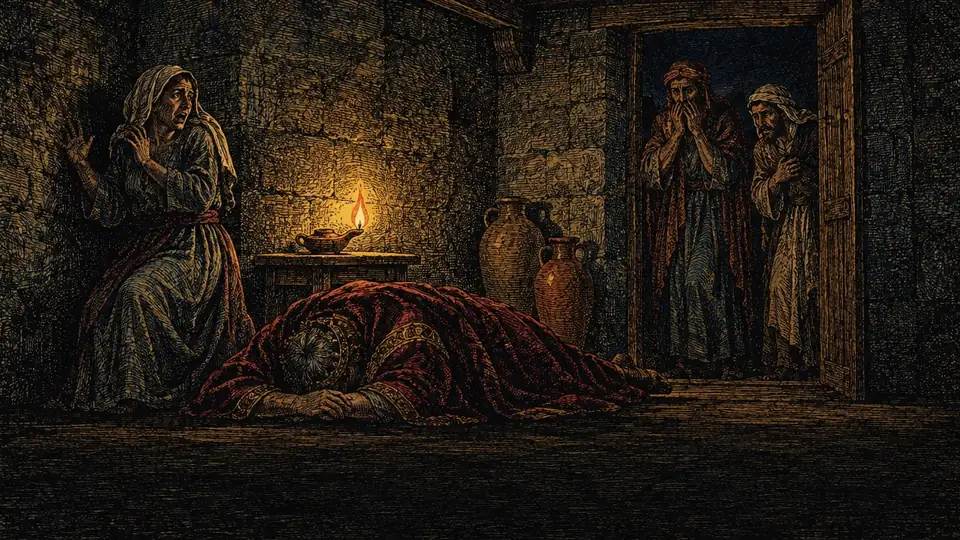
The woman saw an old man coming up, covered with a mantle, and cried out, for she knew then that her visitor was Saul. Samuel’s words were heavy: the kingdom was given to David, “and to morrow shalt thou and thy sons be with me” (1 Samuel 28:19). The next day Saul and his sons fell on Mount Gilboa.
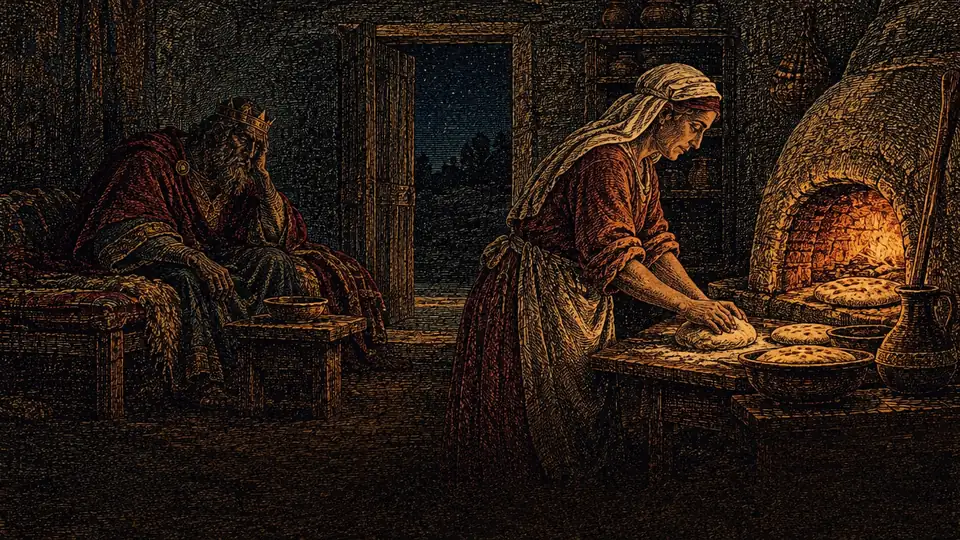
Whether Samuel truly came, readers have never agreed. Some early writers held that a spirit of deceit took his shape; others that God allowed the prophet himself to speak, as the text seems to say; others that the woman deceived the king. The chapter ends with her kindness: she killed a fatted calf and baked bread for Saul before he went out into the night.
And the king said unto her, Be not afraid: for what sawest thou? And the woman said unto Saul, I saw gods ascending out of the earth.
1 Samuel 28:13, KJV
Where it happened
Endor, Near Ein Dor, Lower Galilee (site likely).
The name lives on at Ein Dor, in Lower Galilee near Mount Tabor; the old town lay close by, across the valley from Shunem.
Every story stands at its place on the Worldwide Watch map: the Bible’s world, on the map.
More from the kingdom
Samuel and Kings
Sources and editorial method
Research and editorial references used for this page include:
- The King James Bible, as published by bible-api.com
- The Book of Enoch, translated by R. H. Charles (1917), Project Gutenberg
Every story is told from the King James Bible, and from the Book of Enoch in R. H. Charles’s translation (1917) where a story names it. Every quotation was checked word for word against those texts. Where a place is not known, the page says so. The paintings and the narration were made for the house.

