
Fire on Carmel
On Mount Carmel, Elijah challenged the prophets of Baal. Their god sent no fire; the fire of the LORD fell on Elijah’s altar, drenched with water, and consumed it all.
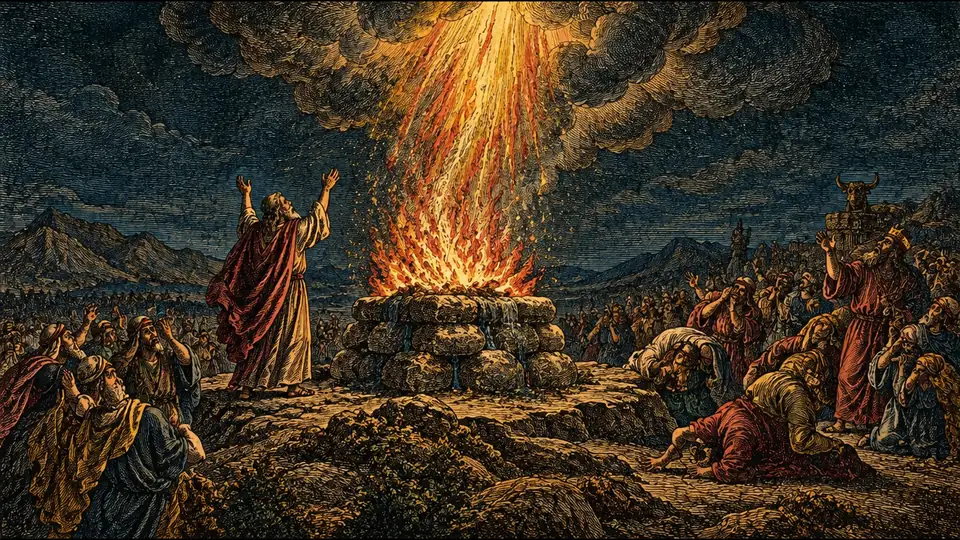
Press play: the paintings change with the story and the words come as the narrator reads them. The whole story is written out below.
Now playing: Fire on Carmel
The whole story
Three years of drought had come at Elijah’s word in the days of King Ahab and Jezebel, who had brought in the worship of Baal. Elijah called the people and the four hundred and fifty prophets of Baal to Carmel and asked, “How long halt ye between two opinions?” (1 Kings 18:21). The god who answered by fire, he said, let him be God.
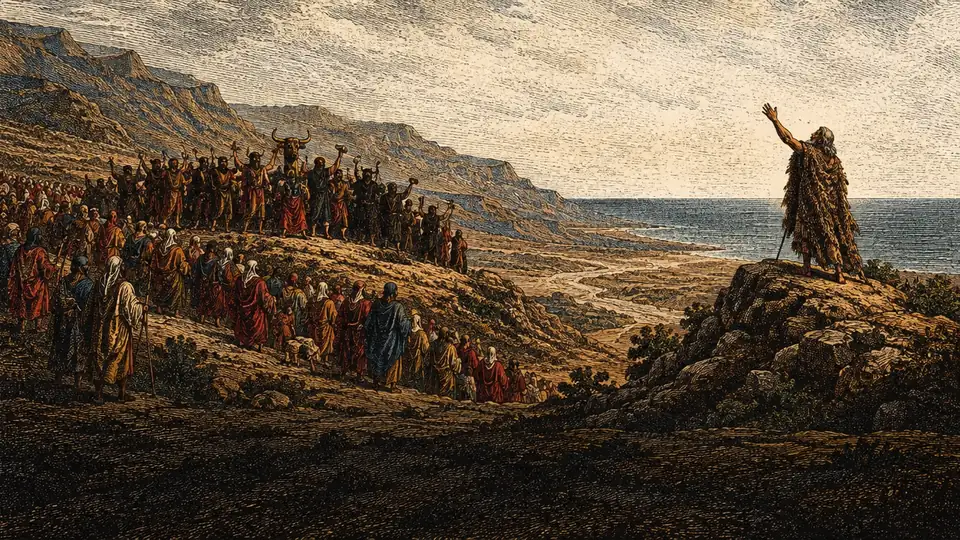
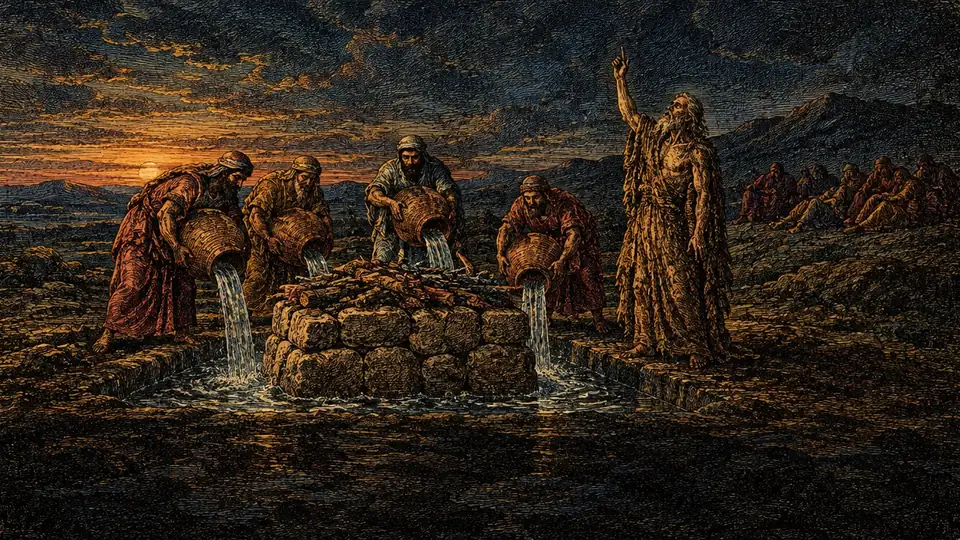
The prophets of Baal cried from morning until noon and leaped upon their altar, but there was neither voice nor any that answered. Elijah mocked them, then repaired the broken altar of the LORD with twelve stones, dug a trench round it, and had water poured over the offering three times. At his short prayer the fire fell and licked up even the water in the trench.
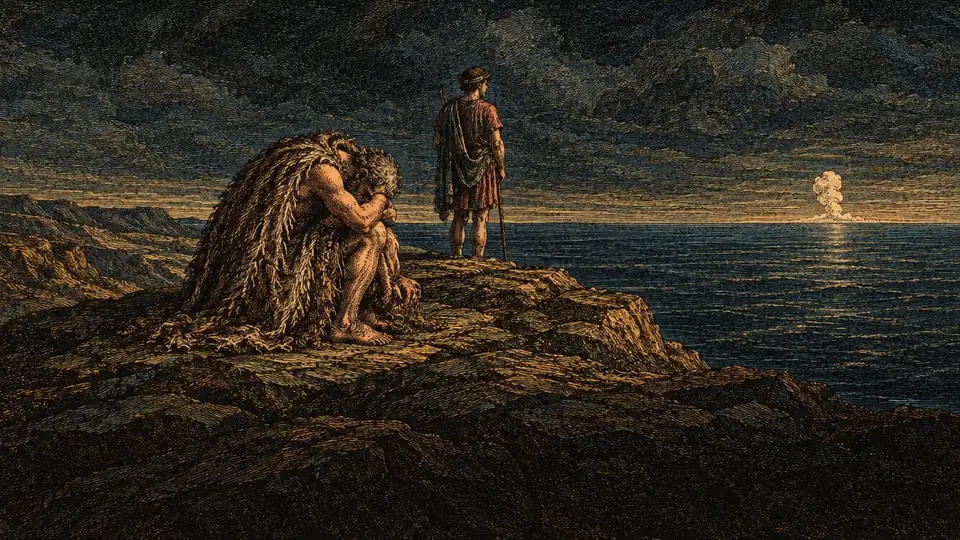
Then Elijah prayed on the top of Carmel with his face between his knees, and sent his servant seven times to look toward the sea, until a little cloud arose like a man’s hand and the heaven grew black with rain. The Carmelite order took its name from the mountain, and their monastery at El-Muhraqa, the place of burning, looks out over the valley of Jezreel.
Then the fire of the LORD fell, and consumed the burnt sacrifice, and the wood, and the stones, and the dust, and licked up the water that was in the trench.
1 Kings 18:38, KJV
Where it happened
Mount Carmel, El-Muhraqa, Mount Carmel (site by tradition).
Mount Carmel is known; Elijah’s altar is remembered at El-Muhraqa, on the ridge’s southeast end.
Every story stands at its place on the Worldwide Watch map: the Bible’s world, on the map.
More from the kingdom
Samuel and Kings
Sources and editorial method
Research and editorial references used for this page include:
- The King James Bible, as published by bible-api.com
- The Book of Enoch, translated by R. H. Charles (1917), Project Gutenberg
Every story is told from the King James Bible, and from the Book of Enoch in R. H. Charles’s translation (1917) where a story names it. Every quotation was checked word for word against those texts. Where a place is not known, the page says so. The paintings and the narration were made for the house.

