
The queen of Sheba
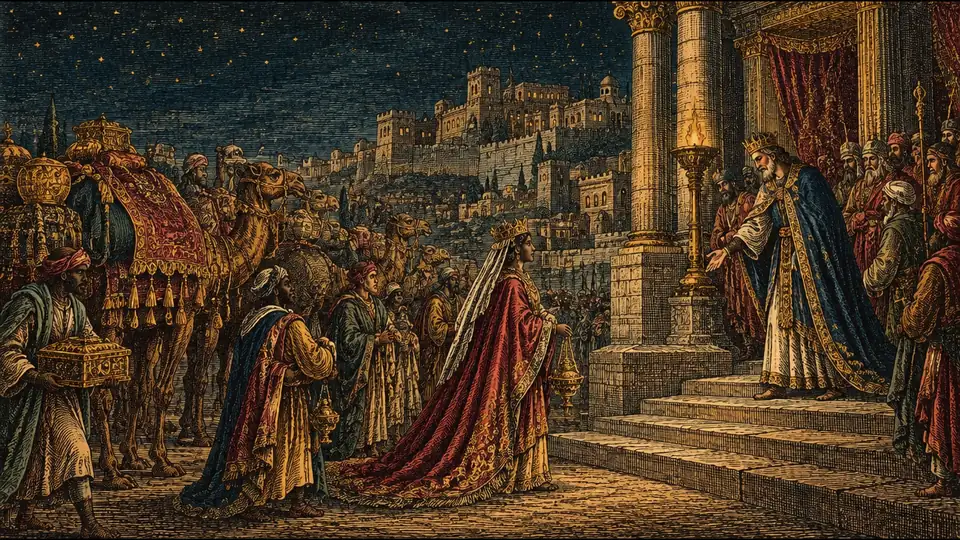
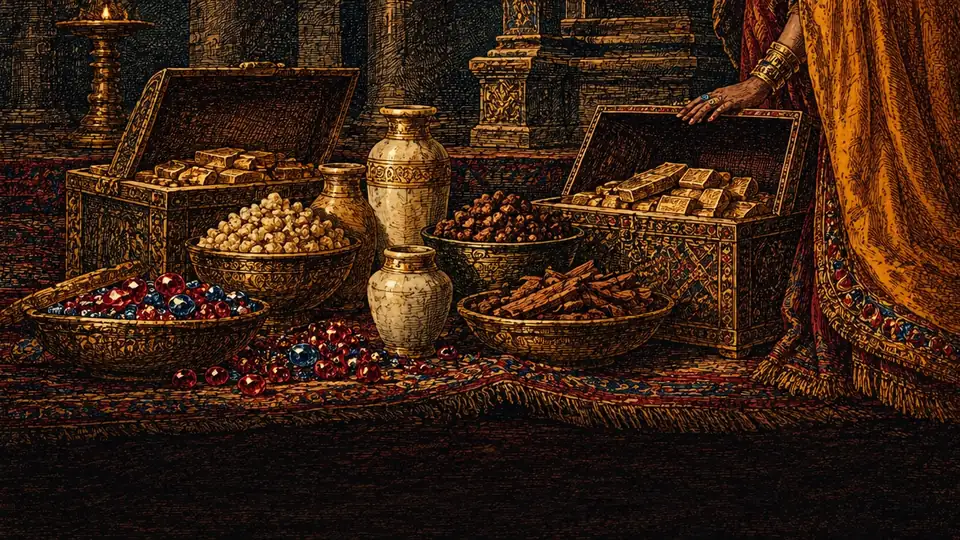
Hearing of Solomon’s wisdom, the queen of Sheba came to Jerusalem with spices, gold and precious stones, to prove him with hard questions.
Press play: the paintings change with the story and the words come as the narrator reads them. The whole story is written out below.
Now playing: The queen of Sheba
The whole story
She came with a very great train, with camels that bare spices, and very much gold, and precious stones, and communed with Solomon of all that was in her heart. He told her all her questions; nothing was hid from the king. When she had seen his wisdom, his house, his table and his ascent to the house of the LORD, there was no more spirit in her.
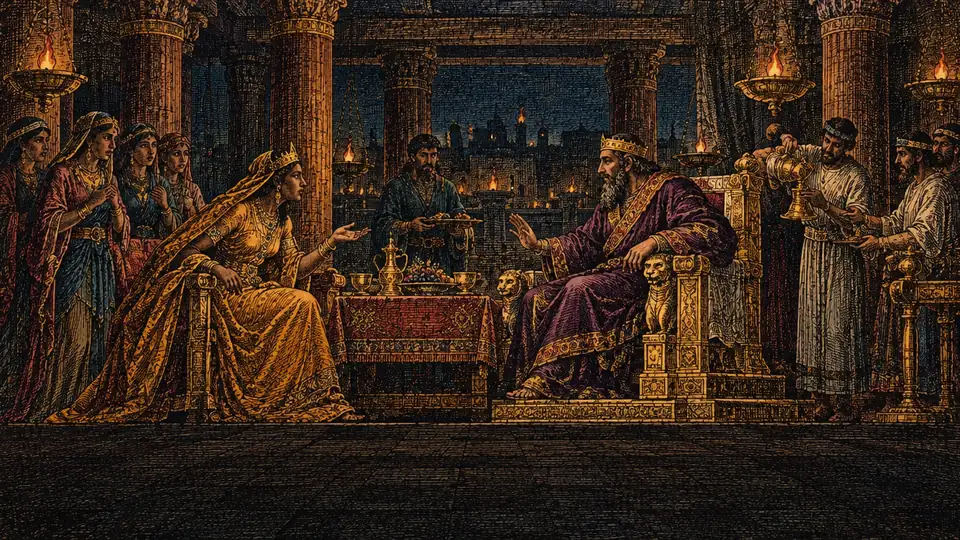
She said that “the half was not told me” (1 Kings 10:7), and blessed the LORD who had set Solomon on the throne. She gave him a hundred and twenty talents of gold and spices in great abundance, and he gave her all she desired before she went back to her own country. Jesus later named her the queen of the south, who came from the ends of the earth to hear wisdom.
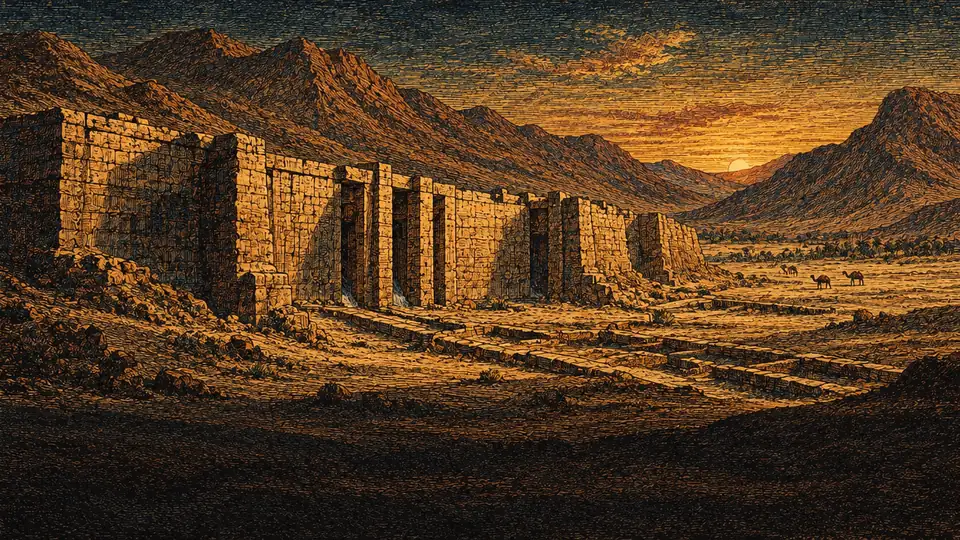
Saba, in Yemen, grew rich on the incense trade, and its great dam at Marib and the temple of its moon god Almaqah still stand in ruins. Ethiopia tells another story, in the book called the Kebra Nagast: that the queen, Makeda, bore Solomon a son, Menelik, who brought the ark of the covenant to Aksum, where the Ethiopian church says it is kept to this day.
And when the queen of Sheba heard of the fame of Solomon concerning the name of the LORD, she came to prove him with hard questions.
1 Kings 10:1, KJV
Where it happened
Sheba, Marib, Yemen (site debated).
Most link Sheba with the kingdom of Saba, whose capital was Marib in Yemen, where the mark stands; Ethiopian tradition claims the queen for Ethiopia.
Every story stands at its place on the Worldwide Watch map: the Bible’s world, on the map.
More from the kingdom
Samuel and Kings
Sources and editorial method
Research and editorial references used for this page include:
- The King James Bible, as published by bible-api.com
- The Book of Enoch, translated by R. H. Charles (1917), Project Gutenberg
Every story is told from the King James Bible, and from the Book of Enoch in R. H. Charles’s translation (1917) where a story names it. Every quotation was checked word for word against those texts. Where a place is not known, the page says so. The paintings and the narration were made for the house.

