
Wheels in the heavens
Among the captives by the river of Chebar, Ezekiel saw the heavens opened: four living creatures, a wheel in the middle of a wheel, and above them the likeness of a throne.
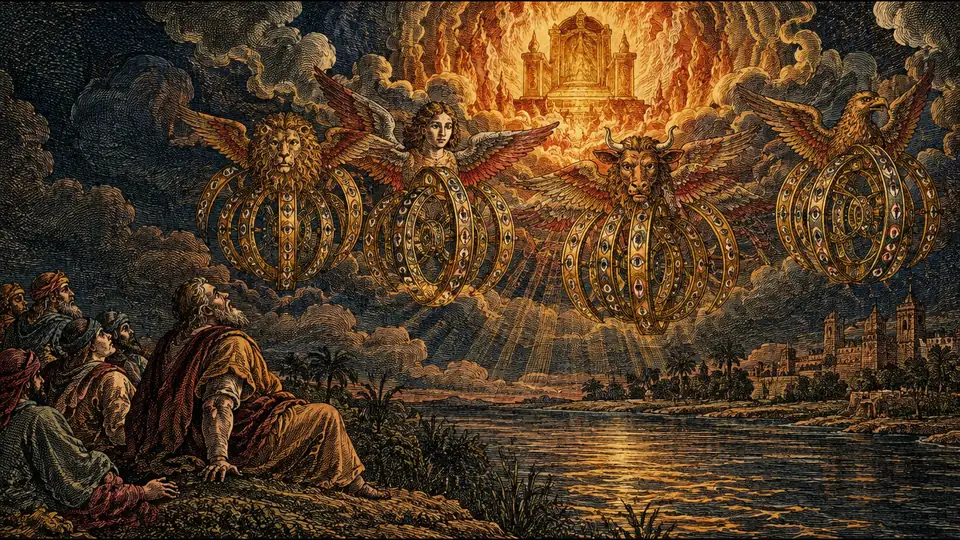
Press play: the paintings change with the story and the words come as the narrator reads them. The whole story is written out below.
Now playing: Wheels in the heavens
The whole story
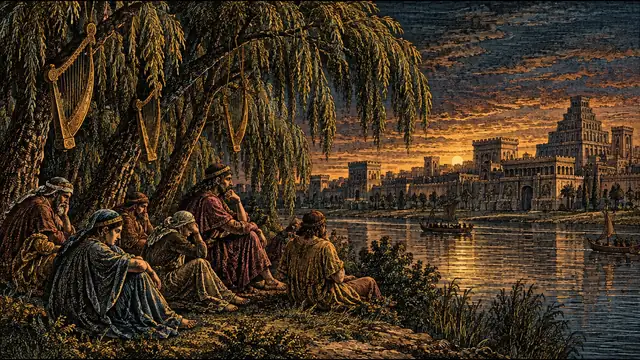
It was the fifth year of King Jehoiachin’s captivity, and Ezekiel, a priest, was among the exiles by the river. Out of the north came a whirlwind and a great cloud with fire, and in it four living creatures, each with four faces, of a man, a lion, an ox and an eagle, and four wings, and they sparkled like the color of burnished brass.
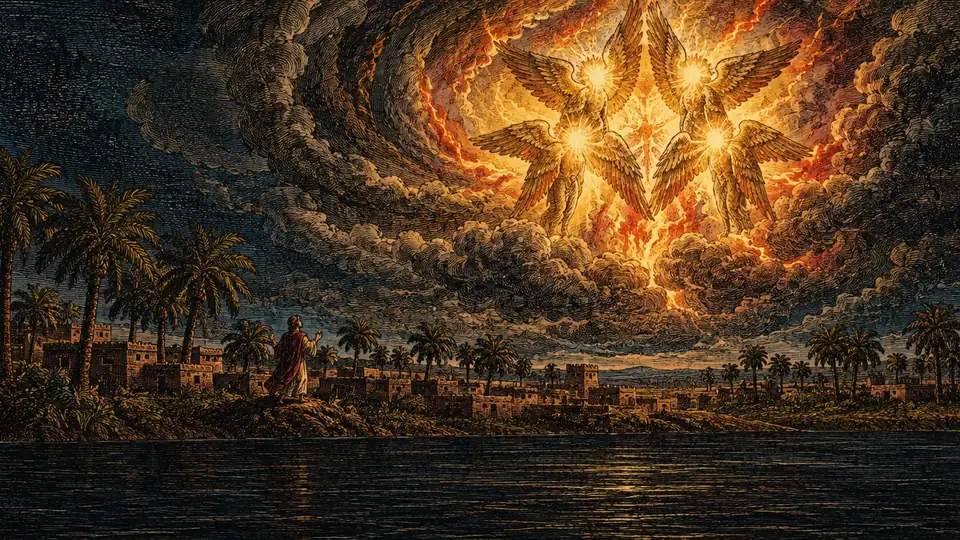
Beside each creature was a wheel, their rings so high that they were dreadful, and full of eyes round about, and wherever the spirit went, the wheels went. Above them was a firmament like crystal, and a throne like a sapphire stone, and on it the likeness of a man, with brightness round about like the bow in the cloud. “This was the appearance of the likeness of the glory of the LORD” (Ezekiel 1:28).
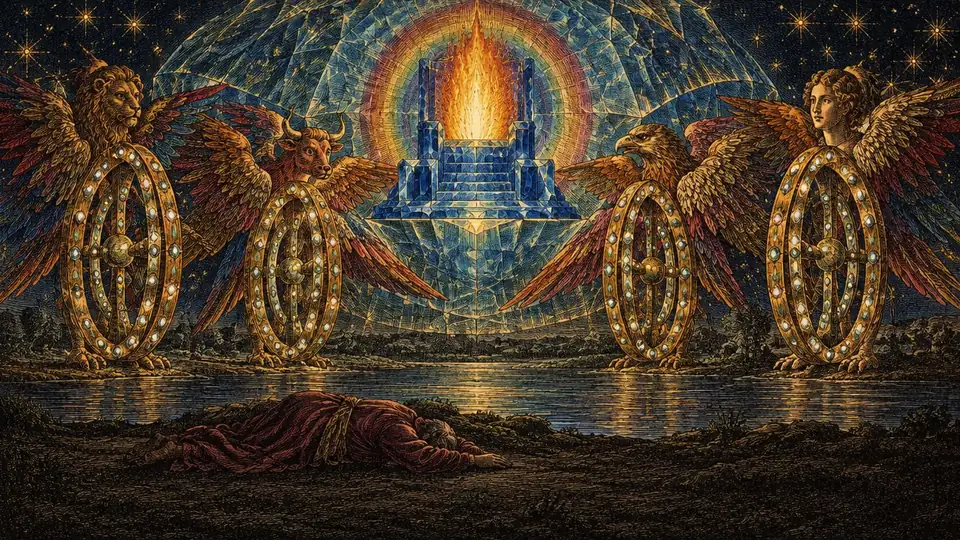
Ezekiel’s vision of the throne-chariot, the Merkabah, became one of the most studied passages in Jewish mysticism, and the rabbis warned against expounding it lightly. In modern times some have read flying machines into it, but the prophet says plainly what he saw: the glory of God, not bound to the temple in Jerusalem but present with his people in exile.
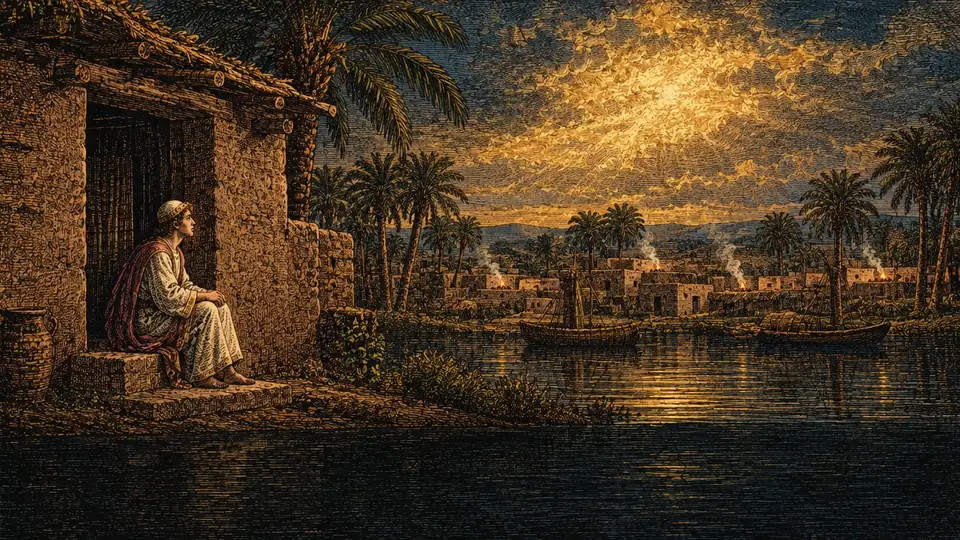
The appearance of the wheels and their work was like unto the colour of a beryl: and they four had one likeness: and their appearance and their work was as it were a wheel in the middle of a wheel.
Ezekiel 1:16, KJV
Where it happened
The river of Chebar, Near Nippur, Iraq (site likely).
Babylonian records name the Kabaru canal by Nippur, south of Babylon; most take it to be Ezekiel’s Chebar.
Every story stands at its place on the Worldwide Watch map: the Bible’s world, on the map.
More from Prophets and exile
Kings to Nehemiah
Sources and editorial method
Research and editorial references used for this page include:
- The King James Bible, as published by bible-api.com
- The Book of Enoch, translated by R. H. Charles (1917), Project Gutenberg
Every story is told from the King James Bible, and from the Book of Enoch in R. H. Charles’s translation (1917) where a story names it. Every quotation was checked word for word against those texts. Where a place is not known, the page says so. The paintings and the narration were made for the house.

