
Nineveh repents
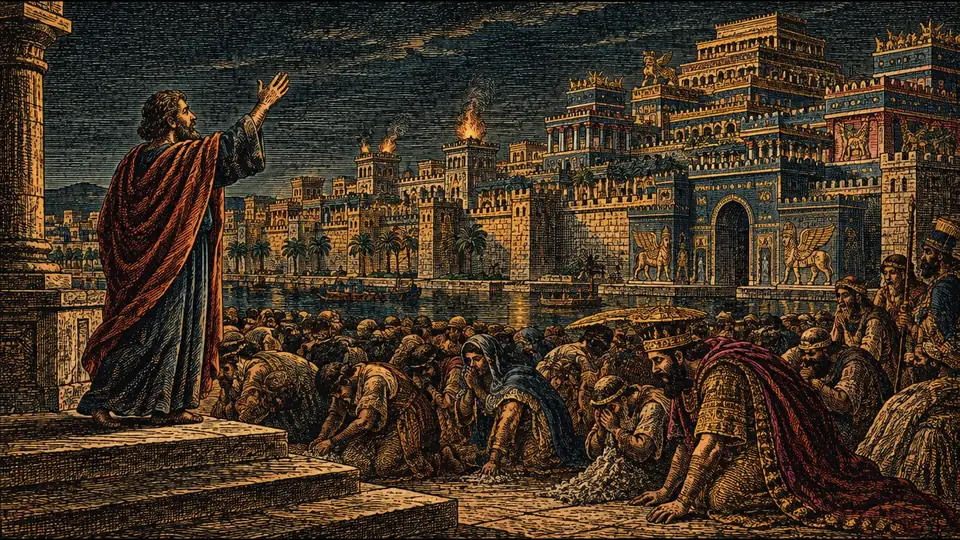
When Jonah at last preached in Nineveh, the great city of Assyria, its people believed God and fasted in sackcloth, and the city was spared.
Press play: the paintings change with the story and the words come as the narrator reads them. The whole story is written out below.
Now playing: Nineveh repents
The whole story
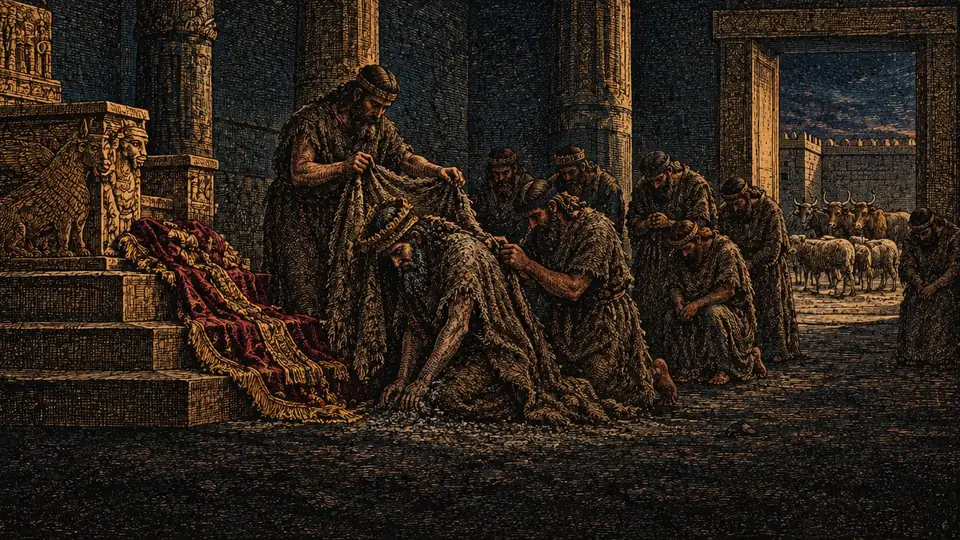
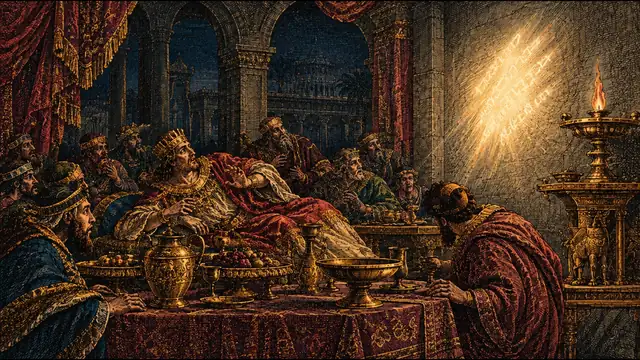
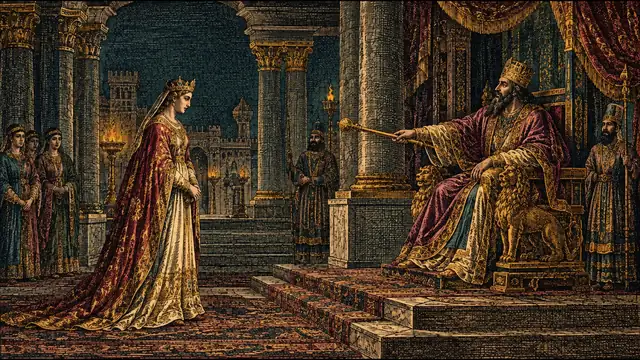
Jonah went a day’s journey into the city crying, “Yet forty days, and Nineveh shall be overthrown” (Jonah 3:4). The people believed God and proclaimed a fast, and the king rose from his throne, covered himself with sackcloth and sat in ashes, and ordered that man and beast should fast and turn from their evil way.
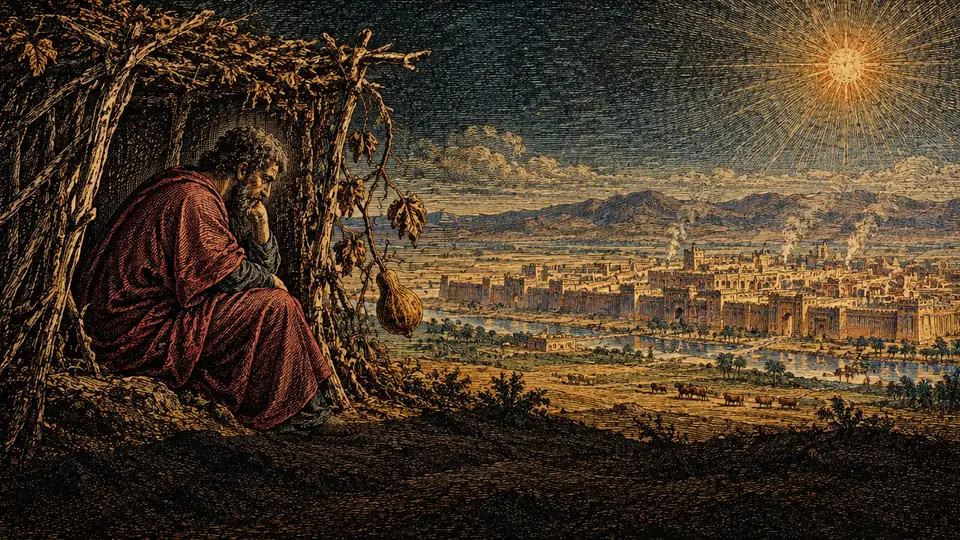
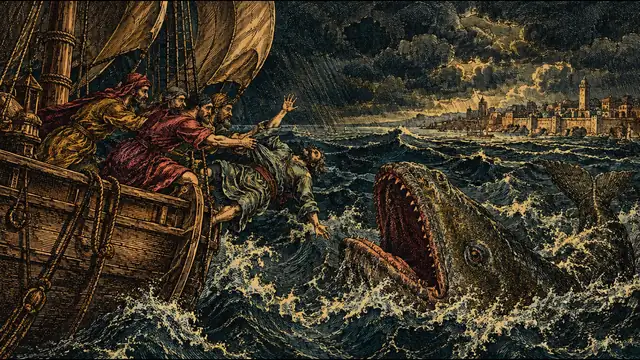
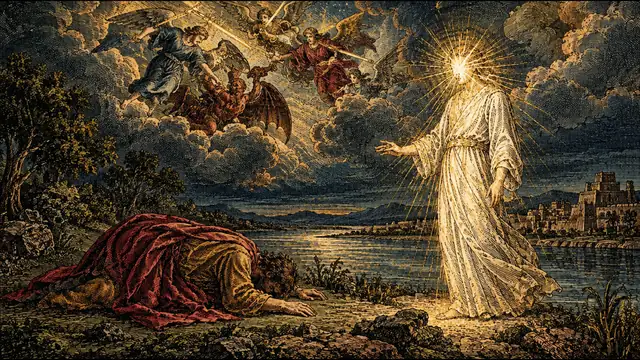
God saw their works and spared the city, and Jonah was angry. He sat outside the city in a booth, and God prepared a gourd to shade him and then a worm to smite it. When Jonah grieved for the gourd, God asked whether he should not spare Nineveh, that great city, with its many thousands of people who could not tell their right hand from their left, and also much cattle.
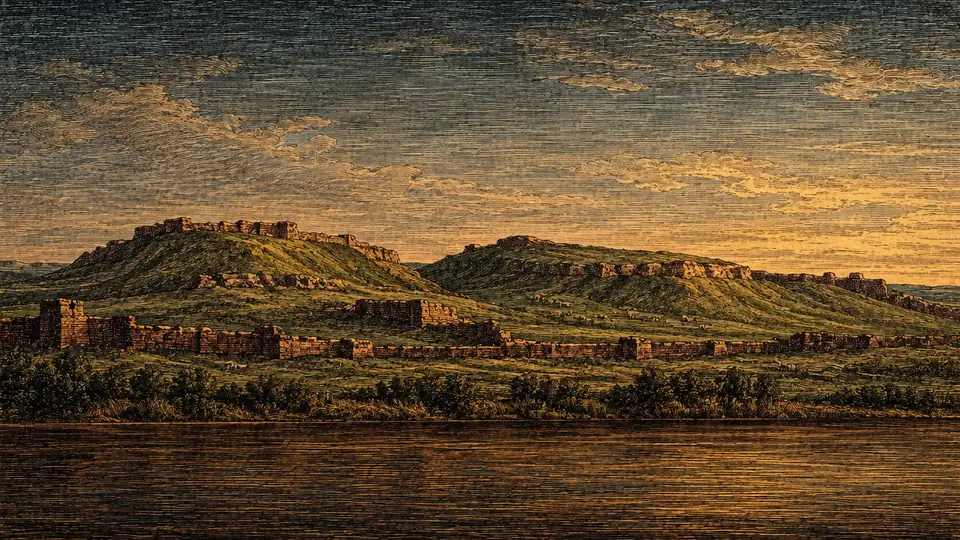
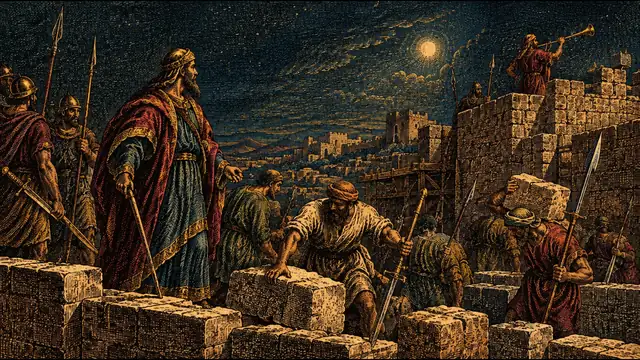
Nineveh was later the capital of Assyria under Sennacherib, who built his palace without rival there, and Ashurbanipal, whose library of clay tablets, found in the middle of the nineteenth century, gave the world the epic of Gilgamesh. The city fell in 612 BC to the Babylonians and the Medes, as the prophet Nahum had said. Its great mounds lie across the Tigris from Mosul.
So the people of Nineveh believed God, and proclaimed a fast, and put on sackcloth, from the greatest of them even to the least of them.
Jonah 3:5, KJV
Where it happened
Nineveh, Mosul, Iraq.
The mounds of Nineveh lie across the Tigris from the old city of Mosul.
Every story stands at its place on the Worldwide Watch map: the Bible’s world, on the map.
More from Prophets and exile
Kings to Nehemiah
Sources and editorial method
Research and editorial references used for this page include:
- The King James Bible, as published by bible-api.com
- The Book of Enoch, translated by R. H. Charles (1917), Project Gutenberg
Every story is told from the King James Bible, and from the Book of Enoch in R. H. Charles’s translation (1917) where a story names it. Every quotation was checked word for word against those texts. Where a place is not known, the page says so. The paintings and the narration were made for the house.

