
The fiery furnace
Shadrach, Meshach and Abednego would not bow to the king’s golden image. Cast into the burning furnace, they walked in the fire unharmed, and a fourth walked with them.
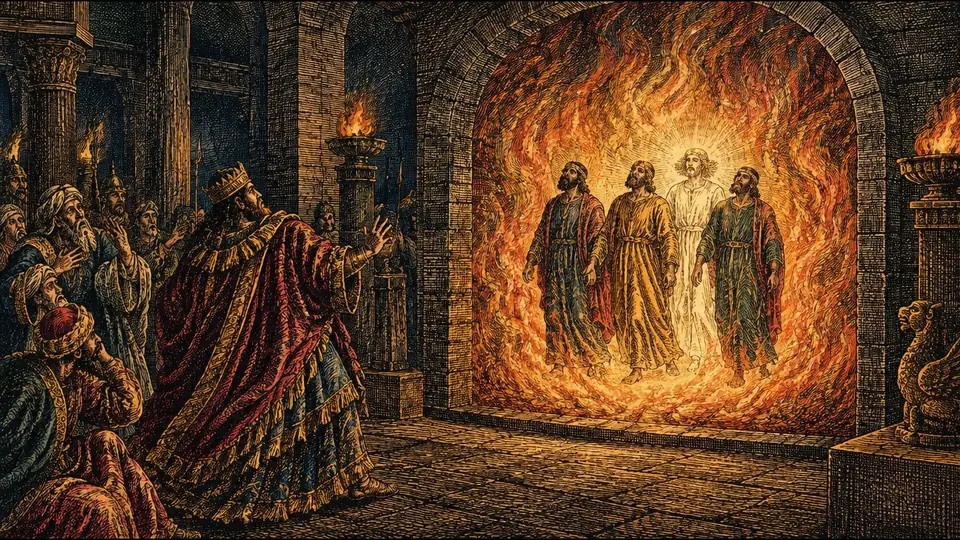
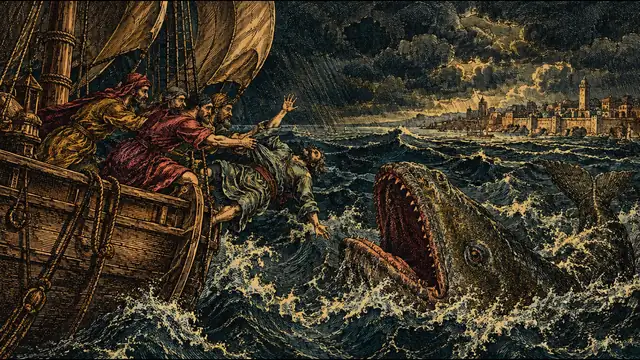
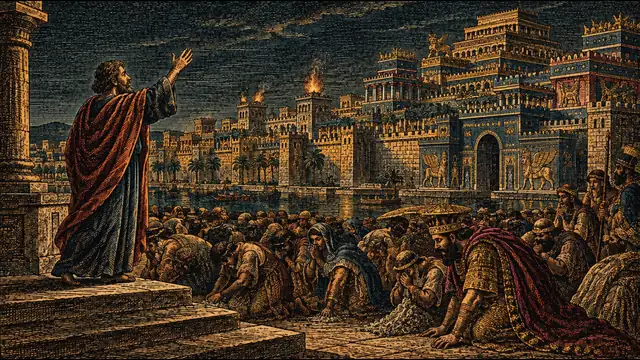
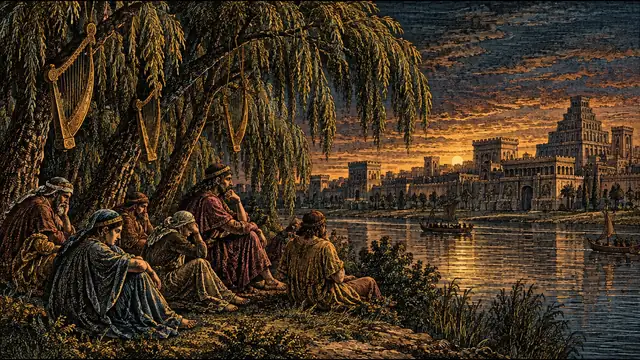
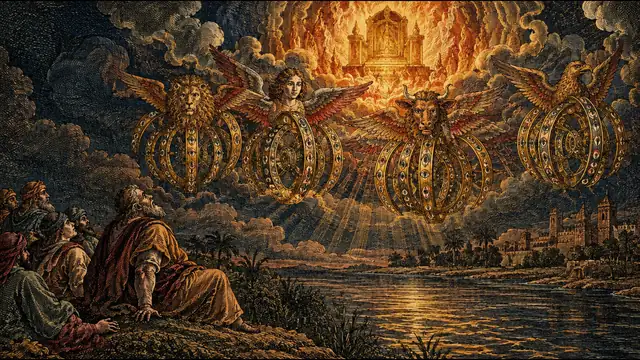
Press play: the paintings change with the story and the words come as the narrator reads them. The whole story is written out below.
Now playing: The fiery furnace
The whole story
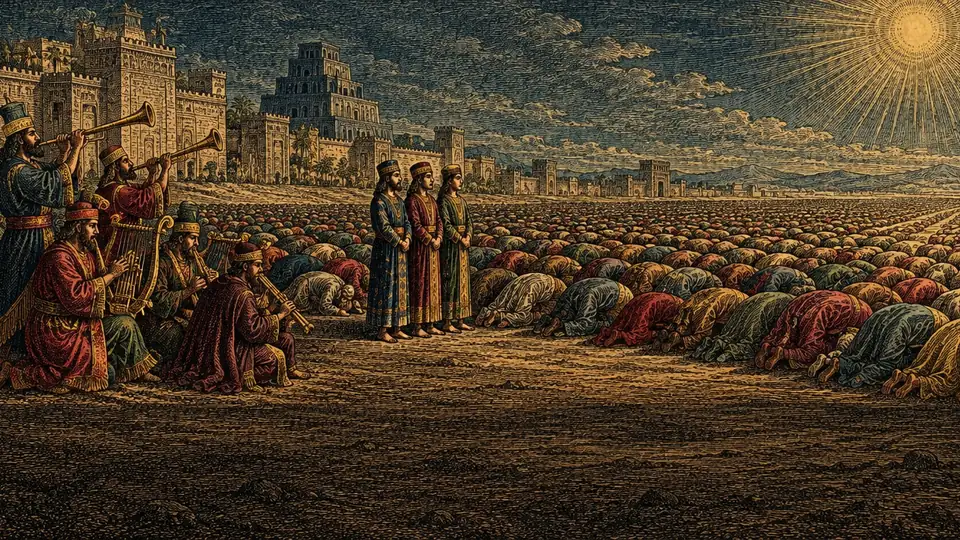
Nebuchadnezzar set up an image of gold, sixty cubits high, in the plain of Dura, and commanded all peoples to fall down and worship it when they heard the music. Three Jews he had set over the province of Babylon would not. Brought before him, they said their God was able to deliver them, “But if not, be it known unto thee, O king, that we will not serve thy gods” (Daniel 3:18).
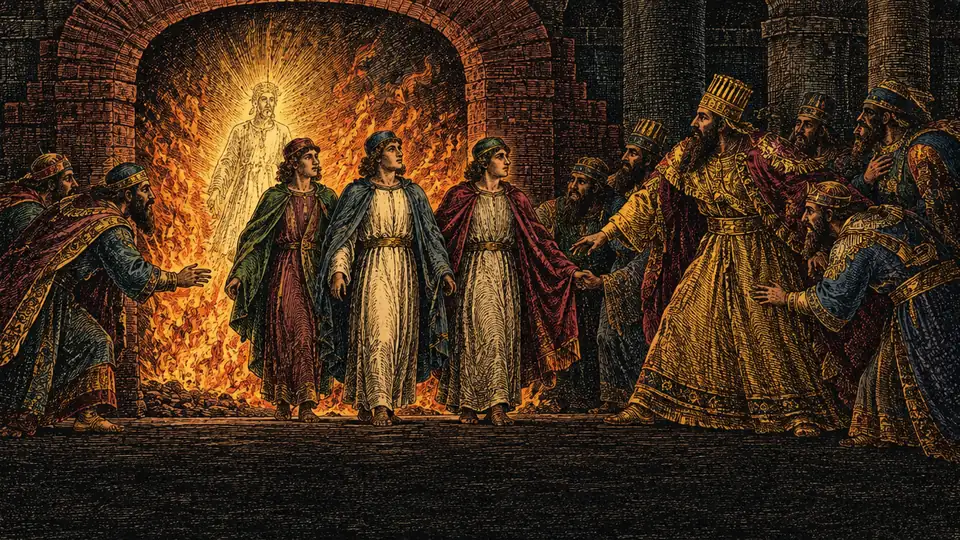
The king in his fury had the furnace heated seven times more than it was wont, so hot that the flame slew the men who cast them in. Then he rose up in haste: he saw four men loose, walking in the midst of the fire, and they had no hurt, and the form of the fourth was like the Son of God. The three came out without even the smell of fire upon them.
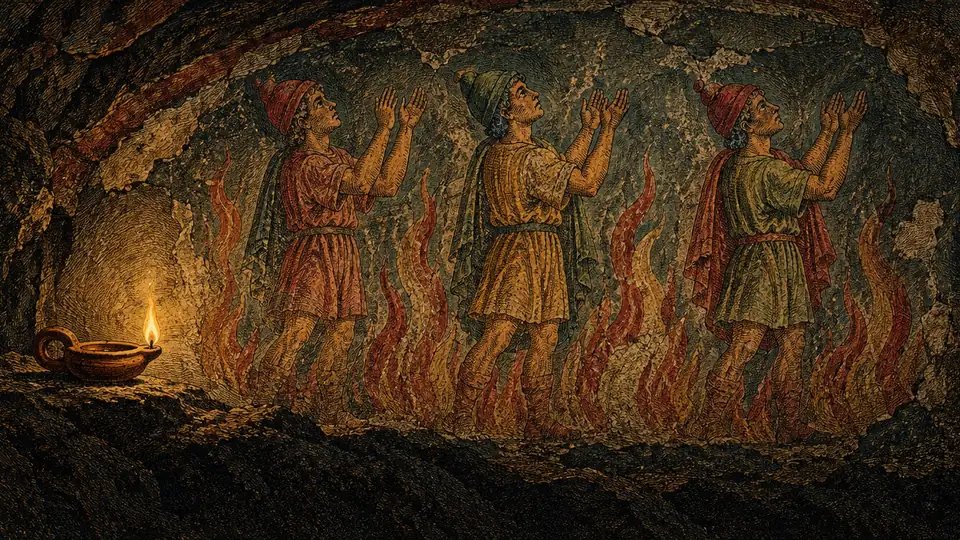
The story comforted Jews under later persecutions, and Christians painted the three young men on the walls of the catacombs of Rome. The Greek Bible adds a long prayer and a hymn they sang in the flames, the Song of the Three Holy Children, kept among the Apocrypha. The plain of Dura has never been found for certain.
He answered and said, Lo, I see four men loose, walking in the midst of the fire, and they have no hurt; and the form of the fourth is like the Son of God.
Daniel 3:25, KJV
Where it happened
Babylon, Near Hillah, Iraq (site unknown).
Daniel sets the golden image on the plain of Dura, in the province of Babylon; where Dura lay is not known.
Every story stands at its place on the Worldwide Watch map: the Bible’s world, on the map.
More from Prophets and exile
Kings to Nehemiah
Sources and editorial method
Research and editorial references used for this page include:
- The King James Bible, as published by bible-api.com
- The Book of Enoch, translated by R. H. Charles (1917), Project Gutenberg
Every story is told from the King James Bible, and from the Book of Enoch in R. H. Charles’s translation (1917) where a story names it. Every quotation was checked word for word against those texts. Where a place is not known, the page says so. The paintings and the narration were made for the house.

