
The prince of Persia
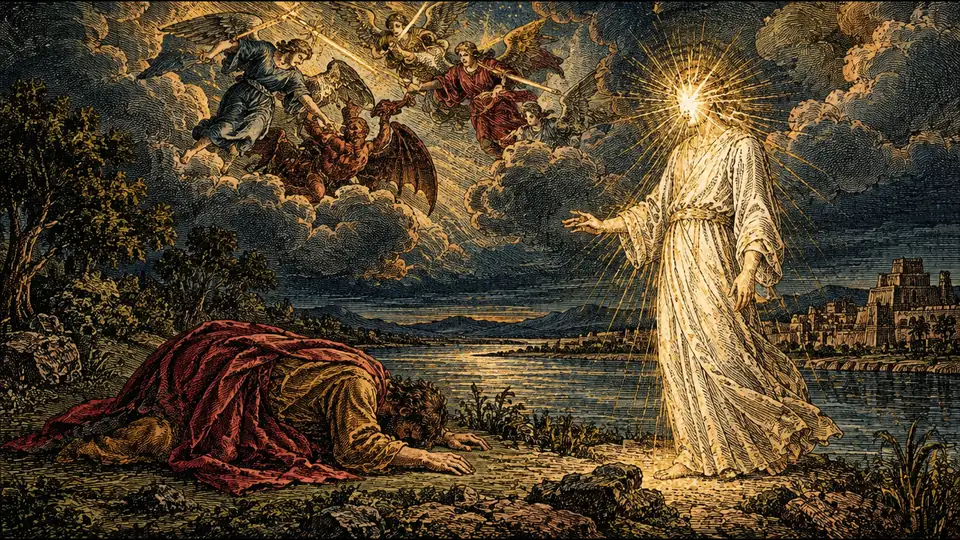
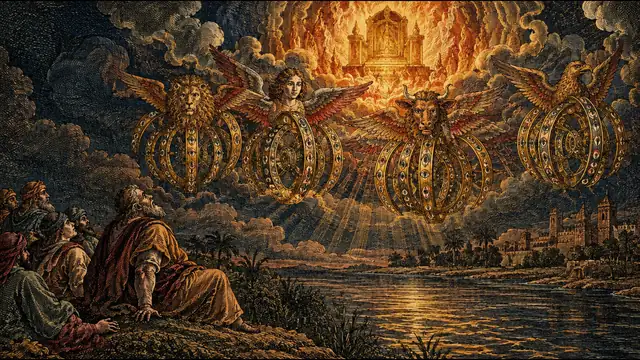
Daniel mourned and fasted three weeks by the great river Hiddekel. Then a man clothed in linen appeared and told him he had been held back twenty-one days by the prince of the kingdom of Persia.
Press play: the paintings change with the story and the words come as the narrator reads them. The whole story is written out below.
Now playing: The prince of Persia
The whole story
It was the third year of Cyrus king of Persia. The messenger’s body was like the beryl, his face like lightning and his eyes like lamps of fire, and the men with Daniel fled and hid without seeing him. Daniel fell on his face in a deep sleep until a hand touched him and set him trembling on his knees.
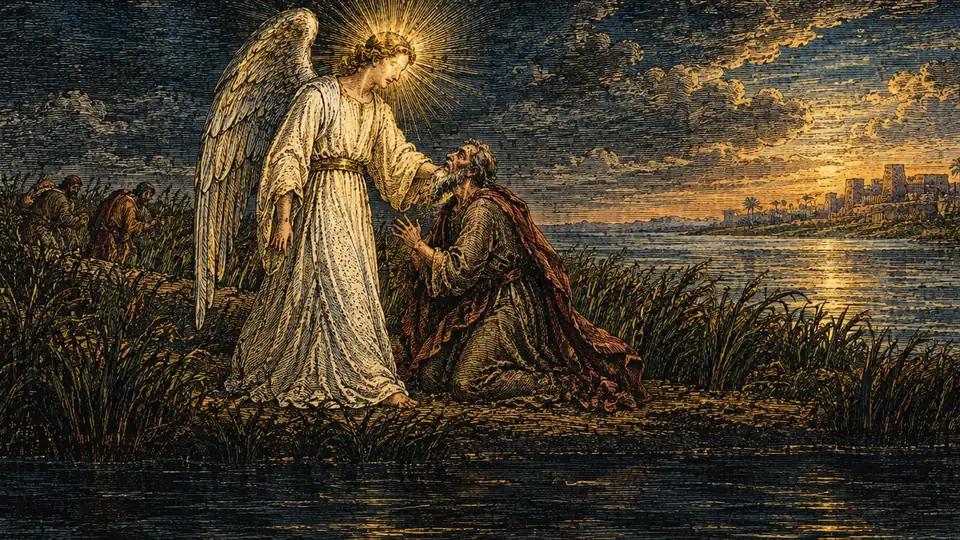
The messenger explained his delay. From the first day Daniel set his heart to understand, his words were heard, but a spiritual prince over Persia withstood him, until Michael came to help. Going back to fight, he said, “lo, the prince of Grecia shall come” (Daniel 10:20). Many readers see here a glimpse of an unseen struggle behind the kingdoms of the earth.
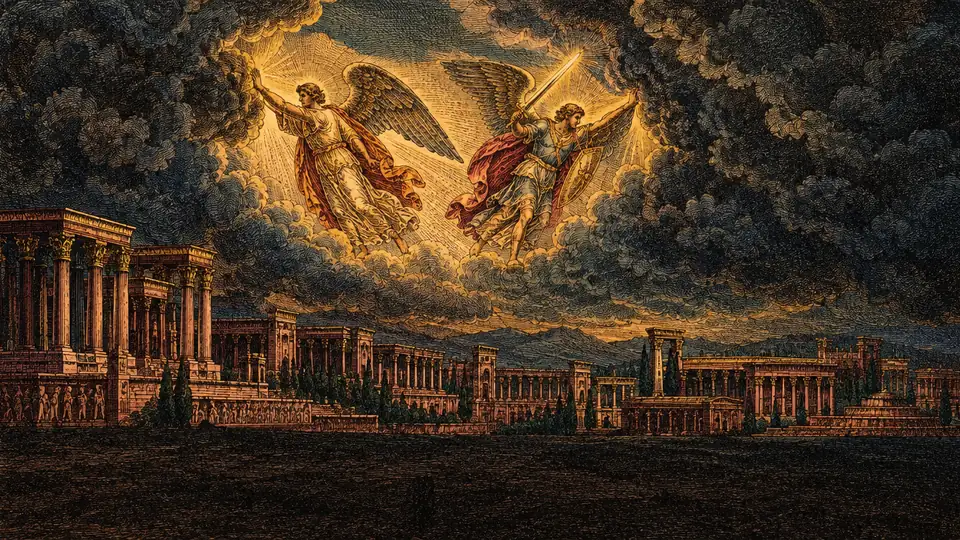
The New Testament speaks in the same way of principalities and powers. Paul wrote that the struggle of believers is “against principalities, against powers, against the rulers of the darkness of this world” (Ephesians 6:12). Daniel’s way through the hidden war was the same as ever: prayer, and the patience to wait three weeks.
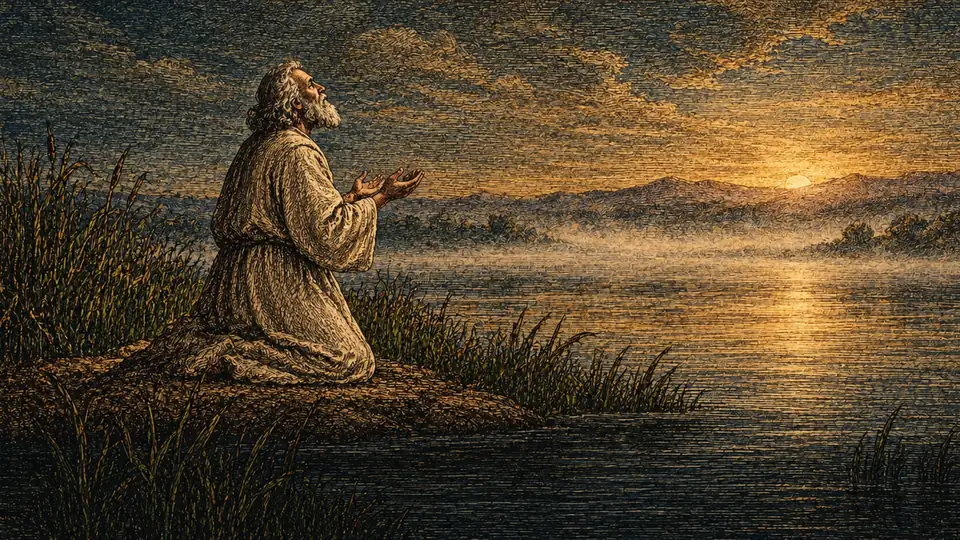
But the prince of the kingdom of Persia withstood me one and twenty days: but, lo, Michael, one of the chief princes, came to help me; and I remained there with the kings of Persia.
Daniel 10:13, KJV
Where it happened
The great river Hiddekel, The Tigris, south of Baghdad, Iraq (site unknown).
The Hiddekel is the Tigris; where on its banks Daniel stood is not known, and the mark stands on the river below Baghdad.
Every story stands at its place on the Worldwide Watch map: the Bible’s world, on the map.
More from Prophets and exile
Kings to Nehemiah
Sources and editorial method
Research and editorial references used for this page include:
- The King James Bible, as published by bible-api.com
- The Book of Enoch, translated by R. H. Charles (1917), Project Gutenberg
Every story is told from the King James Bible, and from the Book of Enoch in R. H. Charles’s translation (1917) where a story names it. Every quotation was checked word for word against those texts. Where a place is not known, the page says so. The paintings and the narration were made for the house.

