
Peace, be still
Crossing the lake at evening, the disciples woke Jesus in a great storm. He rebuked the wind, and there was a great calm.
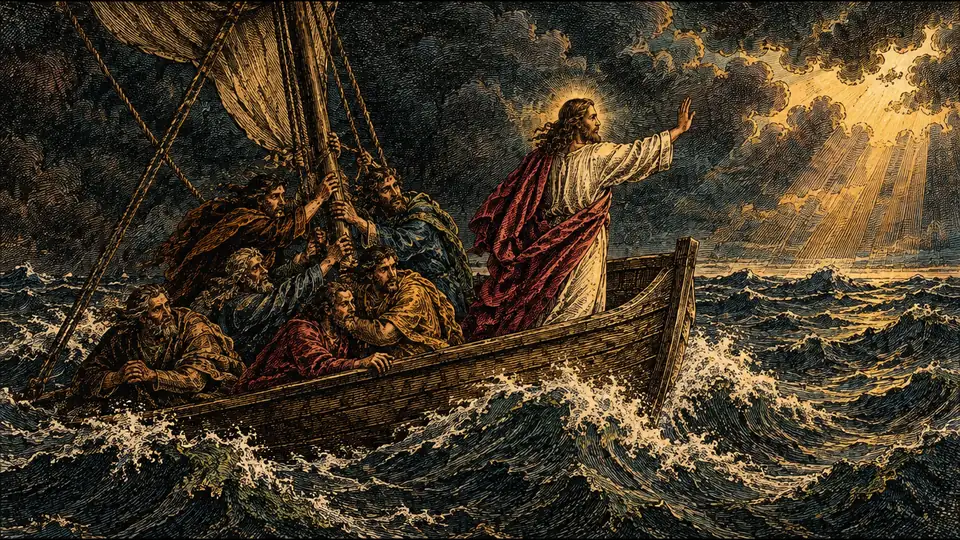
Press play: the paintings change with the story and the words come as the narrator reads them. The whole story is written out below.
Now playing: Peace, be still
The whole story
That evening Jesus said, “Let us pass over unto the other side” (Mark 4:35), and they took him even as he was in the ship. There arose a great storm of wind, and the waves beat into the ship so that it was now full, while he was in the hinder part, asleep on a pillow. They woke him: “Master, carest thou not that we perish?” (Mark 4:38).
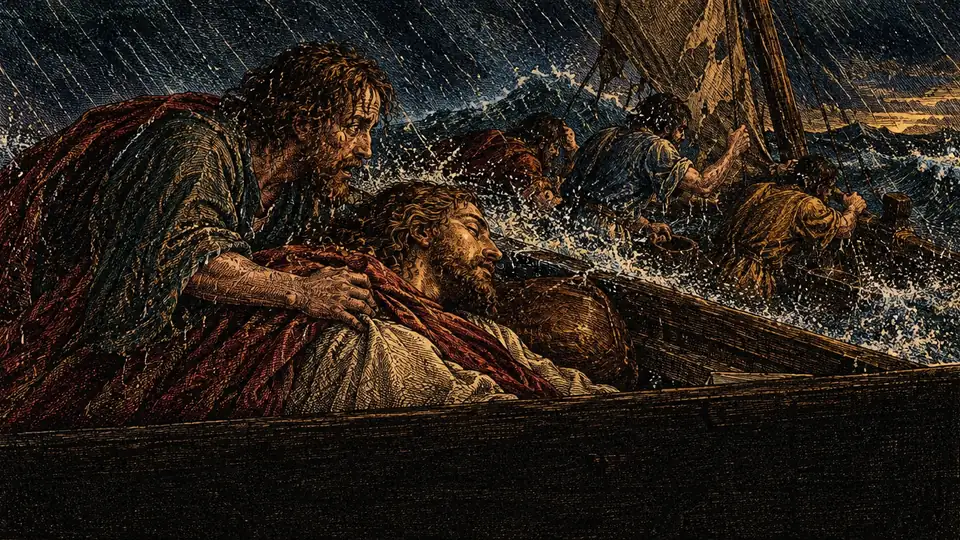
He arose and rebuked the wind, and said unto the sea, Peace, be still, and there was a great calm. Then he asked them why they were so fearful, and how it was that they had no faith. They feared exceedingly and said one to another, “What manner of man is this, that even the wind and the sea obey him?” (Mark 4:41).
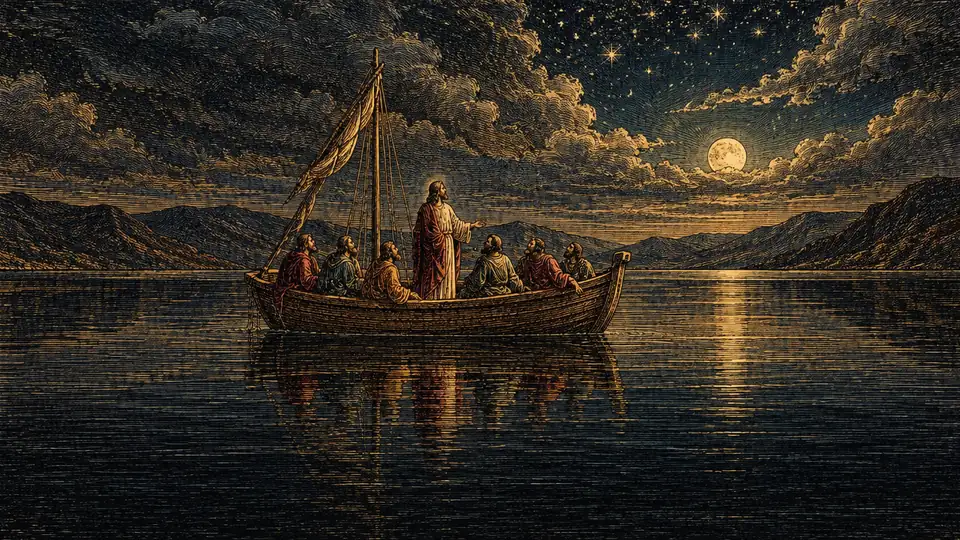
The Sea of Galilee lies about seven hundred feet below the level of the sea, ringed by hills, and cool air pouring down from the heights still raises sudden, violent storms on its warm waters; fishermen on the lake know how fast they come. On the same lake Jesus later walked on the water and caught Peter’s hand.
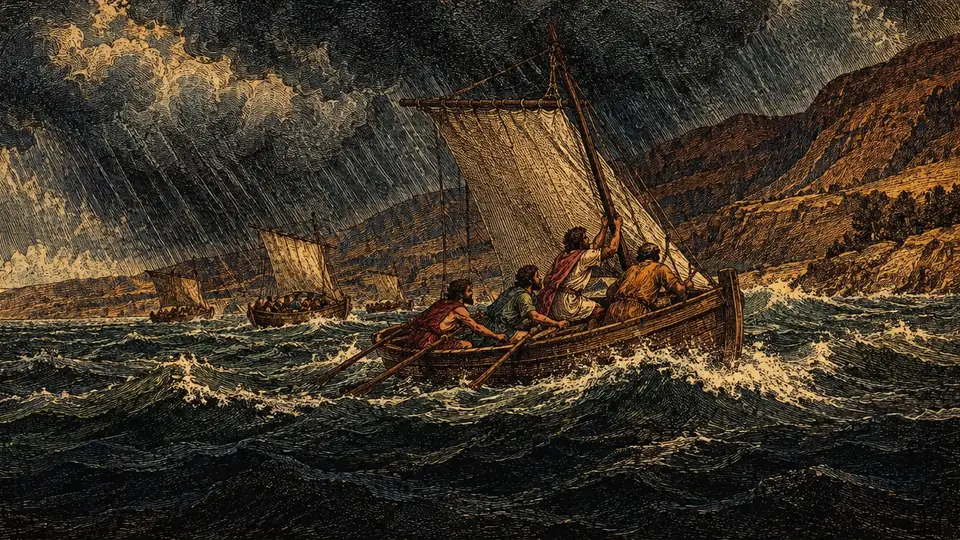
And he arose, and rebuked the wind, and said unto the sea, Peace, be still. And the wind ceased, and there was a great calm.
Mark 4:39, KJV
Where it happened
The Sea of Galilee, Lake Kinneret, Israel.
The lake is known; Capernaum, the fishermen’s town, stands on its north shore, and the mount of the sermon is remembered nearby.
Every story stands at its place on the Worldwide Watch map: the Bible’s world, on the map.
More from the Gospels
Matthew to John
Sources and editorial method
Research and editorial references used for this page include:
- The King James Bible, as published by bible-api.com
- The Book of Enoch, translated by R. H. Charles (1917), Project Gutenberg
Every story is told from the King James Bible, and from the Book of Enoch in R. H. Charles’s translation (1917) where a story names it. Every quotation was checked word for word against those texts. Where a place is not known, the page says so. The paintings and the narration were made for the house.

