
Fishers of men
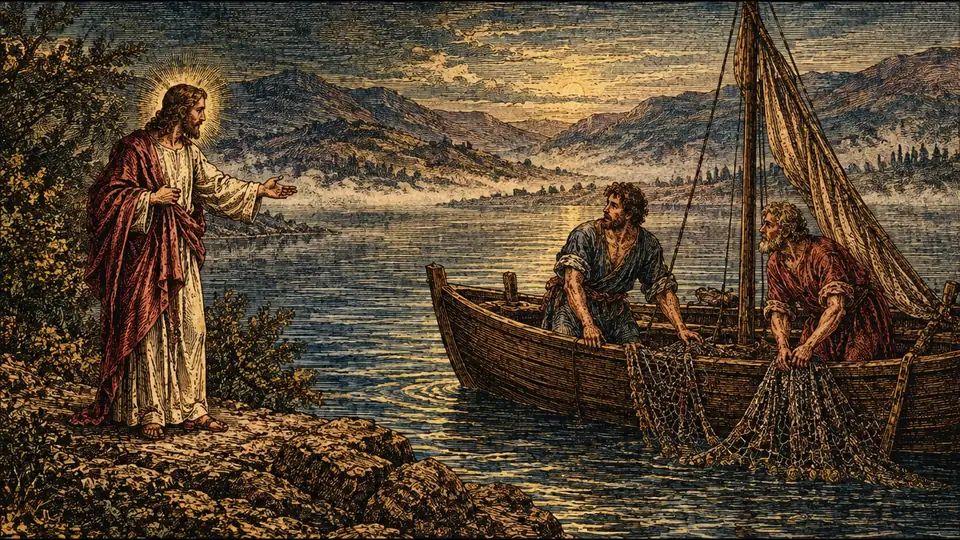
Walking by the Sea of Galilee, Jesus called the fishermen Simon Peter and Andrew, then James and John, from their nets.
Press play: the paintings change with the story and the words come as the narrator reads them. The whole story is written out below.
Now playing: Fishers of men
The whole story
Jesus walked by the sea and saw Simon called Peter and Andrew his brother casting a net into the sea, for they were fishers. Going on from there, he saw James and John in a ship with Zebedee their father, mending their nets, and called them, and they immediately left the ship and their father and followed him.
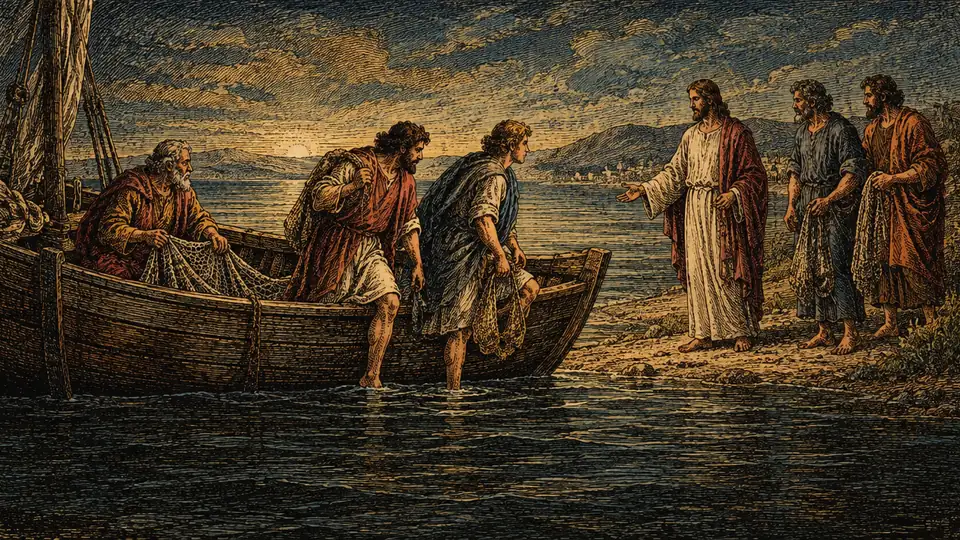
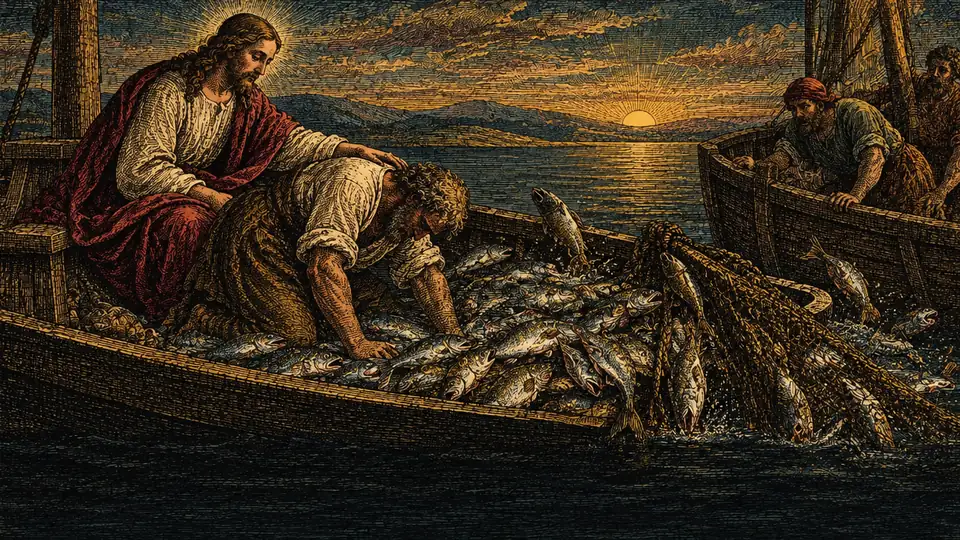
Luke tells the call with a miracle: after toiling all night and taking nothing, Simon let down the net at Jesus’s word and enclosed so great a multitude of fishes that the net broke. Peter fell down at his knees and said, “Depart from me; for I am a sinful man, O Lord” (Luke 5:8).
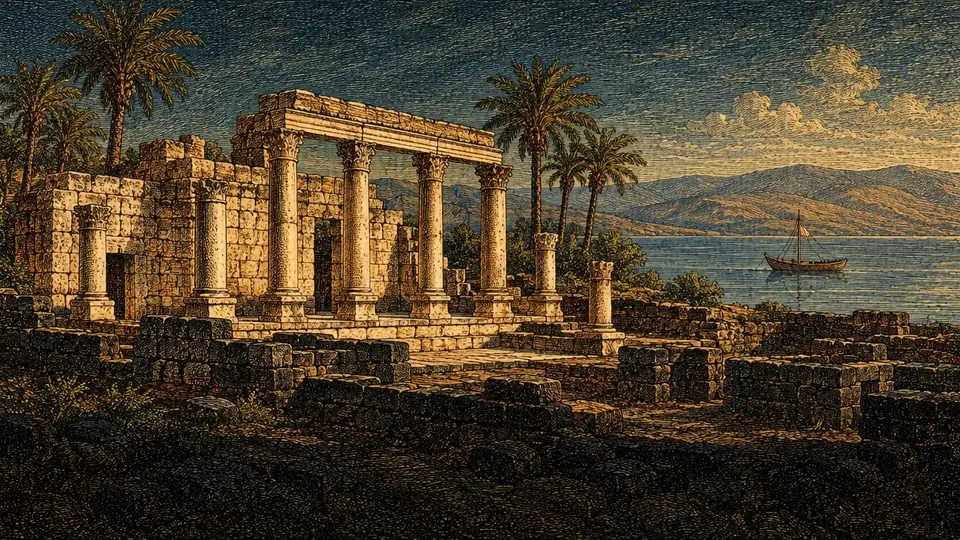
Capernaum, on the north shore, became the center of Jesus’s work in Galilee. Its white limestone synagogue of the fourth or fifth century stands on the black basalt foundations of an older one, and nearby a modern church rises over a house honored as Peter’s. In 1986 a fishing boat of the first century was found in the mud of the lake shore.
And he saith unto them, Follow me, and I will make you fishers of men.
Matthew 4:19, KJV
Where it happened
The Sea of Galilee, Lake Kinneret, Israel.
The lake is known; Capernaum, the fishermen’s town, stands on its north shore, and the mount of the sermon is remembered nearby.
Every story stands at its place on the Worldwide Watch map: the Bible’s world, on the map.
More from the Gospels
Matthew to John
Sources and editorial method
Research and editorial references used for this page include:
- The King James Bible, as published by bible-api.com
- The Book of Enoch, translated by R. H. Charles (1917), Project Gutenberg
Every story is told from the King James Bible, and from the Book of Enoch in R. H. Charles’s translation (1917) where a story names it. Every quotation was checked word for word against those texts. Where a place is not known, the page says so. The paintings and the narration were made for the house.

