
Water into wine
At a wedding in Cana of Galilee, when the wine ran out, Jesus turned six waterpots of water into wine, the first of his miracles.
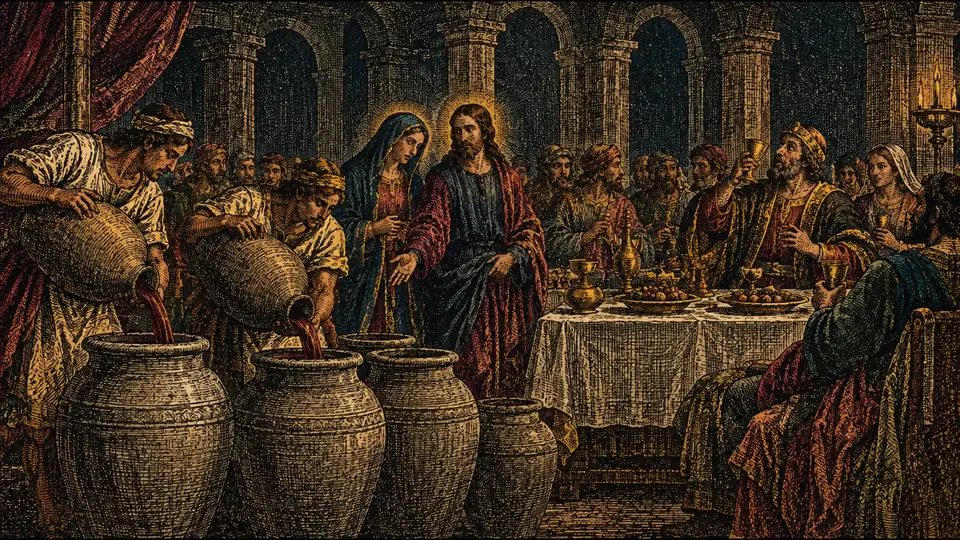
Press play: the paintings change with the story and the words come as the narrator reads them. The whole story is written out below.
Now playing: Water into wine
The whole story
The mother of Jesus was at the wedding, and Jesus and his disciples were called to it too. When the wine ran out she told him, They have no wine, and told the servants, “Whatsoever he saith unto you, do it” (John 2:5). Six waterpots of stone stood there for the washing, holding two or three firkins apiece.
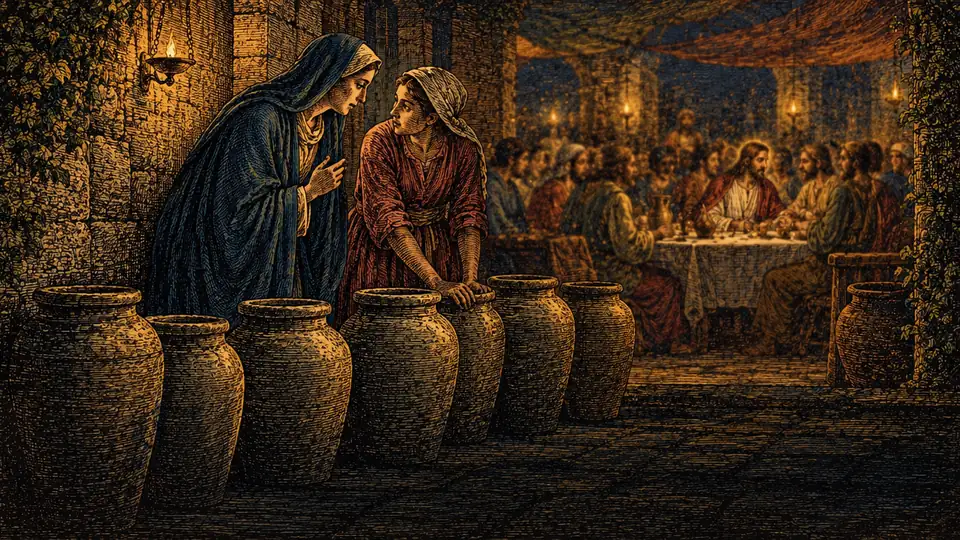
Jesus told the servants to fill them to the brim, then draw out and bear to the governor of the feast. Tasting the water made wine and not knowing whence it was, he called the bridegroom and said that every man sets out good wine first, “but thou hast kept the good wine until now” (John 2:10). And his disciples believed on him.
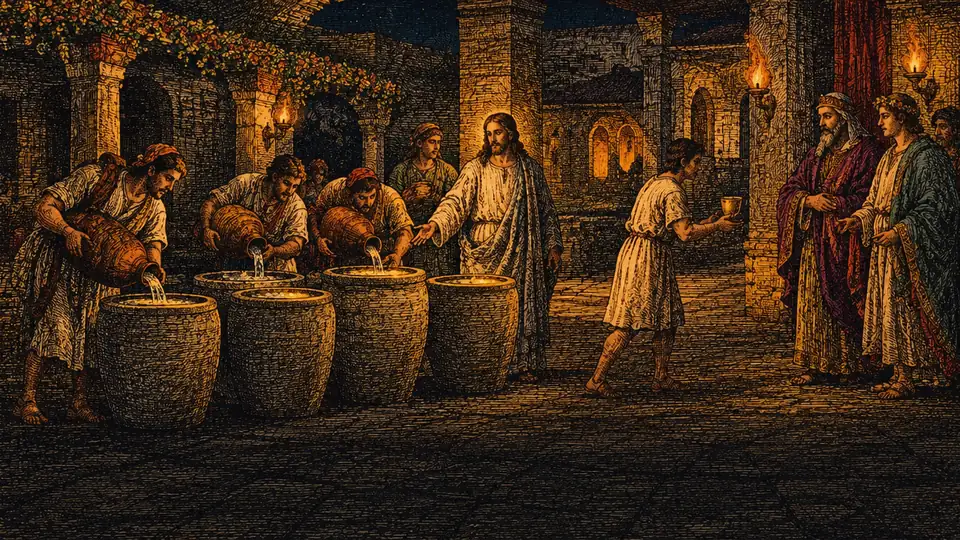
John calls it the beginning of miracles, a sign that showed forth his glory. At Kafr Kanna, churches stand over older remains, and many couples come to renew their wedding vows; at Khirbet Qana, excavations have found a cave honored by early Christian pilgrims, with pieces of stone jars, which some scholars think marks the true site.
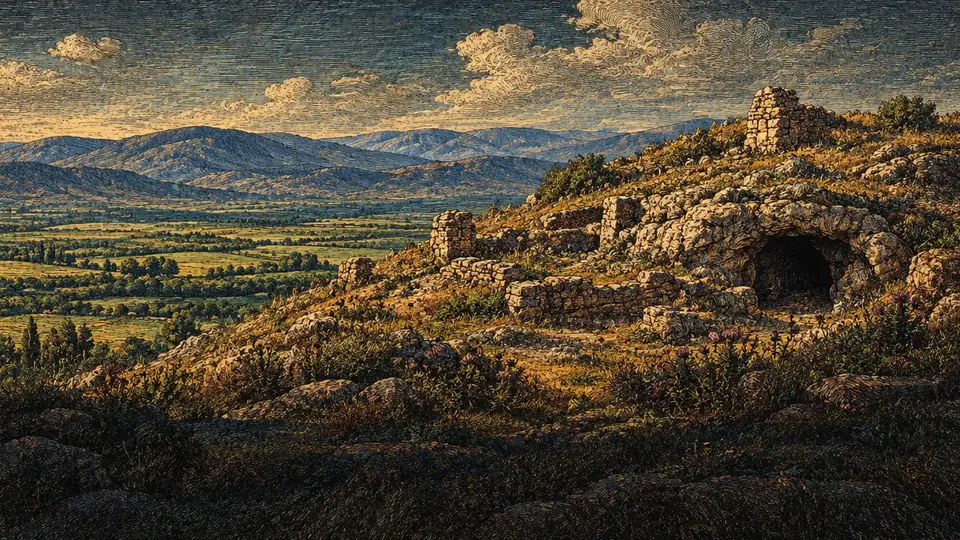
This beginning of miracles did Jesus in Cana of Galilee, and manifested forth his glory; and his disciples believed on him.
John 2:11, KJV
Where it happened
Cana of Galilee, Kafr Kanna, near Nazareth (site debated).
Pilgrims visit Kafr Kanna, near Nazareth, where the mark stands; many archaeologists favor Khirbet Qana, about five miles to the northwest.
Every story stands at its place on the Worldwide Watch map: the Bible’s world, on the map.
More from the Gospels
Matthew to John
Sources and editorial method
Research and editorial references used for this page include:
- The King James Bible, as published by bible-api.com
- The Book of Enoch, translated by R. H. Charles (1917), Project Gutenberg
Every story is told from the King James Bible, and from the Book of Enoch in R. H. Charles’s translation (1917) where a story names it. Every quotation was checked word for word against those texts. Where a place is not known, the page says so. The paintings and the narration were made for the house.

