
He is risen
Early on the first day of the week, the women came to the tomb and found it empty, and an angel told them he was risen.
Press play: the paintings change with the story and the words come as the narrator reads them. The whole story is written out below.
Now playing: He is risen
The whole story
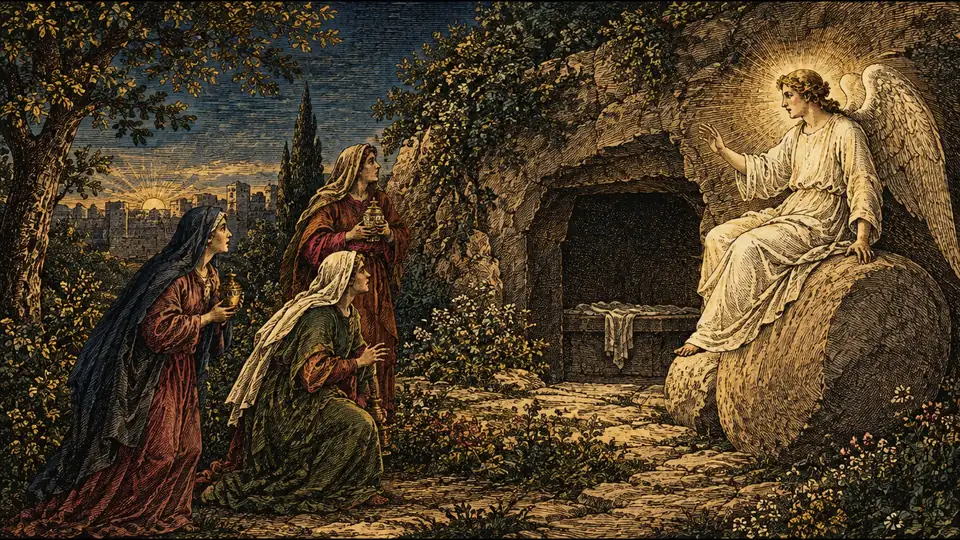
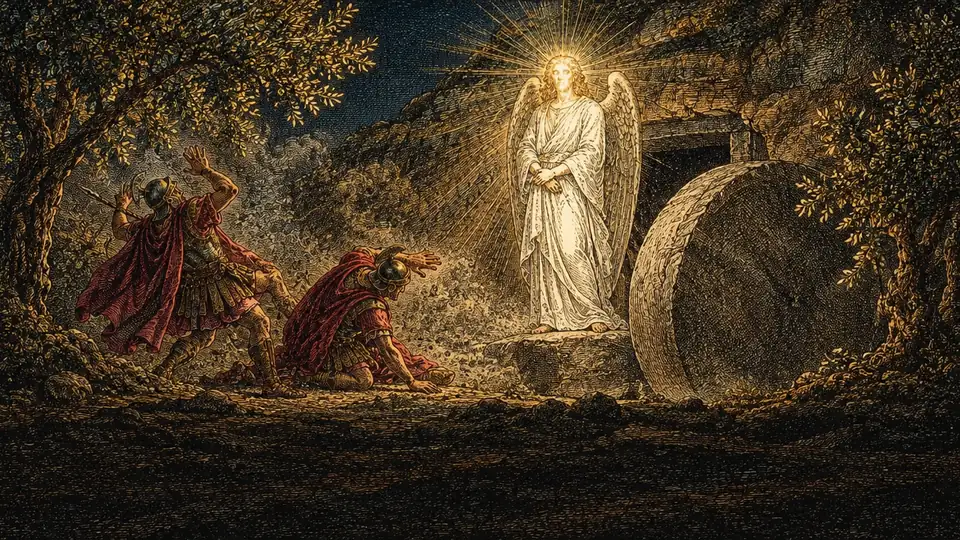
Very early on the first day of the week, Mary Magdalene and the other women came with spices to the sepulchre, asking one another who would roll away the stone. There had been a great earthquake, and the angel of the Lord had rolled it back and sat upon it, his countenance like lightning and his raiment white as snow, and the keepers shook and became as dead men.
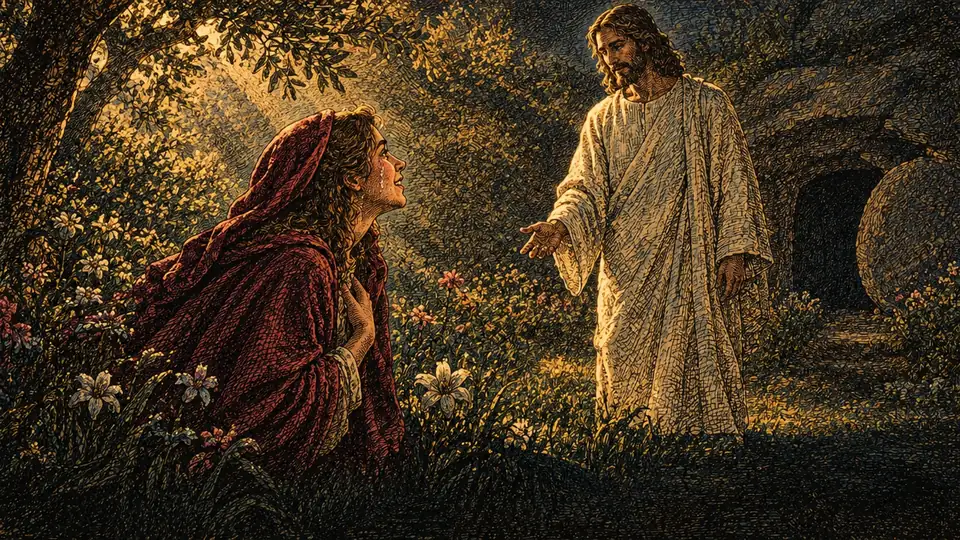
The angel said, “Fear not ye: for I know that ye seek Jesus, which was crucified” (Matthew 28:5), and told them to go quickly and tell his disciples. Peter and John ran to the tomb and found the linen clothes lying. Mary Magdalene stayed weeping, and turning, saw Jesus standing, and knew him when he called her by her name.
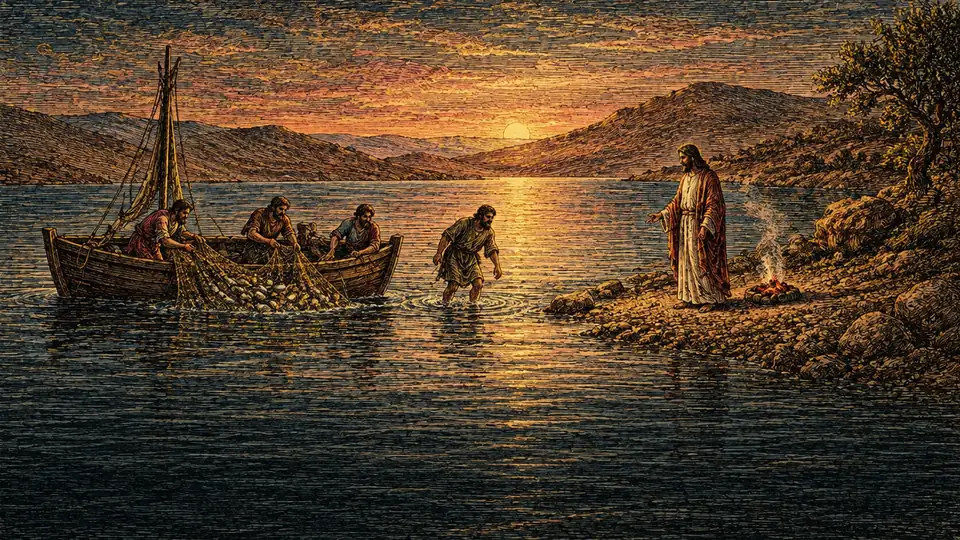
For forty days he showed himself alive by many proofs: to two on the road to Emmaus, to the disciples behind shut doors, to Thomas, who was told to reach hither his hand, and by the Sea of Galilee. Paul, writing some twenty years later, listed the witnesses, among them above five hundred brethren at once, of whom the greater part were still alive.
He is not here: for he is risen, as he said. Come, see the place where the Lord lay.
Matthew 28:6, KJV
Where it happened
Jerusalem (site by tradition).
The Church of the Holy Sepulchre stands where tradition has placed the tomb since the fourth century; the Garden Tomb, north of the old city, is another view.
Every story stands at its place on the Worldwide Watch map: the Bible’s world, on the map.
More from the Gospels
Matthew to John
Sources and editorial method
Research and editorial references used for this page include:
- The King James Bible, as published by bible-api.com
- The Book of Enoch, translated by R. H. Charles (1917), Project Gutenberg
Every story is told from the King James Bible, and from the Book of Enoch in R. H. Charles’s translation (1917) where a story names it. Every quotation was checked word for word against those texts. Where a place is not known, the page says so. The paintings and the narration were made for the house.

